
History, principles, doctrine and institutions: a comprehensive introduction to the discipline of identifying, understanding and countering hostile intelligence activity.
Introduction
Counterintelligence is one of the oldest functions of organized state security and one of the most complex disciplines within modern intelligence systems. Its central purpose is to identify, understand, prevent and counter intelligence activities conducted by hostile states, foreign intelligence services and other actors seeking unauthorized access to protected information, institutions, technologies or decision-making processes.
Unlike intelligence collection, which seeks to acquire knowledge about external actors and developments, counterintelligence concentrates on threats directed against the security and integrity of an organization or state. It is concerned not only with discovering spies but also with recognizing hostile intentions, protecting sensitive capabilities, identifying vulnerabilities and understanding how adversaries attempt to penetrate institutions.
Counterintelligence has evolved from the protection of rulers, armies and diplomatic correspondence into an institutionalized discipline involving intelligence agencies, law enforcement, military security organizations, cybersecurity authorities and private-sector partners.
Today, the discipline extends far beyond traditional spy networks. It encompasses economic espionage, cyber-enabled intelligence collection, insider threats, technological theft and efforts to compromise critical infrastructure.
Definition and Scope of Counterintelligence
Counterintelligence, commonly abbreviated as CI, refers to activities designed to identify, assess, prevent, disrupt or otherwise counter hostile intelligence operations.
The concept encompasses defensive and proactive functions. Defensive counterintelligence concentrates on protecting personnel, information, facilities, communications and sensitive operations. Proactive counterintelligence seeks to identify hostile intelligence networks, understand their objectives and lawfully counter their activities.
Its responsibilities include detecting espionage, protecting classified information, investigating suspected compromises, assessing adversarial intelligence capabilities, reducing vulnerabilities and coordinating protective measures across institutions.
Counterintelligence is broader than counterespionage. It combines intelligence analysis, security management, investigations, threat assessment and institutional protection.
Counterintelligence, Counterespionage and Security
Counterintelligence is the broad discipline concerned with hostile intelligence threats, their objectives, capabilities and effects. Counterespionage focuses more specifically on identifying and countering espionage activities. Security concerns the policies, systems and controls used to protect personnel, information, facilities and operations against a wider range of risks.
An organization may use access controls to protect sensitive research. Those controls form part of its security system. If investigators discover that a foreign intelligence service is attempting to recruit an employee to obtain that research, the matter enters the domain of counterintelligence and potentially counterespionage.
The distinction matters because effective counterintelligence requires both protective systems and an understanding of the adversary.
Historical Origins
The practices associated with counterintelligence predate the modern terminology. Ancient political and military authorities recognized the dangers of infiltration, betrayal and unauthorized disclosure. Rulers relied on trusted messengers, guarded communications and networks of informants.
Ancient Chinese strategic writing, particularly the tradition associated with Sun Tzu, emphasized spies, deception and knowledge of an opponent’s intentions. In the Roman world, military and administrative networks also supported reporting and political security, although they were not modern counterintelligence agencies.
During the medieval and early modern periods, diplomatic correspondence, court politics, dynastic rivalries and religious conflict encouraged systems of secrecy and information gathering.
By the nineteenth century, professional police organizations, national bureaucracies, military general staffs and modern communications established conditions for organized counterespionage.
The Emergence of Modern Counterintelligence
Industrialization increased the strategic importance of military technology, communications networks, transportation systems and industrial production. European governments became increasingly concerned about foreign agents seeking military and political information.
In Britain, the Secret Service Bureau was established in 1909. Its domestic security component, associated with Vernon Kell, developed into the organization commonly known as MI5.
The First World War accelerated organized counterespionage and the protection of military information. The interwar period introduced new ideological and institutional challenges.
During the Second World War, Britain developed extensive counterespionage and deception capabilities. In the United States, the Office of Strategic Services established a counterintelligence division in 1943, subsequently known as X-2. Wartime experience demonstrated that counterintelligence could support both protection and strategic deception.
CHAPTER 05
The Cold War and Institutionalization
The Cold War transformed counterintelligence into a permanent and strategically important function. Competition extended across military affairs, diplomacy, scientific research, intelligence collection and political influence.
Foreign intelligence services sought information about nuclear weapons, military planning, technological development and intelligence capabilities. Counterintelligence organizations attempted to identify these activities while protecting their own institutions.
The period exposed enduring challenges: intelligence organizations themselves could be penetrated; the discovery of one spy did not necessarily reveal the extent of a compromise; and excessive suspicion could damage institutional trust.
James Jesus Angleton, head of the CIA Counterintelligence Staff from 1954 to 1974, illustrates these tensions. His emphasis on hostile penetration and deception influenced the discipline, while aspects of his methods became deeply controversial.

Strategic Principles of Counterintelligence
Threat understanding is fundamental. Institutions must assess which actors may seek access to protected information, what they hope to obtain and how their priorities change.
Protection of sensitive assets requires identifying critical sources, classified material, defense technology, research, personnel and decision-making processes, then applying proportionate safeguards.
Prevention and early warning depend on institutional awareness, reporting mechanisms, threat assessments and cooperation among responsible organizations.
Analytical objectivity is essential because counterintelligence operates amid incomplete information and deliberate deception. Facts must be distinguished from assumptions and allegations.
Coordination and information sharing link intelligence services, law enforcement, military organizations, cybersecurity authorities and relevant civilian institutions.
Legality and accountability are indispensable. Investigative powers must remain within applicable law, respect fundamental rights and be subject to appropriate oversight.
Counterintelligence Doctrine
Counterintelligence doctrine translates strategic objectives into institutional responsibilities and activities. It varies according to national legal systems, intelligence traditions and security priorities.
Strategic counterintelligence examines hostile intelligence threats in relation to national interests and critical capabilities. Operational counterintelligence coordinates activities addressing specific threats.
Investigative counterintelligence examines suspected espionage, unauthorized disclosures and hostile intelligence relationships under applicable authorities. Protective counterintelligence integrates threat understanding with personnel security, information protection and institutional safeguards.
These dimensions are complementary. A single threat may require strategic assessment, institutional protection, an authorized investigation and interagency coordination.
Institutional Foundations
Counterintelligence is organized differently across national systems. Some countries assign domestic responsibilities to dedicated security services; others rely on investigative agencies, intelligence organizations or military security institutions.
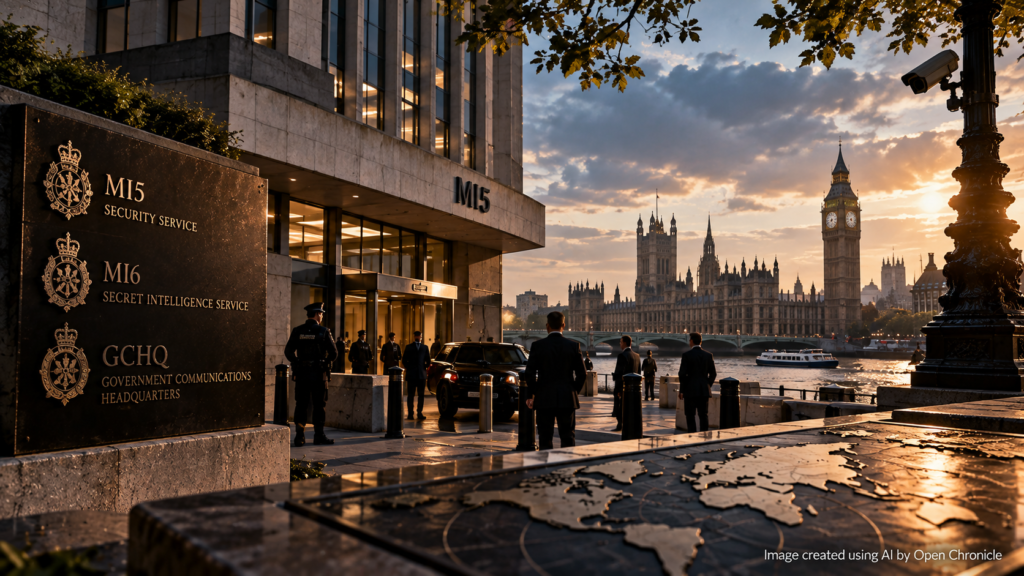
In the United Kingdom, MI5 is a domestic security intelligence organization. In the United States, the FBI investigates foreign intelligence activity within its jurisdiction, while the CIA maintains counterintelligence capabilities related to its foreign intelligence mission.
The National Counterintelligence and Security Center supports strategic coordination within the United States intelligence and security system. Military organizations also protect personnel, installations and defense capabilities.
No single institutional model is universal. Effectiveness depends on clear responsibilities, access to relevant information, professional expertise and accountable cooperation.
The Human Dimension
Despite technological developments, people remain central to counterintelligence. Personnel possess knowledge, judgment, access and institutional trust, and may become targets of hostile recruitment or coercion.
Insider threats may arise from deliberate espionage, coercion or other intentional misconduct, but not every insider security incident is espionage. Suspicious circumstances do not automatically establish hostile intent.
Personnel security, professional ethics, fair reporting procedures, organizational culture and lawful investigations all contribute to resilience. Effective security must protect institutions without destroying the trust on which they depend.
Counterintelligence in the Digital Age
Digital technologies have transformed the environment in which counterintelligence operates. Sensitive information may be stored across interconnected systems, shared with contractors or accessed remotely.
Foreign intelligence activity may involve cyber intrusions, research data theft, exploitation of digital communications and attempts to obtain sensitive technologies. Human and technical vulnerabilities increasingly overlap.
Not every cyberattack is an intelligence operation. Cybercrime, sabotage and espionage may use similar techniques while differing in purpose and legal classification. Attribution and strategic context remain essential.
Counterintelligence organizations increasingly cooperate with cybersecurity agencies, research institutions and private-sector partners to protect critical assets.
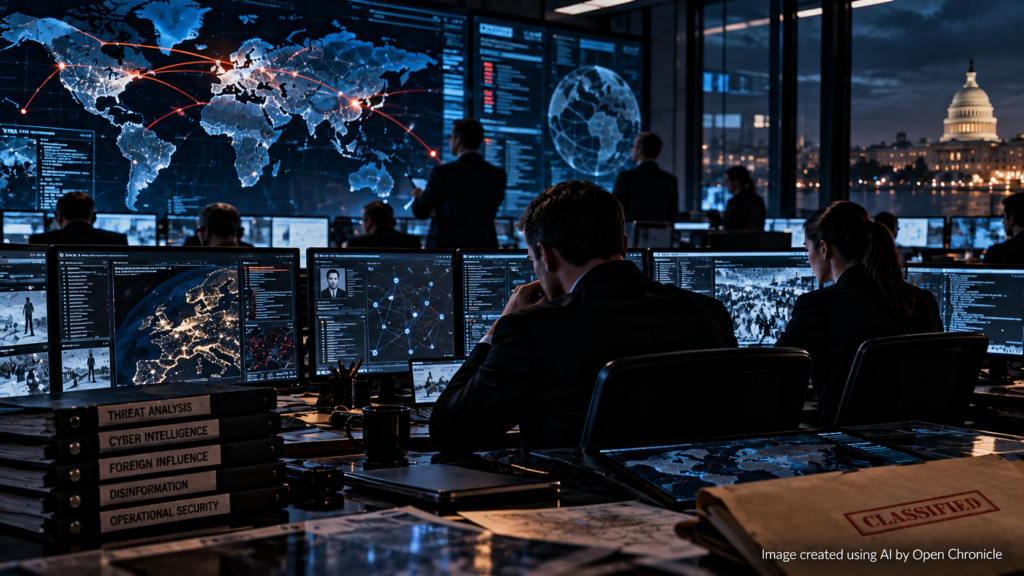
Counterintelligence and Democratic Governance
States have a legitimate interest in protecting national security, classified information and critical institutions. At the same time, intelligence and security powers may affect privacy, freedom of expression, due process and other fundamental rights.
Historical experience demonstrates that security institutions can become instruments of political repression when powers are insufficiently constrained or redirected toward lawful domestic opposition.
Appropriate legal authorization, independent oversight, judicial controls where applicable and institutional accountability help distinguish legitimate counterintelligence from political suppression.
The Enduring Importance of Counterintelligence
Counterintelligence has changed profoundly since the emergence of modern security services in the early twentieth century. It now operates amid global communications, technological competition and international research networks.
Yet its fundamental questions remain recognizable: Who seeks protected information? What are their objectives? Which institutions are vulnerable? How can threats be understood and countered without compromising lawful governance?
Counterintelligence is more than the discovery of spies. It is a continuing process of threat understanding, institutional protection, intelligence assessment and strategic adaptation.
Historical Timeline
Ancient and early modern periods
Early information protection, political surveillance and diplomatic secrecy.
Nineteenth century
Professional policing, military intelligence and state bureaucracies expand.
1909
The British Secret Service Bureau is established.
1914–1918
The First World War accelerates organized counterespionage.
1943
The OSS establishes a counterintelligence division, later known as X-2.
1947–1991
The Cold War makes counterintelligence a central part of intelligence competition.
Twenty-first century
Cyber espionage, technological theft and insider threats expand the field.
Sources and Further Reading
CIACounterintelligence at CIA: A Brief History
FBICounterintelligence
MI5History of MI5
ODNI / NCSCNational Counterintelligence and Security Center
CIAOSS Creates First CI Division
Editorial Note
EXPLORE MORE / COUNTERINTELLIGENCE← Return to Counterintelligence
Explore this subject
Continue exploring related Open Chronicle Encyclopedia entries through the categories associated with this article.

Staff Writers at Open Chronicle produce trusted journalism, strategic analysis and authoritative reference content across global affairs, geopolitics, defense, science, history, technology, business, culture and sport. Their work combines accurate reporting with historical perspective and analytical depth, helping readers understand not only what is happening, but why it matters. Beyond daily news coverage, Staff Writers contribute to the Open Chronicle Encyclopedia, investigative features, original research projects and long-form reports, building a comprehensive knowledge platform designed to inform, educate and preserve reliable information for a global audience.