
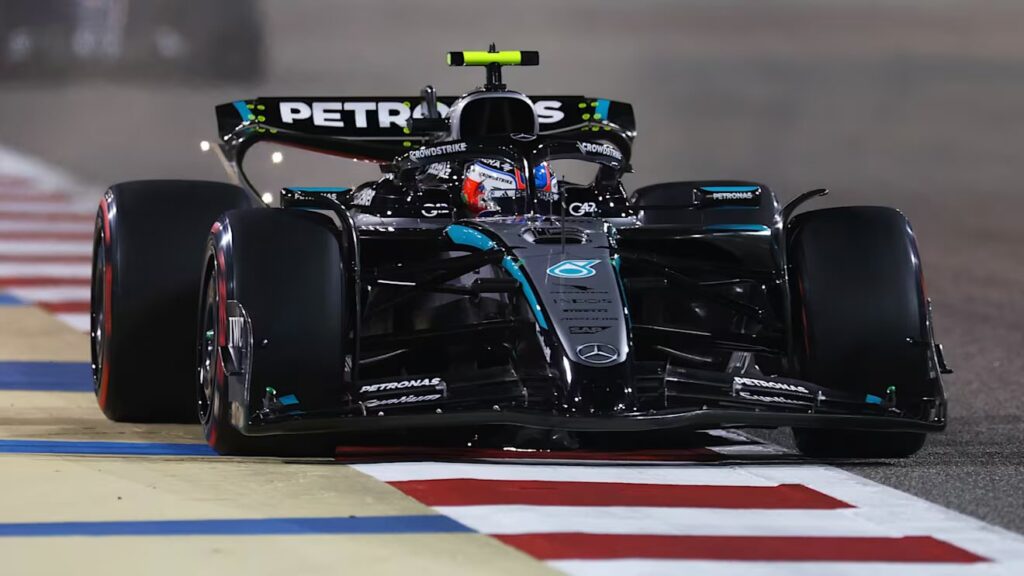
Image: from Mercedes-AMG Passion Club X@MercedesAMGPCF1
In Formula One, Driver Cooling Systems refer to specialized equipment integrated into the cockpit designed to regulate a driver’s core body temperature during extreme weather conditions. Following significant health incidents during the 2023 season, the FIA introduced new mandates for the 2025 season, requiring these systems to be implemented under specific thermal risk conditions.
Origins and Historical Context
The primary catalyst for the mandated cooling kit was the 2023 Qatar Grand Prix. During this event, extreme ambient temperatures and high humidity pushed drivers to the brink of physical collapse. Several drivers reported near-fainting, vomiting inside their helmets, and severe dehydration. Notable incidents included Logan Sargeant retiring due to heatstroke and Esteban Ocon and Lance Stroll requiring immediate medical attention post-race.
Following a technical investigation, the FIA concluded that passive cooling (ventilation holes) was insufficient for modern high-downforce cars in desert climates, leading to the approval of an active “cooling kit” for 2025.
🚨 | FERRARI’S NEW COOLING SOLUTION
SF-25 will get a revised front suspension for tire heating but keep balanced cooling. Ferrari maintains its triangular air intake, focusing on weight distribution over RB’s radiator overhaul.
📰 @Auto_Racer_it pic.twitter.com/Mf8oQq1STT
— La Gazzetta Ferrari (@GazzettaFerrari) February 12, 2025
2025 Regulations
“Heat Hazard” Declaration
The use of the cooling system is not permanent but is triggered by meteorological thresholds. A “Heat Hazard” is officially declared by the FIA when the predicted ambient temperature exceeds 30.5 °C (86.9 °F).
Technical Mandate
Once a Heat Hazard is declared, teams are required to:
-
Equip the car with the FIA-approved cooling system.
-
Maintain the system’s functionality throughout the sessions (Practice, Qualifying, or Race).
Minimum Weight Adjustment
To ensure that teams do not face a performance penalty for prioritizing safety, the 2025 regulations include a weight compensation clause:
-
The overall minimum weight of the car is increased by 5 kg (11 lb) when the cooling system is mandated.
-
This allowance covers the weight of pumps, fluids, heat exchangers, and specialized garments.
Technical Components
While the exact designs may vary between constructors, the systems typically utilize one of the following methods:
-
Cooling Vest: A specialized base layer worn under the racing suit featuring micro-capillaries through which a refrigerated fluid circulates.
-
Active Air Conditioning: A system that forces ambient air and directs it through ducting into the driver’s helmet and chest area.
-
Phase-Change Materials (PCM): Inserts that absorb body heat as they transition from solid to liquid states.
Impact on the Sport
The introduction of this kit marks a significant shift in F1 philosophy, placing physiological safety on par with aerodynamic and weight efficiency. While the system adds weight and draws a small amount of power from the Power Unit (PU), it is viewed as a necessary evolution to protect athletes as the F1 calendar expands into increasingly warmer climates.
Summary of 2025 Weight Changes
| Component | Base Weight | Condition-Specific Weight | Total |
| Minimum Car Weight | 800 kg | +5 kg (Heat Hazard) | 805 kg |
| Driver Allowance | 82 kg | Included in the car total | 82 kg |
Back to 2025 Formula One Season Portal
Explore this subject
Continue exploring related Open Chronicle Encyclopedia entries through the categories associated with this article.

Staff Writers at Open Chronicle produce trusted journalism, strategic analysis and authoritative reference content across global affairs, geopolitics, defense, science, history, technology, business, culture and sport. Their work combines accurate reporting with historical perspective and analytical depth, helping readers understand not only what is happening, but why it matters. Beyond daily news coverage, Staff Writers contribute to the Open Chronicle Encyclopedia, investigative features, original research projects and long-form reports, building a comprehensive knowledge platform designed to inform, educate and preserve reliable information for a global audience.