
Image: Eric Trump Commentary X@erictrumpfan1
By Open Chronicle News Desk Staff with Agencies
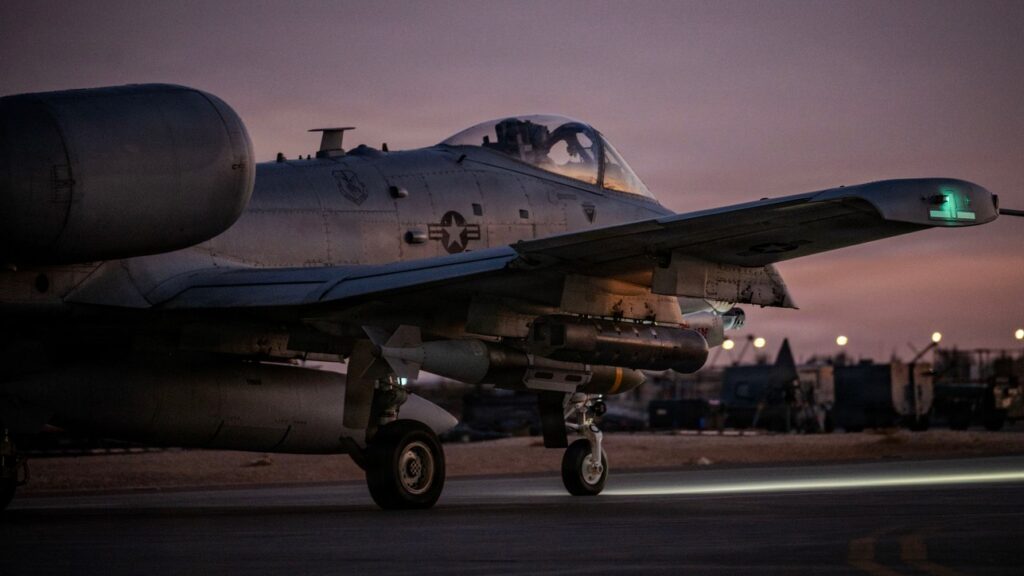
On January 10, United States forces launched a new wave of large-scale strikes across Syria under the banner of Operation Hawkeye Strike. According to US Central Command, the operation targeted multiple Islamic State positions in retaliation for a deadly December 13 attack in Palmyra that killed two American soldiers and a US civilian interpreter. While Washington continues to attribute the attack to the Islamic State, available evidence increasingly points toward an insider assault carried out by a member of Syria’s own security services. This discrepancy exposes a widening gap between operational narratives and on-the-ground realities, raising questions about attribution, alliance management, and long-term US strategy in post-war Syria.
CENTCOM described the January 10 operation as a continuation of strikes first launched on December 19, 2025, explicitly ordered by President Trump in response to the Palmyra attack. US officials maintain that the December ambush was conducted by an Islamic State operative and have used this claim to justify sustained military action against ISIS networks inside Syria.
The strikes were described as large-scale and geographically dispersed, yet CENTCOM declined to disclose specific targets or provide post-strike assessments. This lack of transparency has limited independent verification of whether the operation degraded Islamic State capabilities or primarily served a signaling function.
Beyond US military statements, there is no public evidence directly linking the Islamic State to the December 13 attack. Notably, ISIS has not claimed responsibility, an unusual silence given the group’s historical pattern of rapidly publicizing attacks that kill or injure US personnel.
Syrian authorities acknowledged that the attack was carried out by a member of Syria’s security forces during a meeting involving US personnel. While the Interior Ministry stated that the attacker had been under investigation for jihadist ties, he nonetheless retained access to sensitive environments and proximity to American forces. This points to either severe negligence or deeper structural infiltration within Syrian security institutions.
The incident underscores a critical vulnerability within the new Syrian security apparatus. These services reportedly include thousands of foreign and domestic jihadists, many with prior affiliations to Al Qaeda or Hayat Tahrir al Sham. Several figures within the current Syrian leadership are themselves former members of Al Qaeda networks, reflecting the regime’s origins as an insurgent coalition rather than a conventional state structure.
Crucially, Al Qaeda and the Islamic State remain ideological and operational enemies. This rivalry complicates the US narrative that frames jihadist violence primarily through the lens of ISIS, potentially obscuring threats emanating from allied or tolerated factions within Syrian institutions.
The Trump administration has committed to working with Syria’s new leadership despite its roots in Al Qaeda. US Special Envoy Tom Barrack made this position explicit in July 2025, stating that there is no alternative framework for engagement and no Plan B. This strategic bet prioritizes short-term stability and counter ISIS operations over ideological consistency or long-term institutional reform.
However, the Palmyra attack reveals the inherent risk of this approach. By aligning with a regime whose security forces are partially composed of hostile jihadist elements, the United States increases its exposure to insider threats while constraining its ability to respond directly to allied misconduct.
Operation Hawkeye Strike reflects a familiar pattern in contemporary US military strategy, a rapid kinetic response anchored in contested attribution. While the strikes may disrupt residual Islamic State cells, they do little to address the structural risks embedded in the US partnership with Syria’s new authorities.
From an intelligence perspective, the more significant threat may not lie solely in surviving ISIS networks, but in the ambiguous loyalties of armed actors operating under the banner of a partner government. As long as this contradiction remains unresolved, US forces in Syria will continue to operate in an environment where the line between ally and adversary is increasingly blurred.