
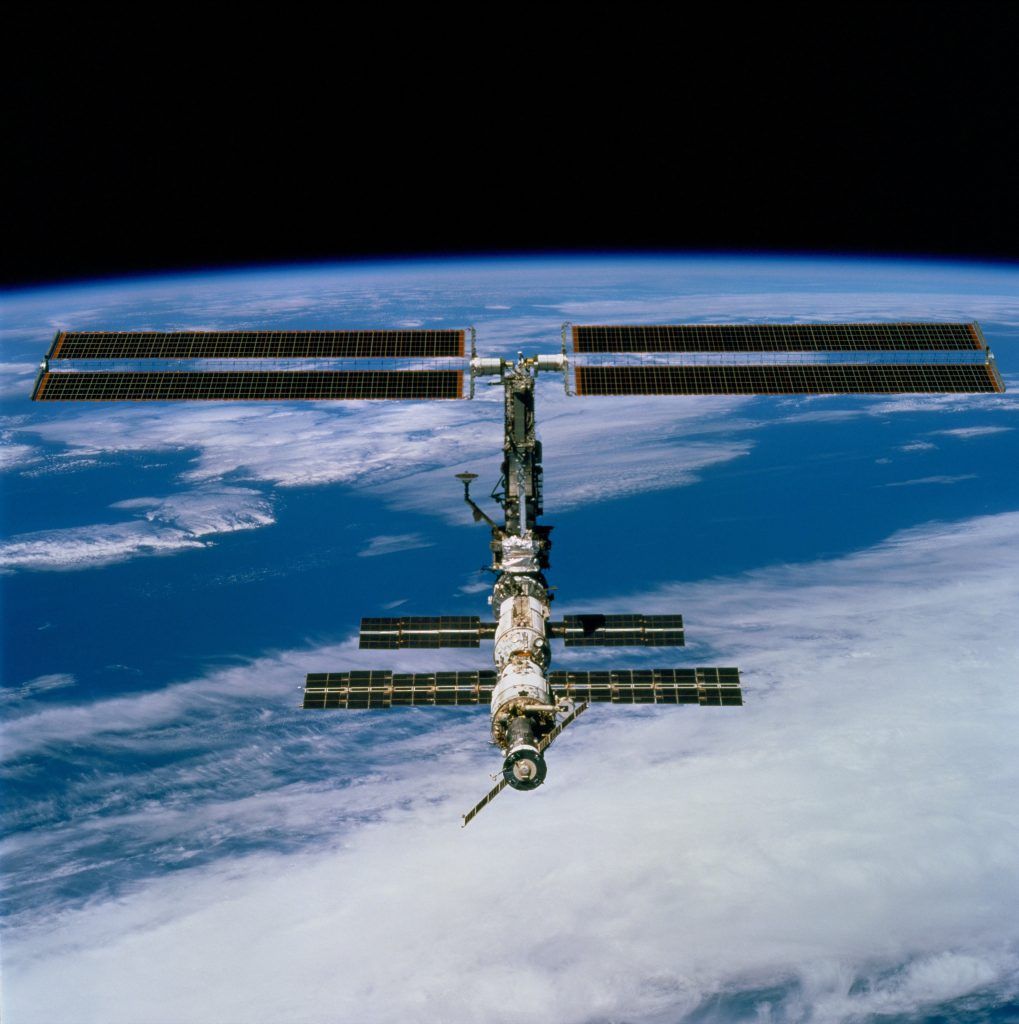
Image: from talker X@talker_news
By Science & Technology Desk January 18, 2026 *
In a groundbreaking study published in PLOS Biology, researchers have revealed that the extreme conditions of microgravity aboard the International Space Station (ISS) fundamentally alter the “arms race” between viruses and bacteria. The findings suggest that space is not just a frontier for exploration, but a unique laboratory for engineering new weapons against drug-resistant infections on Earth.
The Space-Bound Experiment
A team led by Phil Huss from the University of Wisconsin-Madison sent samples of E. coli and its natural predator, a virus known as the T7 phage, to the ISS. On Earth, these two organisms are locked in a constant evolutionary struggle: bacteria develop defenses to block viral entry, and viruses evolve new ways to breach those defenses.
The goal was to see if the absence of gravity, which changes how fluids move and how cells behave, would change the rules of this biological battle.
Surprising Evolutionary Paths
While the T7 phages were still able to infect their hosts in space, the genetic trajectories of both organisms diverged significantly from their counterparts on Earth.
-
Viral Adaptation: The phages aboard the ISS accumulated specific mutations in their “receptor-binding proteins,” the tools they use to attach to and enter bacterial cells. These mutations appeared to enhance the viruses’ ability to bind to their targets in the near-weightless environment.
-
Bacterial Defense: Simultaneously, the E. coli bacteria developed unique mutations to survive the stress of microgravity while attempting to shield themselves from the viral onslaught.
A Breakthrough for Phage Therapy
The most exciting discovery came when the researchers brought these space-evolved insights back to Earth. Using a technique called “deep mutational scanning,” the team analyzed the changes in the viral binding proteins.
They found that the mutations triggered by microgravity actually made the viruses more effective at killing certain strains of E. coli that cause urinary tract infections (UTIs) in humans. These specific strains are typically resistant to standard T7 phages on Earth, but the “space-inspired” versions were able to bypass their defenses.
Engineering the Future of Medicine
“Space fundamentally changes how phages and bacteria interact,” the authors noted. “By studying those space-driven adaptations, we identified new biological insights that allowed us to engineer phages with far superior activity against drug-resistant pathogens back on Earth.”
As antibiotic resistance continues to be one of the greatest threats to global health, “phage therapy”, the use of viruses to kill harmful bacteria, is seen as a vital alternative. This study demonstrates that the unique stresses of space flight can force evolution to find solutions that terrestrial biology might never discover on its own.
Story Source:
Materials provided by PLOS. Note: Content may be edited for style and length.
Journal Reference:
- Phil Huss, Chutikarn Chitboonthavisuk, Anthony Meger, Kyle Nishikawa, R. P. Oates, Heath Mills, Olivia Holzhaus, Srivatsan Raman. Microgravity reshapes bacteriophage–host coevolution aboard the International Space Station. PLOS Biology, 2026; 24 (1): e3003568 DOI: 10.1371/journal.pbio.3003568