The Solar System is a collection of celestial bodies bound together by gravity, centered around the Sun, which is a star. It includes eight planets—Mercury, Venus, Earth, Mars, Jupiter, Saturn, Uranus, and Neptune—along with their moons, dwarf planets like Pluto, asteroids, comets, and other small objects. The Solar System extends far beyond the planets, with objects like the Kuiper Belt and the Oort Cloud marking the outer reaches. The study of the Solar System helps us understand the formation of planetary systems and our place in the universe.
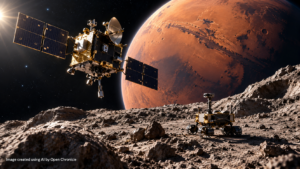
OPEN CHRONICLE SCIENCE | SPACE EXPLORATION · PLANETARY SCIENCE Japan’s MMX spacecraft has begun an ambitious journey to investigate the origins of Phobos and Deimos,…
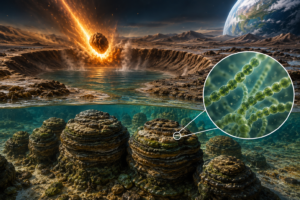
Image Credentials: Image Title: Ancient Asteroid Crater Discovery May Explain How Earth Gained Oxygen. Source: (chatgpt.com) Date: May 2026. Attribution: This image was created using…
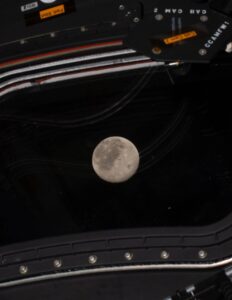
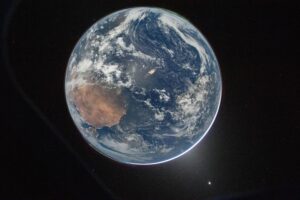
Foto: Nasa By Open Chronicle Staff with Agencies CAPE CANAVERAL / LUNAR ORBIT — In a milestone for deep-space exploration, NASA released the first images…
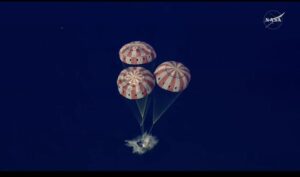
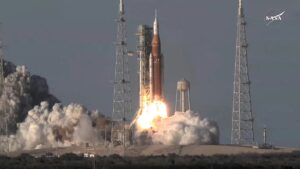
Image: by NASA By Open Chronicle Staff with Agencies KENNEDY SPACE CENTER, Fla. – With a thunderous roar that echoed the Apollo era, NASA’s 322-foot-tall…