
Images: from OSZ X@OpenSourceZone
By Open Chronicle Staff with Agencies
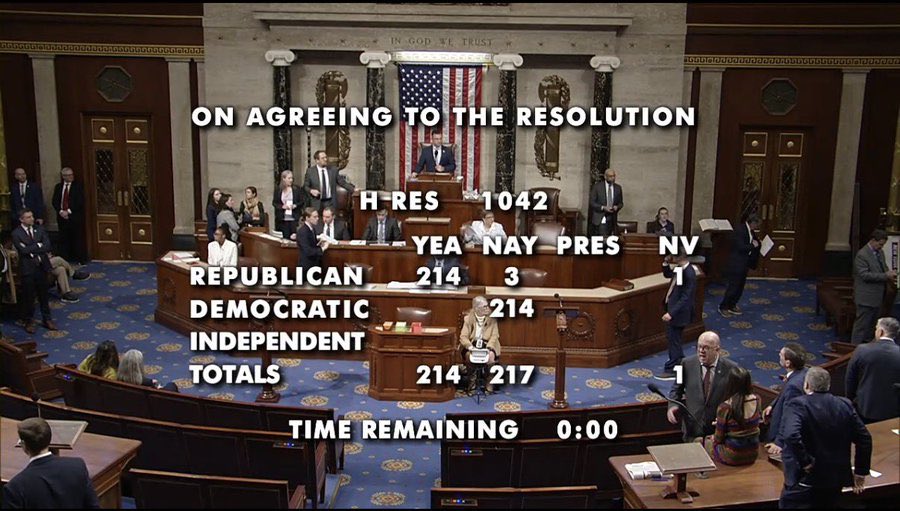
WASHINGTON, D.C. — In a dramatic late-night session that exposed deepening fractures within the Republican party, the U.S. House of Representatives narrowly defeated a procedural measure aimed at shielding President Donald Trump’s aggressive tariff agenda from legislative challenges.
The 214–217 vote on Tuesday marks a significant setback for House Speaker Mike Johnson (R-LA), who had sought to extend a “gag order” preventing lawmakers from forcing votes to overturn the administration’s emergency trade levies. For months, GOP leadership has successfully blocked such resolutions, but a small group of Republican defectors joined a unified Democratic front to end the moratorium.
Cracks in the Majority
The defeat was orchestrated by a trio of Republican rebels: Representatives Thomas Massie (R-KY), Kevin Kiley (R-CA), and Don Bacon (R-NE). Their opposition centered on the constitutional authority of Congress to oversee taxes and trade—a power they argue has been improperly ceded to the executive branch.
“Article I of the Constitution places authority over taxes and tariffs with Congress for a reason,” Rep. Bacon said following the vote. He described the tariffs as a “net negative” for the economy and a “significant tax” that American consumers, manufacturers, and farmers are ultimately forced to pay.
A Strategy of Silence Fails
Speaker Johnson had urged his caucus to maintain the blockade until the Supreme Court rules on a pending case regarding the legality of the President’s use of the International Emergency Economic Powers Act (IEEPA). Johnson argued that a legislative “runway” was necessary to avoid jumping prematurely into a judicial issue.
However, Democrats, led by House Minority Leader Hakeem Jeffries (D-NY), characterized the tariffs as a primary driver of the nation’s cost-of-living crisis. “The affordability crisis in this country is not a hoax; it is very real,” Jeffries declared on the House floor.
What’s Next?
With the procedural ban expired, the House is now cleared to begin debating resolutions of disapproval.
-
Target: Canada: Democrats are expected to immediately force a vote on a resolution to terminate tariffs on Canadian goods.
-
Pressure on the Senate: While the Senate has already expressed bipartisan opposition to many of the duties, a successful House vote would send a powerful, though likely symbolic, message to the White House.
-
The Veto Threat: President Trump remains unlikely to sign any measure that guts his trade strategy, and overturning a presidential veto would require a two-thirds majority in both chambers, a hurdle that remains steep despite the current GOP defections.
As the 2026 midterm elections approach, the collapse of the tariff blockade signals that “affordability” will be the central battlefield, with even some of the President’s allies now unwilling to provide cover for his most controversial economic policies.