
Image: from GMan | GMan’s Chronicle X @FAB87F
By OPEN CHRONICLE STAFF with Agencies
GENEVA — The United States has surged more than 50 fighter jets to the Middle East within the last 24 hours, a massive show of force that coincides with a tentative breakthrough in indirect nuclear negotiations with Tehran.
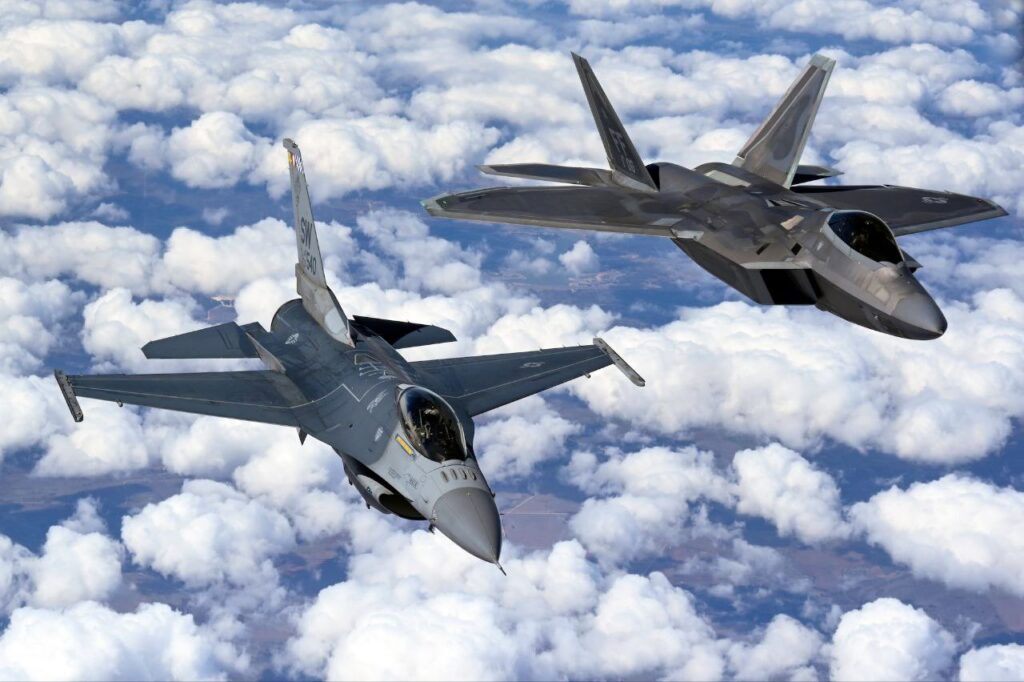
The deployment, first reported by Axios and confirmed by U.S. officials, includes a sophisticated mix of F-16, F-22, and F-35 stealth fighters. The aircraft were tracked by independent flight monitors as they moved into the region to join a growing American naval presence, including the aircraft carrier USS Gerald R. Ford, which was redirected to the area last week.
A Narrow Path for Diplomacy
The military buildup frames a high-stakes diplomatic effort in Geneva. On Tuesday, a U.S. official told reporters that “progress was made” during the latest round of indirect talks regarding Iran’s nuclear program.
According to the official, Iranian representatives have committed to providing a “detailed proposal” within the next two weeks. This proposal is intended to address significant gaps that have persisted since the regional conflicts of 2025, which saw direct exchanges between Israel and Iran and the degradation of Tehran’s previous nuclear infrastructure.
“The Iranians said they would come back with detailed proposals to address some of the open gaps in our positions,” the official stated, while cautioning that “many details still need to be discussed.”
Regional Tensions and Threats
The diplomatic optimism is being tested by bellicose rhetoric from Tehran. Shortly after the Geneva sessions concluded, Iran’s Supreme Leader Ayatollah Ali Khamenei issued a stern warning, asserting that Iran possesses the capability to strike the U.S. Navy so severely that it “cannot get up again.”
Simultaneously, the Islamic Revolutionary Guard Corps (IRGC) announced the temporary closure of the Strait of Hormuz for “security precautions,” citing ongoing maritime drills. The move has sparked concerns over global shipping stability in one of the world’s most vital energy corridors.
Historical Context: The 2025 Shadow
The current negotiations are heavily influenced by the “12-Day War” of June 2025. During that conflict, a coordinated effort by Israel and the U.S.—codenamed Operation Rising Lion—crippled Iran’s uranium enrichment capabilities. Recent intelligence suggests that while the nuclear program was set back years, Tehran has pivoted toward a rapid expansion of its ballistic missile arsenal, aiming for a production capacity of 200 missiles per month.
In Washington, the Biden administration faces pressure from both sides of the aisle. Senator Lindsey Graham told reporters this week that the survival of the current Iranian regime would jeopardize the Abraham Accords and lead to a rearmed Hamas, calling for a “clear-eyed” approach to Tehran’s regional ambitions.
As the U.S. maintains its “deter and defend” posture with the arrival of the new fighter wings, the world looks toward the two-week deadline for Iran’s formal proposal—a window that may determine whether the region moves toward a new security framework or another cycle of kinetic escalation.