
Image: from Basha باشا X @BashaReport
By Open Chronicle Staff with Agencies | March 4, 2026
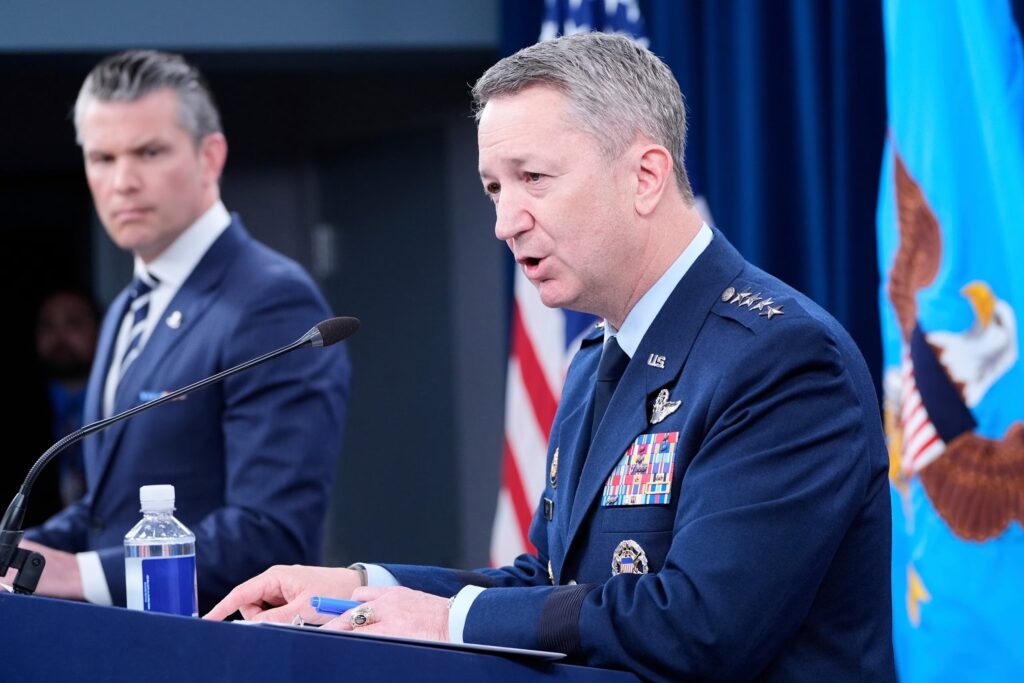
WASHINGTON — The Pentagon has observed a significant degradation in Iran’s offensive capabilities following days of sustained joint military operations. Gen. Dan Caine, Chief of Staff of the U.S. Armed Forces, announced on Wednesday that Iranian missile and drone strikes have plummeted since the commencement of U.S.-Israeli retaliatory actions.
According to data released during a press briefing and cited by Future Warfare Magazine, ballistic missile launches from Iranian territory have decreased by a staggering 86% compared to the initial day of the conflict. Suicide drone deployments have also seen a sharp decline, falling by approximately 73%.
NEW 🔴
Chairman of the Joint Chiefs Gen. Caine: Iran's ballistic missile fire is down 86% from day one.
Drone launches down 73%. pic.twitter.com/AlB3s83rWA
— Open Source Intel (@Osint613) March 4, 2026
“The sharp decrease in Iranian missile and drone activity has allowed U.S. forces to expand their operational superiority,” Gen. Caine stated, suggesting that the strategic targeting of launch sites and supply chains is yielding results.
The scale of the conflict has been unprecedented. Since hostilities escalated last Saturday, military figures indicate that Tehran has launched over 500 ballistic missiles, including 200 long-range projectiles aimed at Israel and 300 medium-range missiles directed toward Gulf states. Additionally, more than 2,000 suicide drones have been deployed in the regional offensive.
The ongoing military campaign by U.S. and Israeli forces continues to target key installations within Iran. In response, Tehran has maintained a cycle of strikes against Israel, while also expanding its target list to include facilities in the Gulf states, Iraq, and Jordan.
While the reduction in launch frequency offers a temporary tactical reprieve for regional air defenses, officials remain cautious. The “operational superiority” cited by Gen. Caine comes at a time of extreme regional volatility as diplomatic efforts struggle to keep pace with the kinetic exchange of fire.