
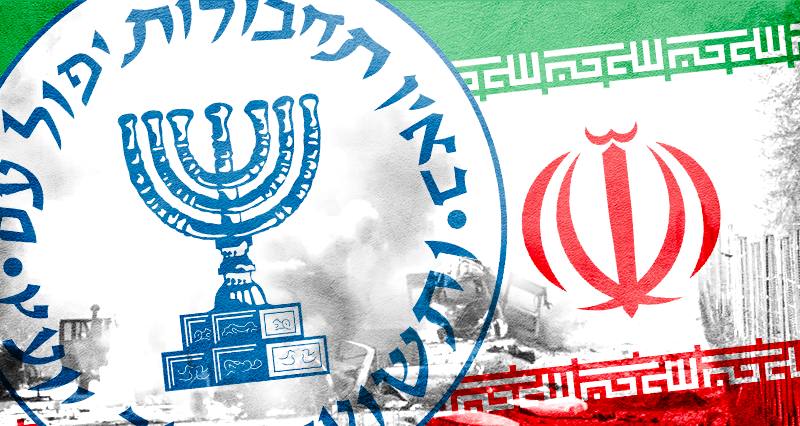
Image: from Defence News Of INDIA X @DefenceNewsOfIN
Open Chronicle | Middle East
Iran has executed two men accused of collaborating with Israel’s intelligence services and planning attacks inside the country, according to state-linked media, marking the latest in a series of capital punishments since the outbreak of war in the region.
The judiciary’s outlet, Mizan, said Mohammad Masoum Shahi and Hamed Validi were convicted of working with a network tied to Mossad and receiving training abroad, including in Iraq’s Kurdistan region. The report did not specify when the men were arrested.
They were found guilty on charges including “enmity against God” and cooperation with “hostile groups,” terms commonly used in Iran for cases involving alleged espionage or national security threats. Their death sentences were upheld by Iran’s Supreme Court before being carried out.
Execution of Two Security Defendants After Overnight Transfer Raises Fair Trial Concerns
Early this morning, Mohammad Masoum (Nima) Shahi and Hamed Validi were executed after being convicted on security-related charges, including alleged cooperation with Mossad.
The executions… pic.twitter.com/KCexIyIUO2
— Rojhelat Info (@RojhelatInfo_En) April 20, 2026
Executions rise amid conflict
The executions come during a period of heightened tensions following the war involving Iran, the United States, and Israel, which began on February 28. Although a fragile ceasefire has been in place since early April, Iranian authorities have continued to pursue harsh penalties against individuals accused of undermining state security.
Iran is already among the world’s leading users of capital punishment, second only to China, according to international rights groups. The pace of executions has reportedly accelerated in recent weeks.
Earlier this month, Iran executed another man accused of attempting to seize weapons from a military facility during unrest, while several others linked to the same case have also been put to death.
Judiciary under pressure to act faster
Senior judicial officials have openly called for quicker handling of such cases. Gholam Hossein Mohseni Ejei recently urged courts to expedite verdicts, including capital sentences, in cases connected to the ongoing conflict.
He stated that existing laws on espionage should be applied more rapidly against individuals accused of acting on behalf of foreign adversaries.
Human rights concerns grow
Human rights organizations have raised alarm over the surge in executions, arguing that many of those targeted are young men accused of political dissent or links to opposition groups.
Amnesty International has criticized the Iranian judiciary, describing it as a mechanism of repression used to instill fear and suppress demands for political change.
Activists also point to a broader pattern, with some executions linked to individuals allegedly involved in nationwide protests earlier this year.
A climate of fear
The latest executions reflect the increasingly tense domestic environment in Iran, where authorities appear determined to demonstrate control amid external conflict and internal unrest.
As the ceasefire holds for now, the continuation of such measures signals that the internal front remains deeply volatile, with the judiciary playing a central role in the state’s response.