
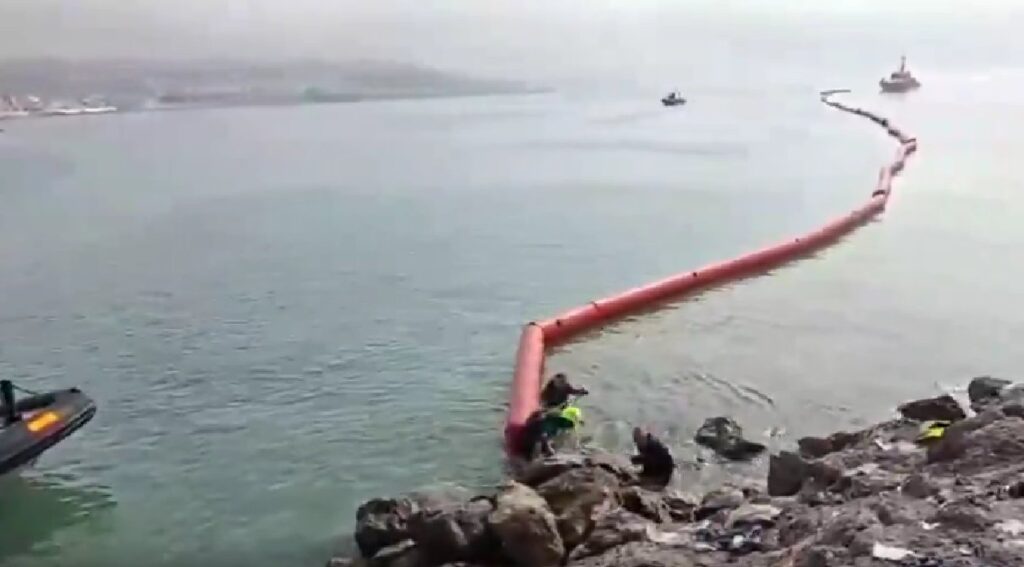
Image: from OSGINT X @posted_news
By Open Chronicle News Desk with Agencies
Spain has installed a 500-metre floating barrier off the coast of its North African enclave of Ceuta following one of the largest and deadliest migration surges ever recorded at the European Union’s external border.
The new maritime barrier was deployed after tens of thousands of migrants crossed into Ceuta from neighbouring Morocco in a matter of days, overwhelming local authorities and triggering a major security and humanitarian response. Spanish officials say more than 48,000 people have already returned to Morocco, but the crisis has prompted Madrid to reinforce its border infrastructure and maintain an elevated military and police presence.
Spain has now installed a floating barrier after 50,000 migrants from Africa invaded their country.
The floating barrier is over 1,600 feet long and is situated off the coast of Ceuta.
Wait, I'm confused. I thought they loved mass unchecked migration into their country? pic.twitter.com/vowuow610u
— Collin Rugg (@CollinRugg) August 1, 2026
Floating barrier aimed at preventing sea crossings
The newly installed barrier stretches approximately 500 metres along the coastline near the Tarajal border area, where many migrants attempted to reach Spanish territory by swimming around the existing land border fences.
According to Spanish authorities, the system consists of a partially submerged pneumatic float anchored by buoys. It is designed to discourage sea crossings while leaving controlled channels open for patrol boats operated by the Civil Guard and other security services.
Officials said the barrier forms part of broader emergency measures introduced after the unprecedented migration influx exposed vulnerabilities along Ceuta’s maritime frontier.
Deadly border crisis
The migration emergency has become one of the most serious ever experienced by the Spanish enclave.
Authorities say approximately 50,000 people entered Ceuta during the mass crossing, with many arriving by swimming around breakwaters separating Morocco from Spanish territory. The crisis resulted in at least 67 deaths, making it one of the deadliest migration incidents on Europe’s southern frontier in recent years.
Most migrants have since either been returned under bilateral agreements between Spain and Morocco or voluntarily crossed back after discovering limited resources and uncertain legal prospects inside the enclave.
Europe reacts
The events in Ceuta have reignited debate across Europe over migration policy and the protection of the European Union’s external borders.
Following the crisis, 22 EU member states called for stronger coordination on border protection, while Ireland, which currently holds the rotating presidency of the Council of the European Union, convened an emergency meeting of interior ministers to discuss the situation.
Spanish Prime Minister Pedro Sánchez criticised moves by some European governments to impose unilateral border restrictions, arguing that migration challenges require coordinated European responses rather than individual national measures.
Smugglers blamed
Spain’s Interior Ministry has attributed the mass crossing largely to human trafficking networks that allegedly spread misleading information among vulnerable migrants, including false claims that entry into Ceuta would guarantee legal residence in Spain or the wider European Union.
Many of those who attempted the crossing were young Moroccans seeking better economic opportunities, with reports indicating that social media played a significant role in encouraging the movement.
Security remains heightened
Although authorities say order has largely been restored, Spanish police, Civil Guard units and military personnel continue to patrol Ceuta’s coastline and border areas to prevent further mass crossings.
The installation of the floating barrier signals Madrid’s determination to strengthen maritime border security while working closely with Moroccan authorities to manage migration flows across one of Europe’s most sensitive frontiers.