
The Russia–Ukraine War
Comprehensive analysis of the war in Ukraine, covering battlefield developments, military capabilities, international diplomacy, defence technology and the evolving balance of power in Eastern Europe.
Understanding the Conflict
Follow the military, political and strategic dimensions of a war that has transformed European security and the international order.
A War Reshaping Europe’s Security Architecture
The conflict extends far beyond the immediate battlefield. It has accelerated military rearmament, altered energy and trade patterns, expanded NATO, transformed drone warfare and revived fundamental questions about deterrence, sovereignty and the use of force.
Explore the ConflictLatest Updates
News, battlefield reporting, diplomatic developments and strategic assessments related to the Russia–Ukraine War.

The Battlefield
The war encompasses multiple land, air and maritime theatres, each shaped by geography, logistics, fortifications and technological change.
Donbas
A central theatre characterised by fortified positions, artillery, drones and sustained pressure along a broad front.
Kharkiv Region
A strategically important border region where defensive depth, logistics and cross-border operations shape the military picture.
Zaporizhzhia
Open terrain, minefields, fortified lines and transport corridors define operations across the southern battlefield.
Kherson
River crossings, artillery exchanges, drone operations and control of transport routes remain central to the theatre.
Crimea
Crimea remains strategically important for logistics, airbases, naval infrastructure and operations across the Black Sea.
Black Sea
Naval drones, missiles, ports, shipping corridors and coastal defence have transformed the traditional maritime balance.
Military Balance
The military balance combines manpower, production, logistics, intelligence, external support, technology and the capacity to sustain operations.
Ukraine
Russia
Air and Maritime Campaigns
Missiles, unmanned systems, air defence and naval innovation have expanded the conflict far beyond the immediate front line.
The War Above Ukraine
Aircraft, cruise missiles, ballistic missiles, glide bombs, one-way attack drones and layered air defence systems shape the conflict’s strategic depth.
The Black Sea Theatre
Sea drones, coastal missiles, intelligence and precision strikes have challenged traditional naval power and reshaped maritime security.
NATO and the Global Response
The war has produced major changes in European defence, alliance planning, sanctions, arms production and strategic competition.
Military Assistance
Weapons, ammunition, air defence, vehicles and other forms of assistance form a central part of Ukraine’s war effort.
Intelligence Support
Surveillance, satellite imagery, warning systems and intelligence cooperation influence planning and battlefield awareness.
Training and Logistics
Training programmes, maintenance networks and multinational logistics sustain the delivery and use of complex weapons systems.
Defence Industry
Governments and manufacturers are expanding ammunition, missile, drone and air-defence production.
Sanctions and Finance
Financial restrictions, export controls and energy measures form a parallel economic front in the conflict.
European Security
The war has accelerated defence spending, force posture changes and long-term reassessments of deterrence in Europe.
Weapons and Technology
The conflict has become a major laboratory for drones, electronic warfare, precision weapons, battlefield software and industrial adaptation.
FPV Drones
Low-cost first-person-view drones have become central to reconnaissance and precision attacks against vehicles, positions and personnel.
Electronic Warfare
Jamming, signal interception and navigation disruption influence communications, drone operations and precision guidance.
Long-range Missiles
Long-range strike systems extend the conflict into logistics, command centres, airbases and infrastructure far behind the front.
Satellite Intelligence
Commercial and military satellites contribute imagery, communications, targeting information and strategic warning.
Counter-UAS
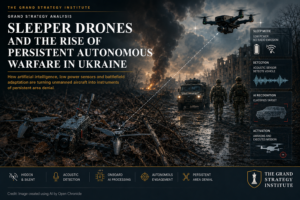
Air defence, jammers, interceptor drones and mobile systems are evolving in response to the scale of unmanned warfare.
Digital Battlefield
Software platforms link sensors, units, drones and artillery, compressing the time between detection and engagement.
Conflict Timeline
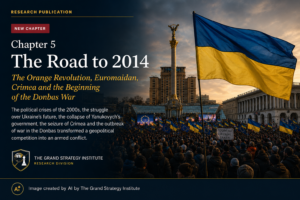
The full-scale invasion launched in 2022 emerged from a longer conflict whose origins include the annexation of Crimea and the war in Donbas.
Crimea and the War in Donbas
Russia annexes Crimea as fighting begins in eastern Ukraine, creating the foundations of the wider conflict.
Minsk Agreements
Diplomatic agreements seek to reduce the fighting, but the conflict remains unresolved and implementation remains incomplete.
Military Build-up
Large Russian troop deployments near Ukraine increase concern over the possibility of a major military operation.
Full-scale Invasion
Russia launches a multi-axis invasion. Ukraine resists the initial offensive and the conflict develops into a prolonged interstate war.
Fortified Front Lines
Large-scale offensive operations confront dense minefields, layered defences, artillery and extensive drone surveillance.
Prolonged War of Attrition
Manpower, industrial production, air defence, drones, logistics and external support become increasingly decisive.
Key Actors
The conflict involves two direct belligerents and a wider international network of states, alliances, industries and political institutions.
Ukraine
Defending its territory while relying on mobilisation, domestic production and extensive international support.
Russia
Conducting large-scale military operations supported by substantial manpower, missiles and defence production.
NATO
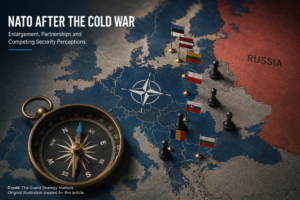
Reinforcing collective defence while member states provide varying forms of military and financial assistance.
European Union
Providing financial, political and material support while implementing sanctions and defence initiatives.
United States
A central provider of military assistance, intelligence, finance and diplomatic coordination.
United Kingdom
Supporting Ukraine through training, weapons, intelligence cooperation and diplomatic initiatives.
Poland
A major logistical hub and an important advocate for stronger European and NATO support for Ukraine.
Belarus
Providing territory and strategic depth while remaining closely integrated with Russia’s regional security posture.
Strategic Analysis
Long-form analysis of military strategy, diplomacy, deterrence, defence economics and the wider consequences of the conflict.
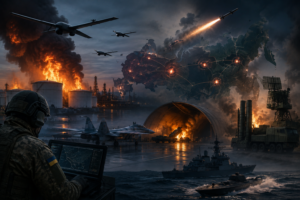
Russia–Ukraine War Archive
Browse Open Chronicle reporting, analysis, historical context and specialist coverage related to the conflict.
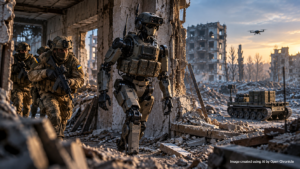
Follow the World’s Active Conflicts
Explore strategic hubs covering wars, regional crises, military developments and geopolitical flashpoints across the international system.
Explore Conflict Monitor →