
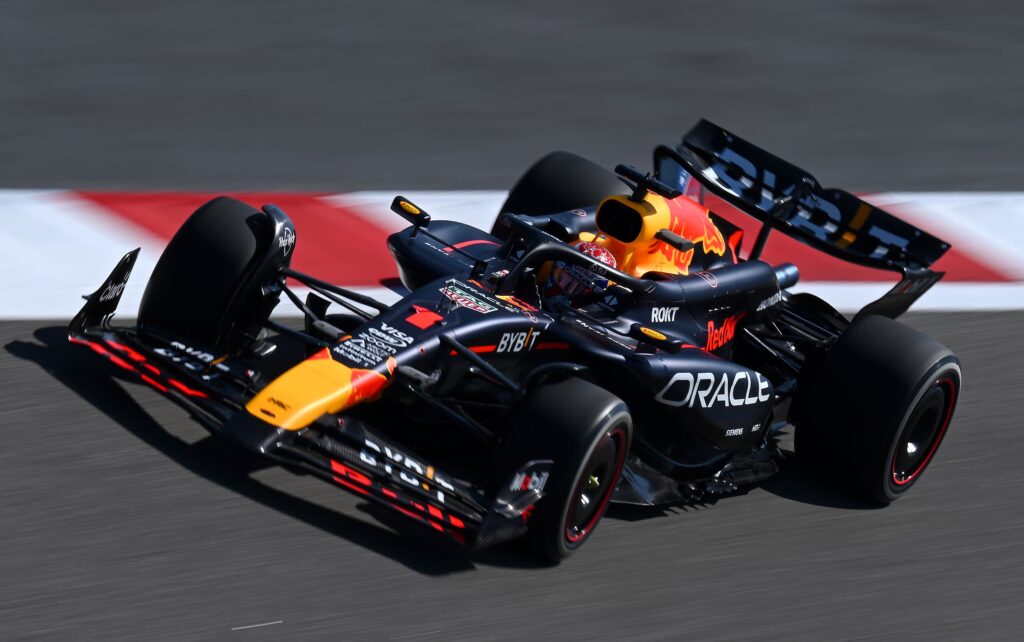
Image: from RBR Daily X@RBR_Daily
The 2025 Formula One technical and sporting regulations marked a significant departure from long-standing resource-restriction policies regarding transmission systems. For the first time in the modern era, the FIA removed the limit on the number of gearboxes a team may use throughout a championship season. This decision was based on the high reliability standards achieved by current designs and the transition toward the 2026 power unit regulations.
Historical Context
Since 2008, Formula One has progressively tightened restrictions on gearbox usage to reduce costs and prevent “throwaway” components. Before 2022, gearboxes were required to last six consecutive events. Under the 2022–2024 regulations, teams were restricted to a fixed “pool” of four gearboxes for the entire season (later adjusted for longer calendars). Exceeding this allocation resulted in grid penalties, typically five or ten places.
2025 Regulatory Change
Following a proposal by the Formula One Commission and ratification by the World Motor Sport Council, all limits on gearbox replacements were abolished for the 2025 season.
Rationale for Deregulation
The FIA identified two primary reasons for this policy shift:
-
Technological Maturity: The reliability of contemporary eight-speed seamless-shift gearboxes has reached a point where failure rates are statistically negligible. Most “changes” in previous years were proactive rather than reactive to terminal failures.
-
Obsolescence of the Restriction: With teams focusing research and development (R&D) budgets on the radical 2026 engine and chassis changes, the cost-saving benefit of limiting 2025-spec gearboxes was deemed minimal compared to the administrative burden of tracking “seals” and “pools.”
Technical Implications
While teams are now free to use an unlimited number of gearboxes, several constraints remain in place to prevent excessive spending:
-
Cost Cap Integration: While the number of units is unlimited, the cost of manufacturing those units still falls under the FIA Financial Regulations (Cost Cap). Teams must balance the benefit of a fresh gearbox against their total seasonal budget.
-
Homologation: The internal ratios and casing designs remain subject to homologation rules, meaning teams cannot introduce new “performance-enhancing” designs with each change; they must use the design registered at the start of the season.
Comparison of Gearbox Restrictions
| Era | Regulation Type | Penalty for Change |
| 2014–2021 | 6-consecutive-race rule | 5-place grid penalty |
| 2022–2024 | Seasonal pool (e.g., 4 units) | 5-place grid penalty per extra unit |
| 2025 | Unlimited | None |
Back to 2025 Formula One Season Portal
Explore this subject
Continue exploring related Open Chronicle Encyclopedia entries through the categories associated with this article.

Staff Writers at Open Chronicle produce trusted journalism, strategic analysis and authoritative reference content across global affairs, geopolitics, defense, science, history, technology, business, culture and sport. Their work combines accurate reporting with historical perspective and analytical depth, helping readers understand not only what is happening, but why it matters. Beyond daily news coverage, Staff Writers contribute to the Open Chronicle Encyclopedia, investigative features, original research projects and long-form reports, building a comprehensive knowledge platform designed to inform, educate and preserve reliable information for a global audience.