
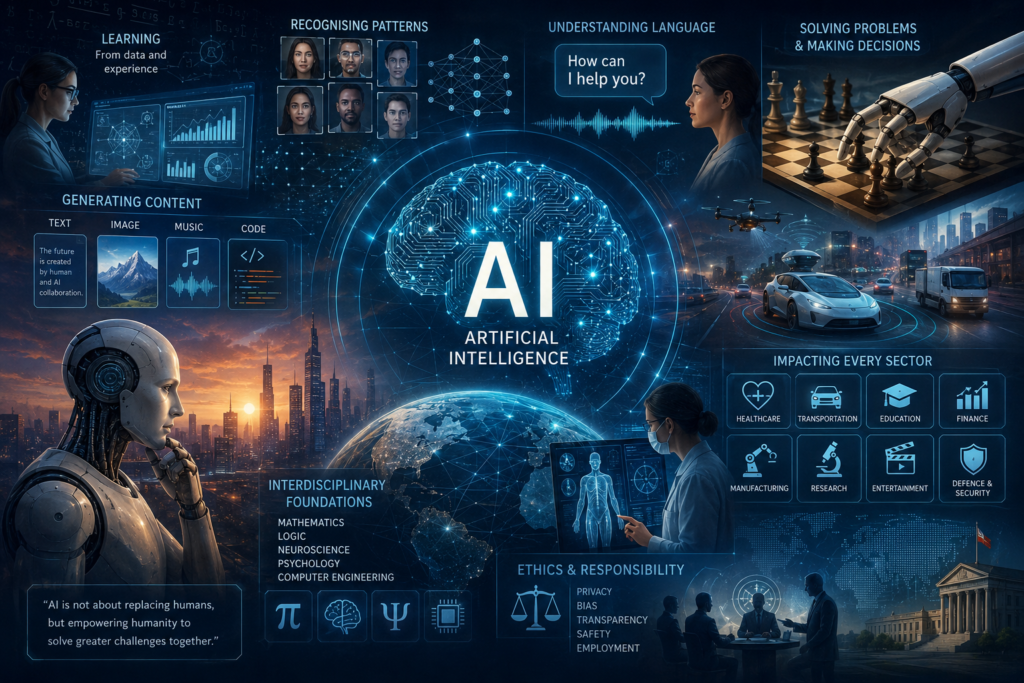
“Artificial intelligence is not merely teaching machines to think; it is redefining how humanity discovers, creates and understands the world.”
Open Chronicle Encyclopedia
Introduction
Artificial Intelligence (AI) is the branch of computer science dedicated to developing systems capable of performing tasks that traditionally require human intelligence. These tasks include learning from experience, recognising patterns, understanding natural language, solving problems, making decisions and, increasingly, generating original content such as text, images, music and computer code.
Although the concept of intelligent machines has existed in mythology and philosophy for centuries, artificial intelligence emerged as a scientific discipline during the twentieth century through the convergence of mathematics, logic, neuroscience, psychology, and computer engineering. Today, AI has become one of the defining technologies of the twenty-first century, influencing nearly every aspect of modern society, from healthcare and transportation to scientific research, education, finance, manufacturing, entertainment, and national security.
Unlike conventional software, which follows explicit instructions written by programmers, many modern AI systems can learn from data, identify relationships and improve their performance over time. This ability has transformed computers from simple calculating machines into adaptive systems capable of solving increasingly complex problems.
Artificial intelligence is not a single technology but rather an interdisciplinary field encompassing numerous branches, including machine learning, deep learning, robotics, computer vision, natural language processing, and autonomous systems. Together, these technologies have reshaped the digital landscape and continue to redefine how humans interact with information, machines, and one another.
Despite remarkable progress, artificial intelligence remains one of the most debated scientific fields. Questions surrounding ethics, transparency, employment, privacy, bias, safety and the possibility of machines achieving human-level intelligence have become central topics for researchers, governments and international organisations. As AI systems become more capable, understanding their origins, development, and impact has become increasingly important.
Profile
| Field | Computer Science |
| Primary disciplines | Machine Learning, Deep Learning, Robotics, Computer Vision, Natural Language Processing |
| Scientific foundations | Mathematics, Logic, Statistics, Cognitive Science |
| First recognised as a scientific discipline | 1956 (Dartmouth Summer Research Project on Artificial Intelligence) |
| Coined by | John McCarthy |
| Purpose | Creating machines capable of performing tasks associated with human intelligence |
| Major applications | Healthcare, Science, Industry, Finance, Defence, Education, Transportation, Space Exploration |
| Current status | One of the fastest-growing scientific and technological fields worldwide |
At a Glance
Definition
Artificial intelligence refers to the development of computer systems capable of perceiving, learning, reasoning, planning and making decisions using computational methods that imitate or augment aspects of human intelligence.
Core Objective
To build machines that can solve increasingly complex problems with minimal human intervention while continuously improving through data and experience.
Key Technologies
- Machine Learning
- Deep Learning
- Neural Networks
- Natural Language Processing
- Computer Vision
- Robotics
- Reinforcement Learning
- Generative Artificial Intelligence
Modern Importance
Artificial intelligence now underpins search engines, medical diagnostics, autonomous vehicles, industrial automation, cybersecurity, scientific discovery, digital assistants and many of the world’s largest online platforms.
Historical Background
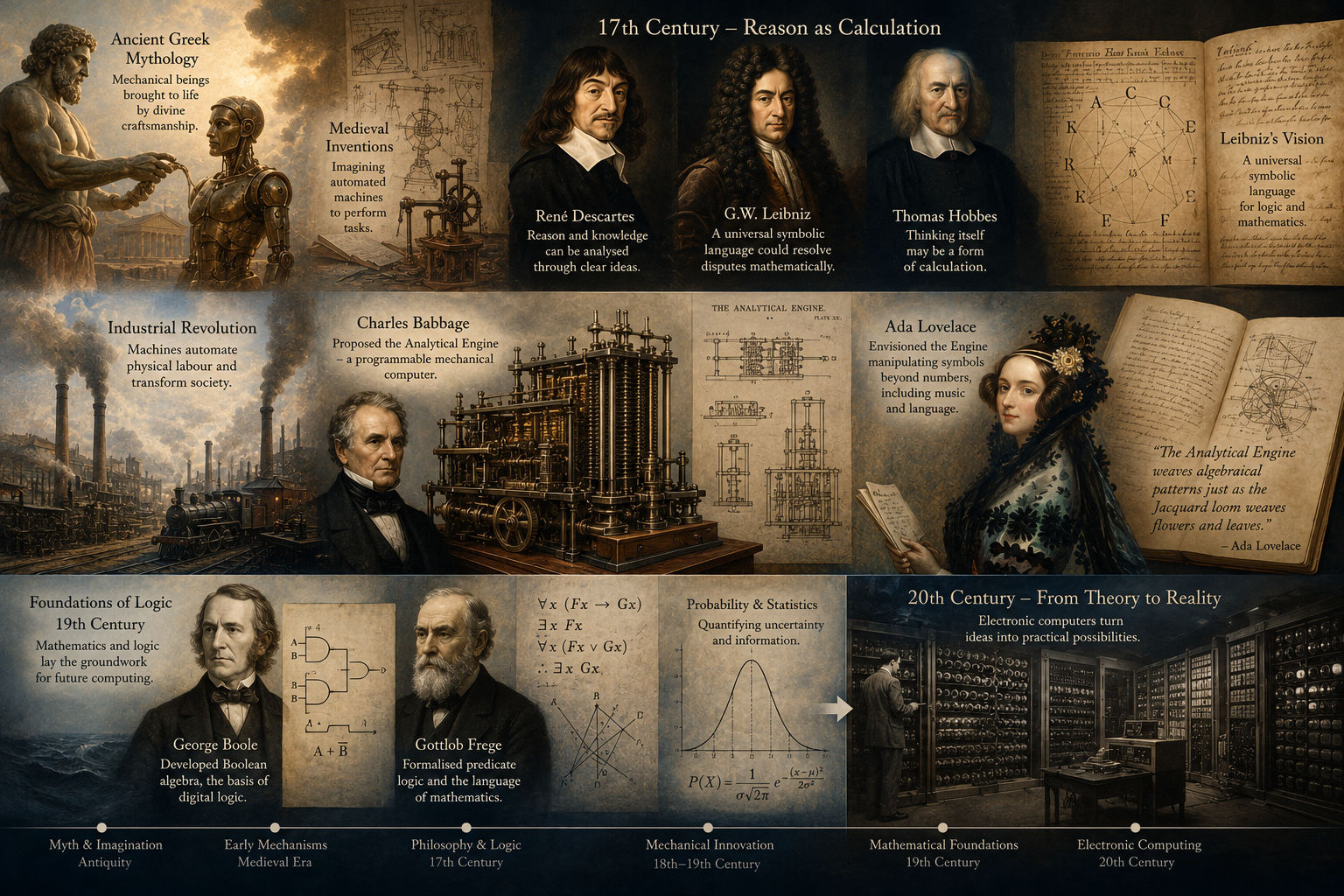
The pursuit of artificial intelligence did not begin with computers. Long before electronic machines existed, philosophers and scientists questioned whether human reasoning could be explained through logical rules.
Ancient Greek mythology described mechanical beings brought to life through divine craftsmanship, while medieval inventors imagined automated machines capable of performing simple tasks. During the seventeenth century, philosophers such as René Descartes, Gottfried Wilhelm Leibniz, and Thomas Hobbes argued that reasoning itself might be understood as a form of calculation.
Leibniz, in particular, envisioned a universal symbolic language through which logical disputes could be resolved mathematically. Although impossible to realise with the technology of his time, this vision anticipated concepts that would later become central to computer science.
The Industrial Revolution introduced increasingly sophisticated mechanical devices capable of automating physical labour. During the nineteenth century, Charles Babbage proposed the Analytical Engine, a programmable mechanical computer that many historians regard as the conceptual ancestor of modern digital computers.
Ada Lovelace, often recognised as the world’s first computer programmer, suggested that such a machine might one day manipulate symbols beyond numbers, including music and language. Her insight represented one of the earliest recognitions that computation could extend far beyond arithmetic.
The twentieth century witnessed dramatic advances in mathematics, logic, and engineering. The formalisation of symbolic logic by George Boole and Gottlob Frege, together with developments in probability theory and statistics, established many of the theoretical foundations upon which artificial intelligence would later be built.
The emergence of electronic computers during and after the Second World War transformed these theoretical ideas into practical possibilities.
What Is Artificial Intelligence?
Artificial intelligence is best understood as the scientific and engineering discipline concerned with creating systems capable of performing cognitive tasks that normally require human intelligence.
These capabilities include:
- Learning from experience
- Recognising patterns
- Understanding spoken and written language
- Solving mathematical and logical problems
- Making predictions
- Planning sequences of actions
- Adapting to new situations
- Generating original content
However, intelligence itself remains difficult to define.
Human intelligence encompasses reasoning, creativity, emotional understanding, common sense, intuition and social interaction. Modern AI systems excel in specific domains but generally lack the broad adaptability and contextual understanding associated with human cognition.
Most current AI systems belong to the category known as Narrow Artificial Intelligence (ANI). These systems are designed to perform particular tasks exceptionally well, such as recognising faces, translating languages, or recommending products.
In contrast, Artificial General Intelligence (AGI) refers to a hypothetical machine capable of understanding and performing any intellectual task that a human can accomplish. Although widely discussed in scientific and public discourse, AGI has not yet been achieved.
Researchers continue to debate whether intelligence should be measured solely through observable behaviour or whether consciousness, self-awareness and subjective experience are essential characteristics of genuine intelligence.
These questions place artificial intelligence at the intersection of computer science, philosophy, neuroscience, psychology and cognitive science.
The Origins of Artificial Intelligence
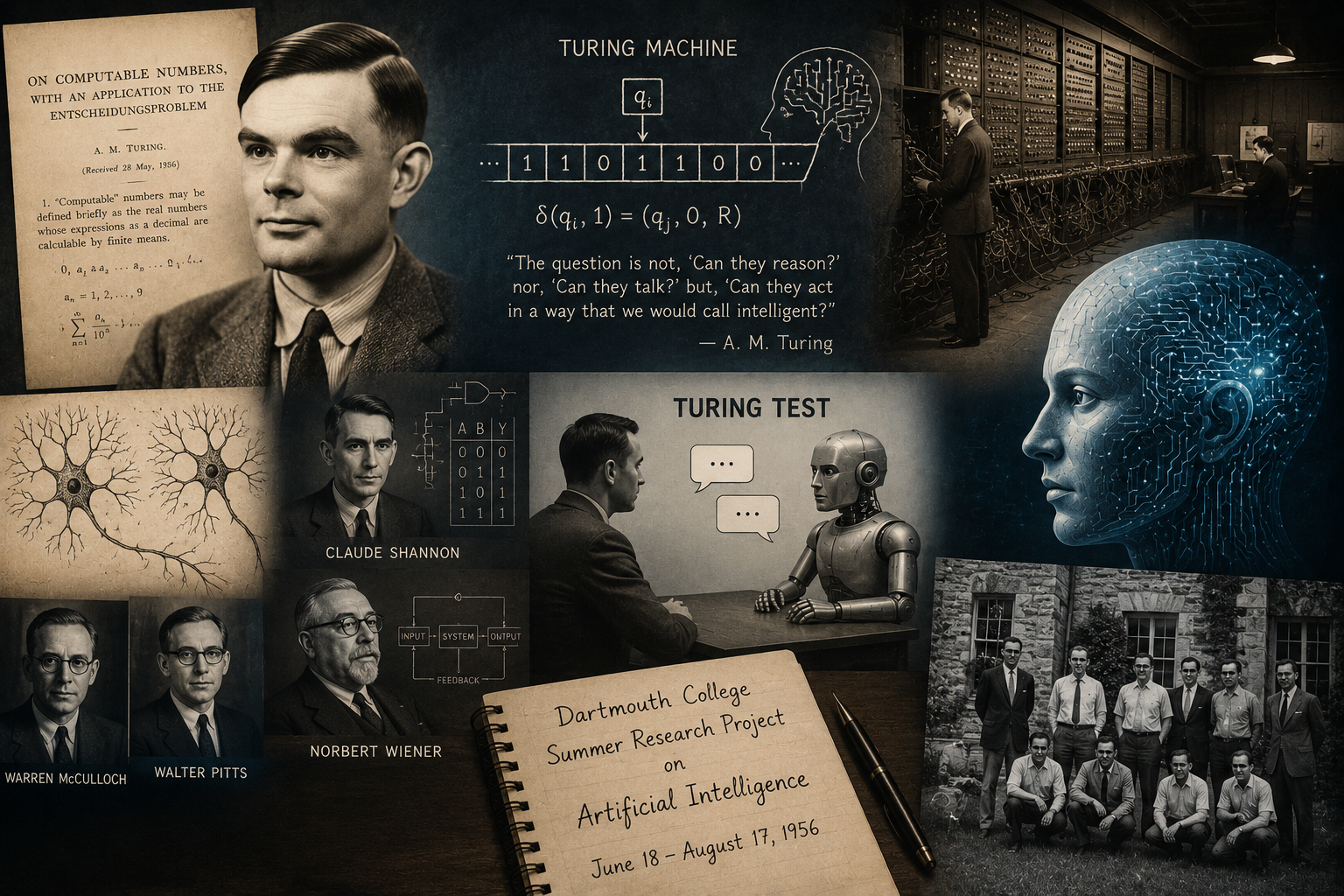
The origins of artificial intelligence cannot be attributed to a single invention or individual. Instead, the discipline emerged through the combined contributions of mathematicians, logicians, engineers, and philosophers who gradually demonstrated that reasoning could be represented mathematically.
Among the most influential pioneers was Alan Turing, whose 1936 paper On Computable Numbers, with an Application to the Entscheidungsproblem introduced the concept now known as the Turing Machine. This abstract mathematical model demonstrated that any computable problem could, in principle, be solved through a sequence of logical operations.
Although entirely theoretical, Turing’s work fundamentally changed how scientists understood computation. It established that reasoning processes themselves could be expressed algorithmically, providing the conceptual basis for programmable computers.
Following the Second World War, rapid advances in electronics made it possible to build machines capable of executing increasingly complex calculations. Researchers began asking whether these machines might eventually perform tasks associated with intelligence rather than simple arithmetic.
In 1950, Turing published Computing Machinery and Intelligence, introducing what later became known as the Turing Test. Instead of attempting to define intelligence philosophically, Turing proposed a practical experiment: if a machine could converse with a human without revealing its non-human identity, it could reasonably be considered intelligent for the test.
This proposal shifted the debate from abstract philosophy toward measurable behaviour and remains one of the most influential ideas in artificial intelligence research.
At approximately the same time, researchers such as Warren McCulloch and Walter Pitts demonstrated that simplified mathematical models of biological neurons could perform logical operations. Claude Shannon explored machine reasoning through information theory, while Norbert Wiener established the field of cybernetics, examining feedback systems in both machines and living organisms.
These diverse lines of research converged during the mid-twentieth century, creating the intellectual environment from which artificial intelligence would formally emerge.
By the mid-1950s, optimism surrounding computing had grown considerably. Scientists increasingly believed that machines might one day solve mathematical problems, understand language, prove theorems, and even simulate aspects of human reasoning. This optimism culminated in the summer of 1956, when a small group of researchers gathered at Dartmouth College for a workshop that officially established artificial intelligence as a distinct scientific discipline.
The Dartmouth Conference would become one of the defining milestones in the history of modern science and marks the beginning of artificial intelligence as an organised field of academic research.
The Dartmouth Conference (1956)
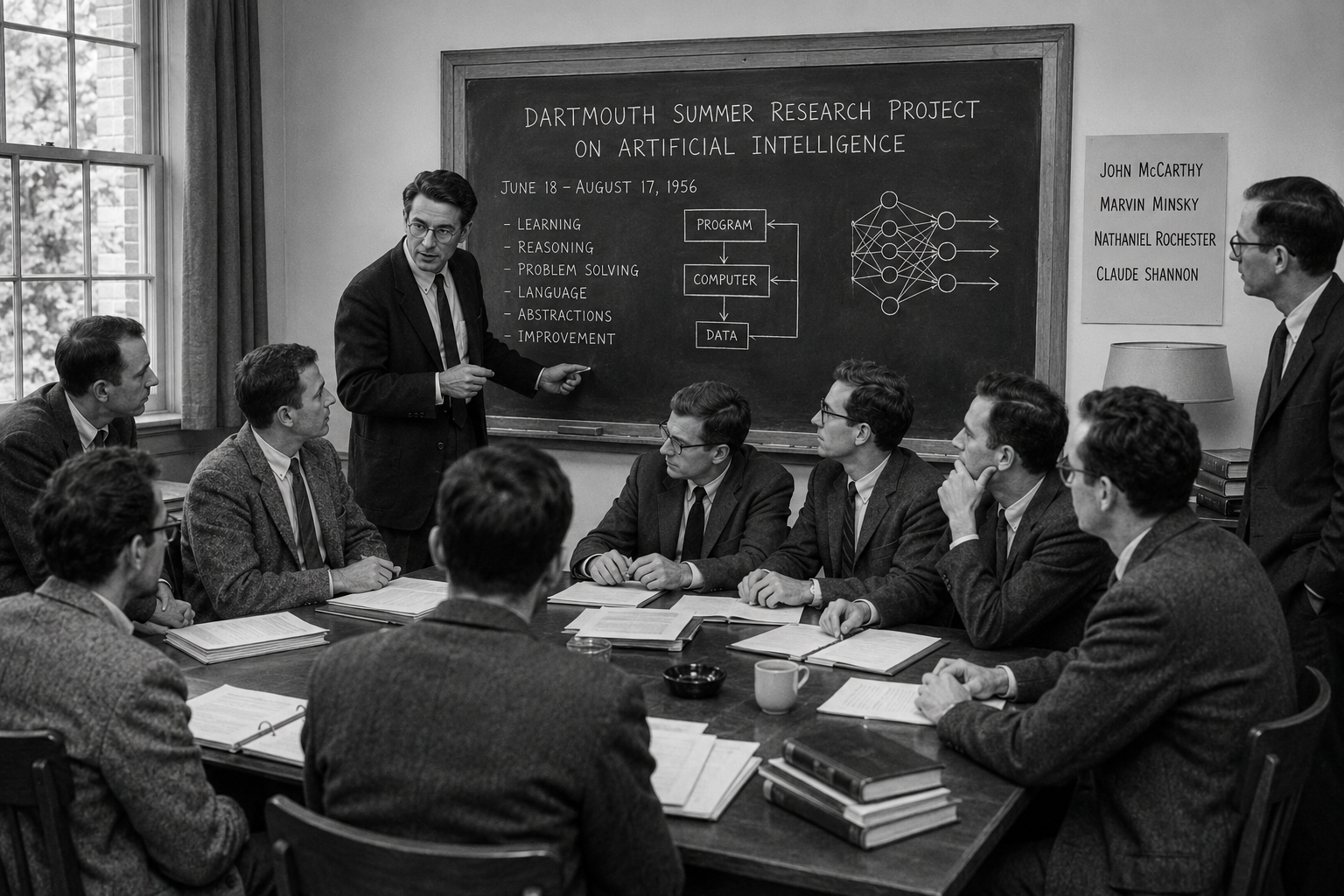
The formal birth of artificial intelligence as a scientific discipline is generally traced to the Dartmouth Summer Research Project on Artificial Intelligence, held between June and August 1956 at Dartmouth College in Hanover, New Hampshire, United States.
Organised primarily by John McCarthy, with support from Marvin Minsky, Nathaniel Rochester and Claude Shannon, the workshop brought together a small group of mathematicians, computer scientists and cognitive researchers who shared a bold vision: that aspects of human intelligence could be described precisely enough for machines to simulate them.
It was for this proposal that John McCarthy coined the term Artificial Intelligence, a name that has remained in use ever since.
The workshop proposal stated that every aspect of learning or intelligence could, in principle, be described so accurately that a machine could be constructed to simulate it. Although this objective proved far more difficult than originally anticipated, the conference established an entirely new scientific field whose influence would eventually extend across almost every sector of society.
Unlike earlier work that focused primarily on numerical calculation, the Dartmouth participants envisioned computers capable of reasoning, solving problems, understanding language, forming abstractions, and improving through experience.
While the conference itself produced relatively few immediate technological breakthroughs, its greatest achievement was intellectual. It united previously separate fields of research under a common scientific objective and established artificial intelligence as an independent area of academic inquiry.
Today, the Dartmouth Conference is widely regarded as one of the most significant milestones in the history of computer science.
The Early Optimism

The decades following the Dartmouth Conference were characterised by extraordinary optimism.
Researchers believed that machines capable of reasoning like humans might be developed within only a few decades. Advances in computer hardware, combined with rapid progress in symbolic logic and programming languages, reinforced the belief that intelligence itself could be recreated through software.
Many scientists predicted that computers would soon solve complex mathematical proofs, translate languages perfectly, understand spoken conversation, and even demonstrate common sense.
Although these expectations proved overly ambitious, they inspired intense investment by universities, governments, and military research organisations.
During the Cold War, artificial intelligence attracted particular interest from defence agencies, which recognised its potential applications in intelligence analysis, surveillance, logistics and strategic planning.
Government funding enabled laboratories in the United States and Europe to recruit leading mathematicians, engineers, and psychologists, accelerating research into machine reasoning.
The optimism of this period helped establish many of the institutions and research centres that continue to lead artificial intelligence today.
The First Artificial Intelligence Programs
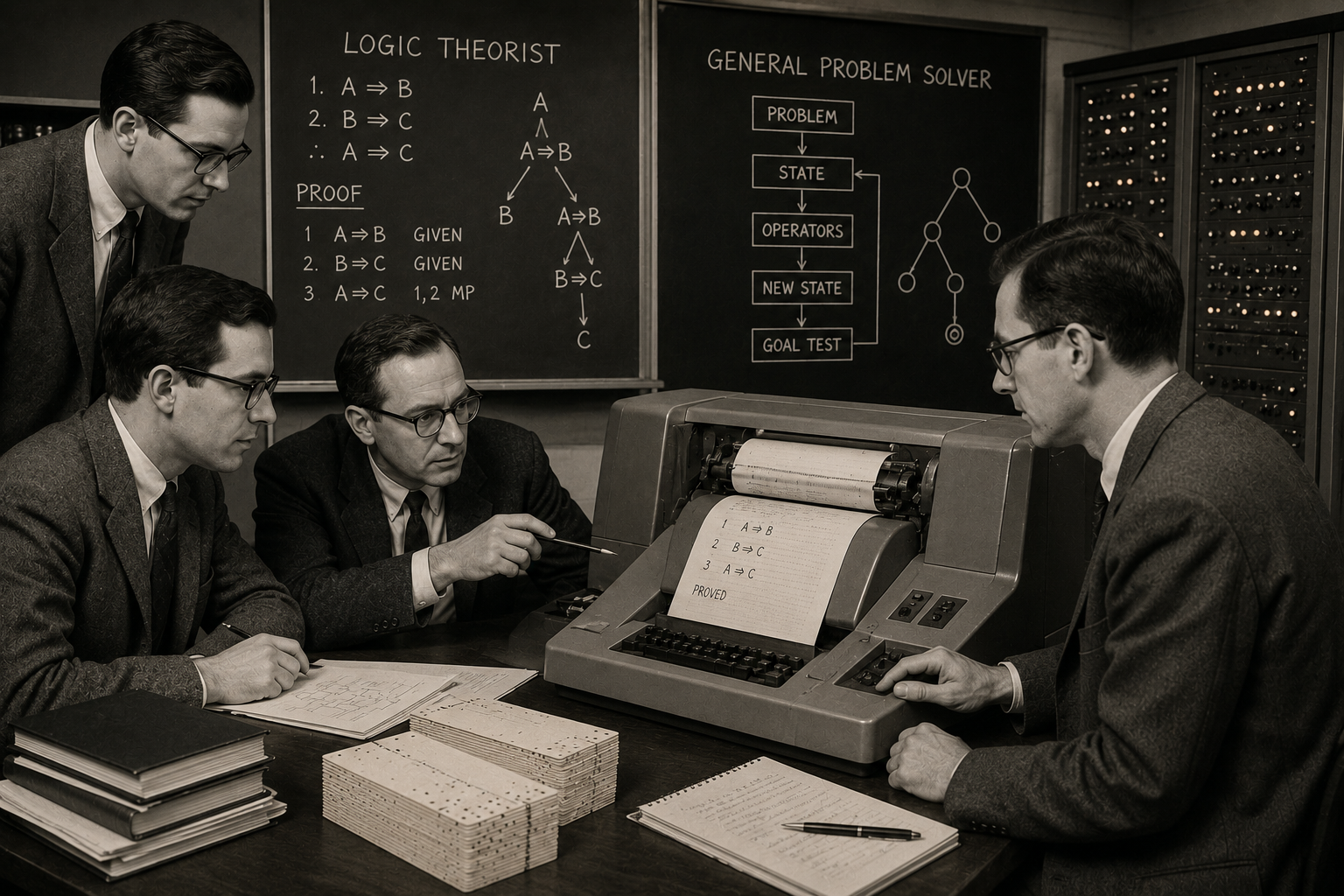
One of the earliest demonstrations of machine reasoning came through programs designed to solve specific logical or mathematical problems.
Among the most influential was the Logic Theorist, developed in 1956 by Allen Newell, Herbert A. Simon and Cliff Shaw.
Rather than performing simple arithmetic, Logic Theorist proved mathematical theorems using symbolic reasoning. Remarkably, the program successfully reproduced several proofs contained in Principia Mathematica, the landmark work by Bertrand Russell and Alfred North Whitehead.
This achievement demonstrated that computers could manipulate abstract symbols rather than merely calculate numbers.
A few years later, Newell and Simon introduced the General Problem Solver (GPS).
Instead of focusing on one specific task, GPS attempted to solve a wide variety of problems using general reasoning strategies. Although its practical capabilities remained limited, it introduced concepts that continue to influence artificial intelligence research today.
These early systems established an important principle: intelligence could be viewed as information processing.
This perspective fundamentally changed computer science by shifting attention away from hardware alone toward algorithms capable of representing knowledge and reasoning.
Symbolic Artificial Intelligence

The dominant approach during the first decades of AI research became known as Symbolic Artificial Intelligence, sometimes called Good Old-Fashioned Artificial Intelligence (GOFAI).
Symbolic AI assumed that intelligence could be represented through explicit rules and logical relationships.
Knowledge was encoded using symbols that represented objects, concepts, and relationships.
For example, an expert system diagnosing diseases might contain thousands of logical rules such as:
- If symptom A and symptom B are present, then disease X becomes likely.
- If disease X is confirmed, recommend treatment Y.
This approach proved highly effective in structured environments where knowledge could be clearly defined.
Researchers developed systems capable of solving algebra problems, proving logical theorems, planning actions, and playing board games.
However, symbolic AI struggled when confronted with uncertainty, ambiguity, or incomplete information.
Humans routinely recognise faces, understand humour, or interpret context without consciously applying formal logical rules.
Replicating these intuitive abilities proved far more challenging than anticipated.
Perceptrons and Early Neural Networks
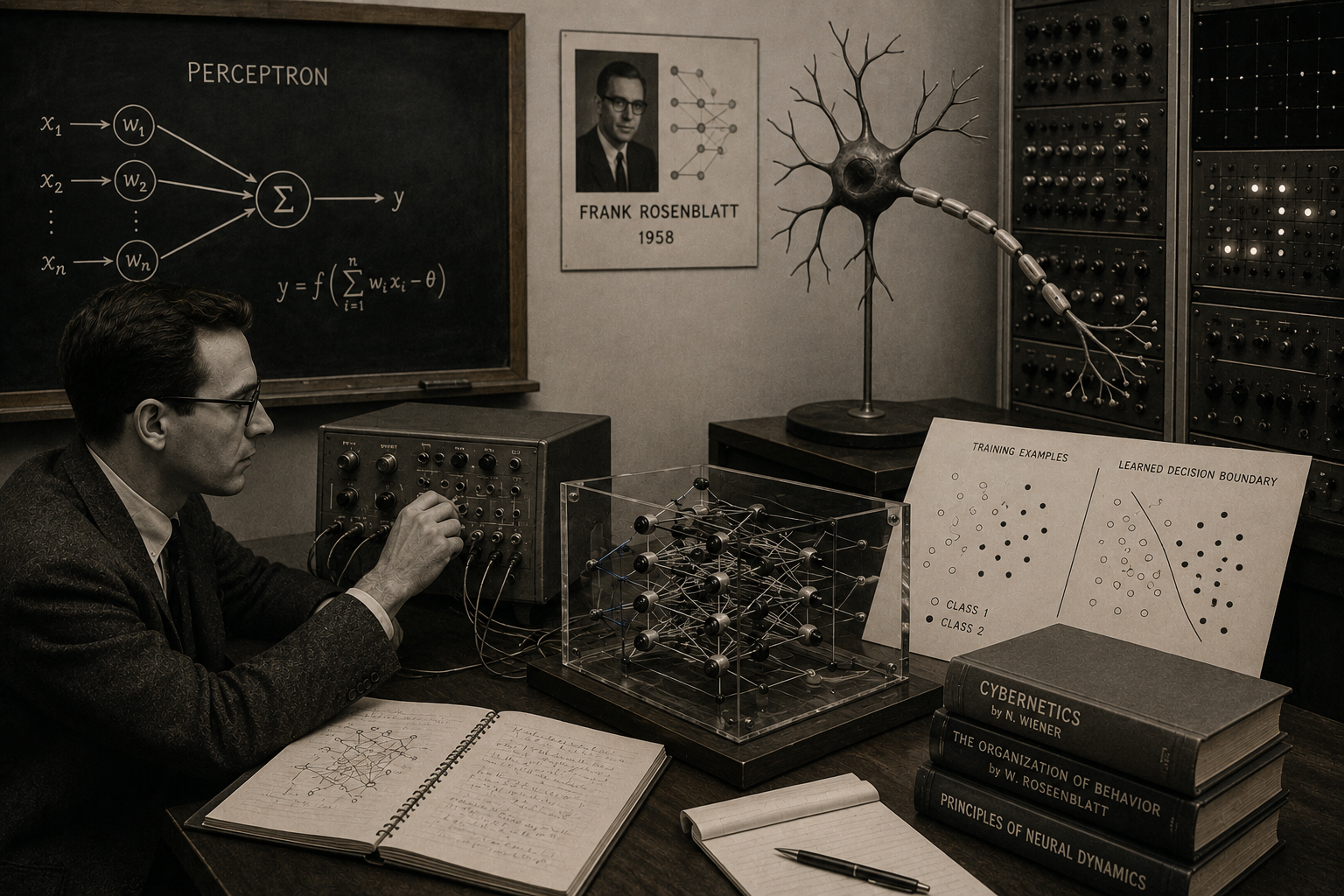
Alongside symbolic AI, another line of research sought inspiration directly from the human brain.
In 1958, psychologist Frank Rosenblatt introduced the Perceptron, one of the earliest artificial neural network models.
The perceptron attempted to simulate simplified biological neurons capable of learning from examples.
Rather than following explicitly programmed rules, the system adjusted numerical weights based on experience.
This represented a fundamentally different philosophy from symbolic AI.
Instead of programming intelligence directly, researchers attempted to allow machines to learn.
Early demonstrations generated considerable excitement, and some scientists predicted that neural networks would eventually recognise images, understand language, and even exhibit intelligence comparable to humans.
However, the technology of the time severely limited these ambitions.
Computers lacked sufficient processing power, memory, and data to train complex neural networks effectively.
The AI Winters

By the early 1970s, enthusiasm surrounding artificial intelligence began to decline.
Many early predictions had proven unrealistic.
Systems that performed well under laboratory conditions struggled when confronted with the complexity of the real world.
Natural language understanding remained primitive.
Robots operated only within carefully controlled environments.
Machine translation produced unreliable results.
Governments and funding agencies increasingly questioned whether artificial intelligence research justified its substantial costs.
The first major reduction in financial support became known as the First AI Winter.
Research slowed considerably during the 1970s.
Although important theoretical advances continued, public expectations became far more cautious.
A second AI Winter occurred during the late 1980s and early 1990s.
This period followed the commercial decline of expert systems, which had initially shown considerable promise but proved expensive to maintain and difficult to adapt to changing circumstances.
Many companies abandoned ambitious AI projects, while investment shifted toward other areas of computer science.
Despite these setbacks, the AI Winters ultimately played a constructive role.
Researchers became more rigorous in evaluating claims, placing greater emphasis on measurable performance rather than optimistic speculation.
This scientific discipline laid important foundations for future breakthroughs.
Expert Systems
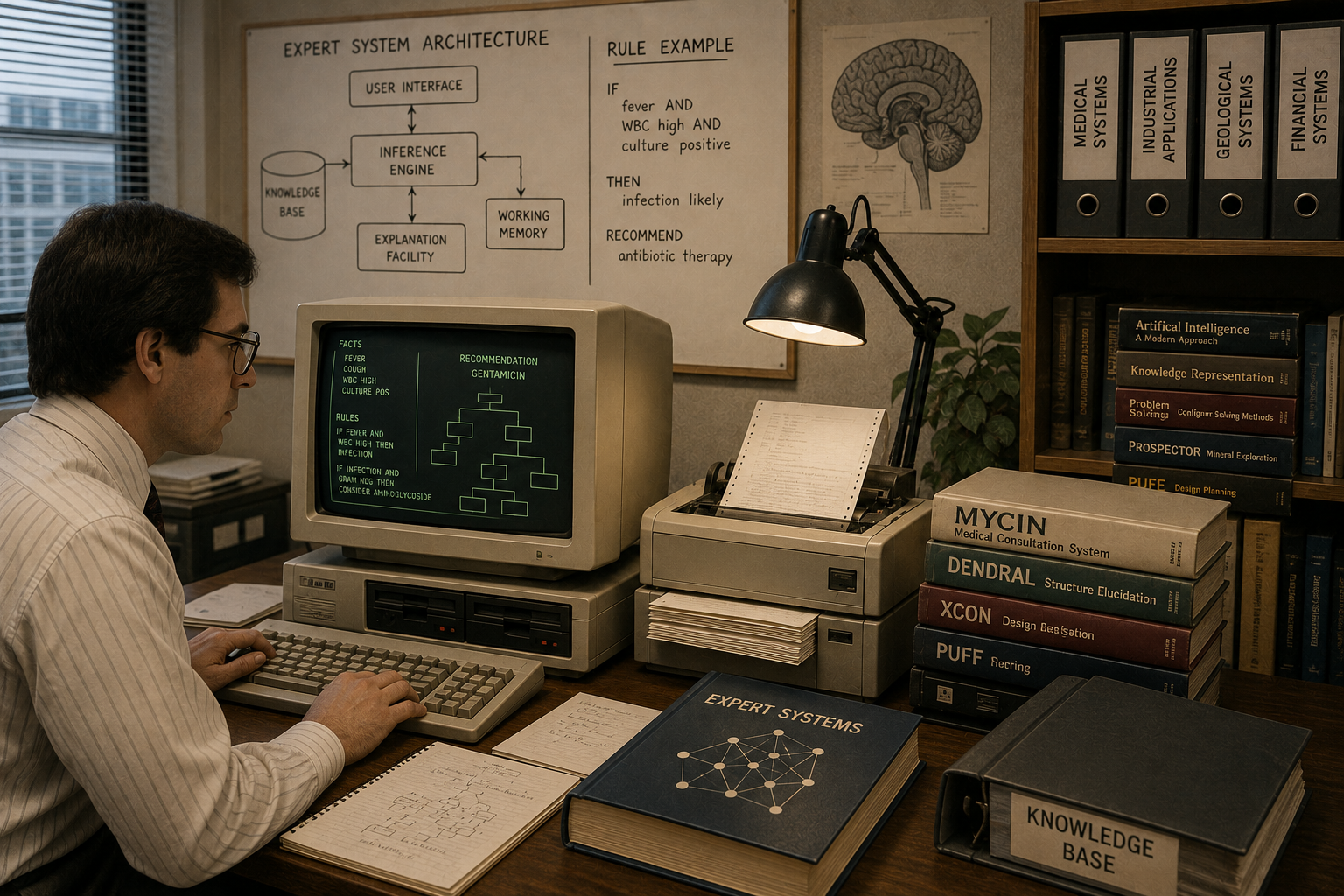
During the 1970s and 1980s, one branch of artificial intelligence achieved notable commercial success.
These programs became known as Expert Systems.
Unlike general reasoning programs, expert systems were designed to emulate the knowledge of human specialists within highly specific domains.
Knowledge engineers interviewed experts and translated their decision-making processes into thousands of logical rules stored within a knowledge base.
One of the most famous examples was MYCIN, developed at Stanford University.
MYCIN assisted physicians by recommending antibiotic treatments based on patient symptoms and laboratory results.
Although never widely deployed in hospitals, its diagnostic performance demonstrated that computers could support complex professional decision-making.
Other expert systems found applications in:
- Medical diagnosis
- Geological exploration
- Industrial manufacturing
- Financial planning
- Equipment maintenance
- Chemical analysis
Despite their successes, expert systems revealed significant limitations.
Updating thousands of manually written rules became increasingly difficult.
These systems also struggled to adapt when presented with unfamiliar situations beyond their predefined knowledge.
As a result, researchers began searching for methods that would allow computers to learn directly from data rather than relying entirely on manually encoded expertise.
The Rise of Machine Learning
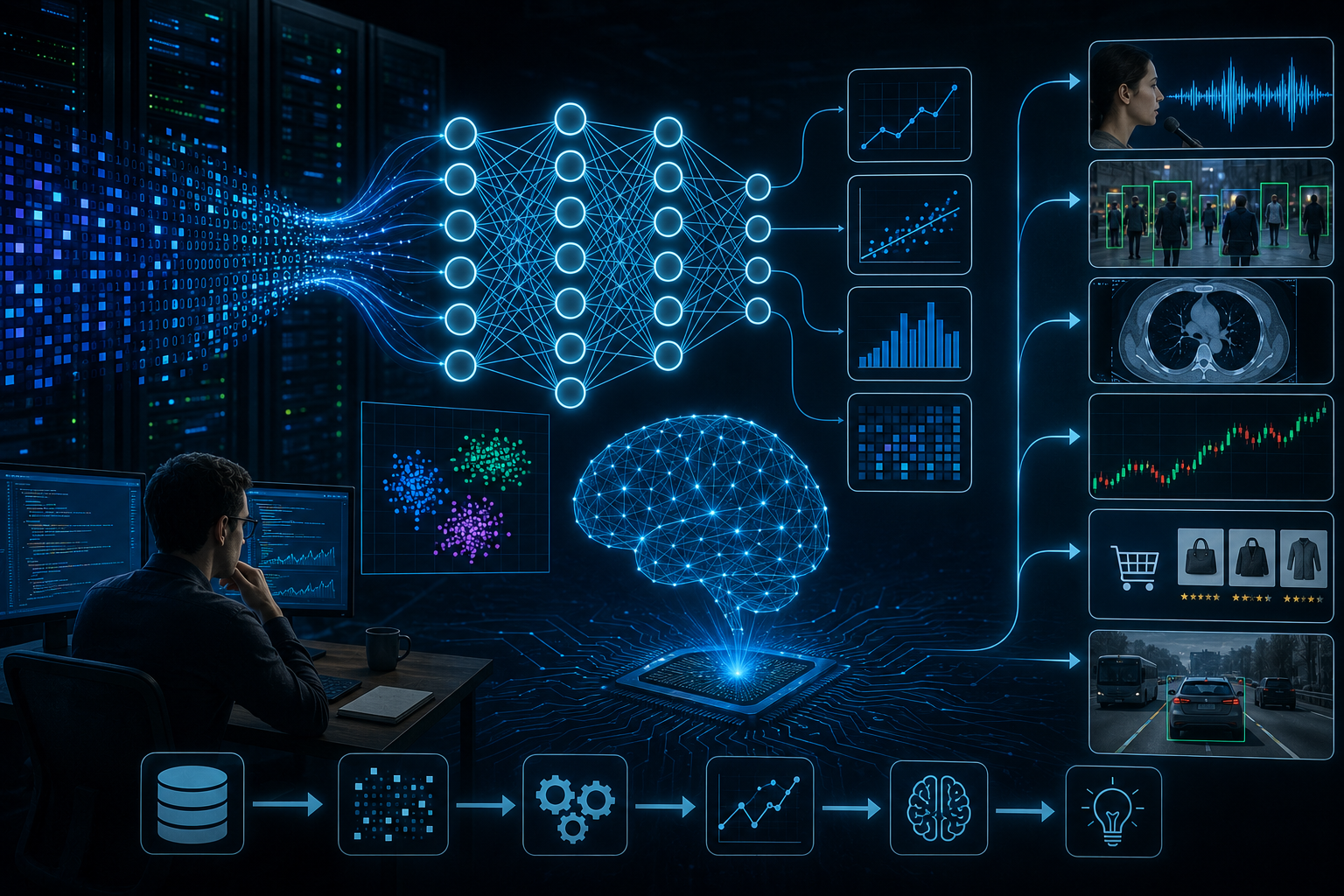
The limitations of symbolic reasoning encouraged a gradual shift toward statistical methods capable of learning automatically.
This transformation marked one of the most important turning points in the history of artificial intelligence.
Instead of programming every rule explicitly, researchers developed algorithms capable of identifying patterns within large datasets.
This new approach became known as Machine Learning.
Machine learning enables computers to improve their performance through experience rather than through direct programming.
Algorithms analyse examples, detect statistical relationships, and generate predictive models that become increasingly accurate as additional data become available.
This represented a profound philosophical shift.
Rather than asking programmers to describe intelligence step by step, machine learning allowed computers to discover many of those relationships independently.
Several approaches emerged, including:
Supervised Learning, where algorithms learn from labelled examples.
Unsupervised Learning, where systems identify hidden patterns without predefined answers.
Reinforcement Learning, where intelligent agents improve through trial and error while interacting with their environment.
Machine learning rapidly expanded into fields such as speech recognition, fraud detection, recommendation systems, medical diagnosis, financial forecasting, and scientific research.
Although symbolic reasoning remains valuable in specialised applications, machine learning has gradually become the dominant paradigm within artificial intelligence.
Combined with exponential growth in computing power, the availability of massive datasets, and advances in neural networks, machine learning would eventually give rise to the deep learning revolution that transformed artificial intelligence during the twenty-first century.
Deep Learning
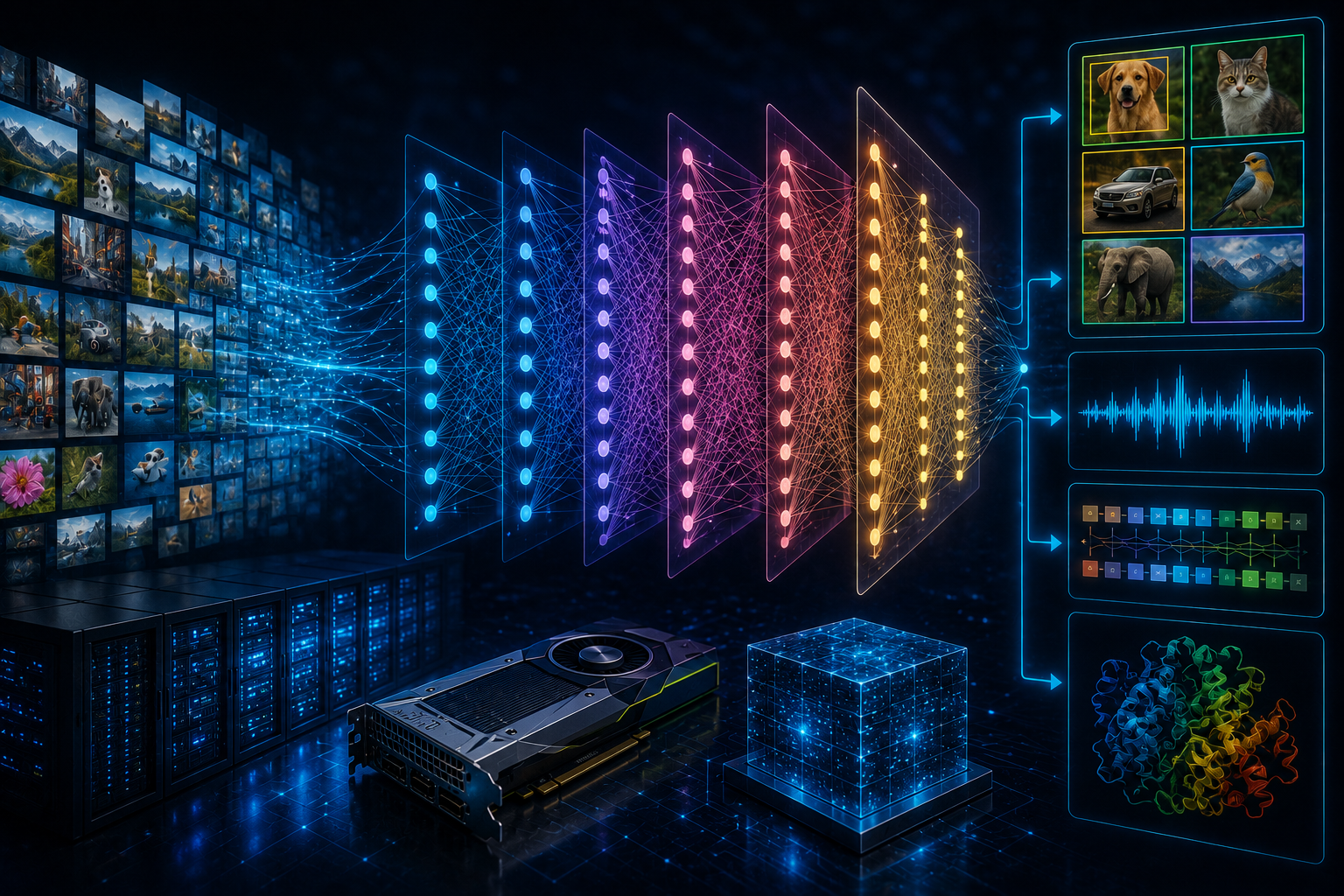
By the early twenty-first century, artificial intelligence entered a period of rapid transformation driven by advances in Deep Learning, a branch of machine learning based on artificial neural networks with multiple computational layers.
While neural networks had existed since the 1950s, they remained constrained for decades by limited computing power, insufficient data, and inefficient training methods. The emergence of powerful graphics processing units (GPUs), cloud computing, and the exponential growth of digital information allowed researchers to train neural networks on an unprecedented scale.
Deep learning differs from traditional machine learning by enabling systems to automatically learn increasingly complex representations of data.
Rather than relying on manually engineered features, deep neural networks identify patterns directly from raw information. In image recognition, for example, the earliest layers may detect simple edges and colours, while deeper layers progressively recognise shapes, objects and eventually complete scenes.
This hierarchical learning process allows AI systems to solve problems that were previously considered beyond the capabilities of computers.
The deep learning revolution accelerated dramatically after 2012, when the neural network AlexNet, developed by Geoffrey Hinton’s research group, achieved a breakthrough in the ImageNet Large Scale Visual Recognition Challenge.
Its performance significantly surpassed competing computer vision systems and demonstrated that deep neural networks could outperform traditional algorithms when trained using sufficiently large datasets and computational resources.
This achievement transformed artificial intelligence research worldwide.
Universities, technology companies, and governments rapidly increased investment in deep learning, leading to advances across numerous scientific and industrial fields.
Artificial Neural Networks
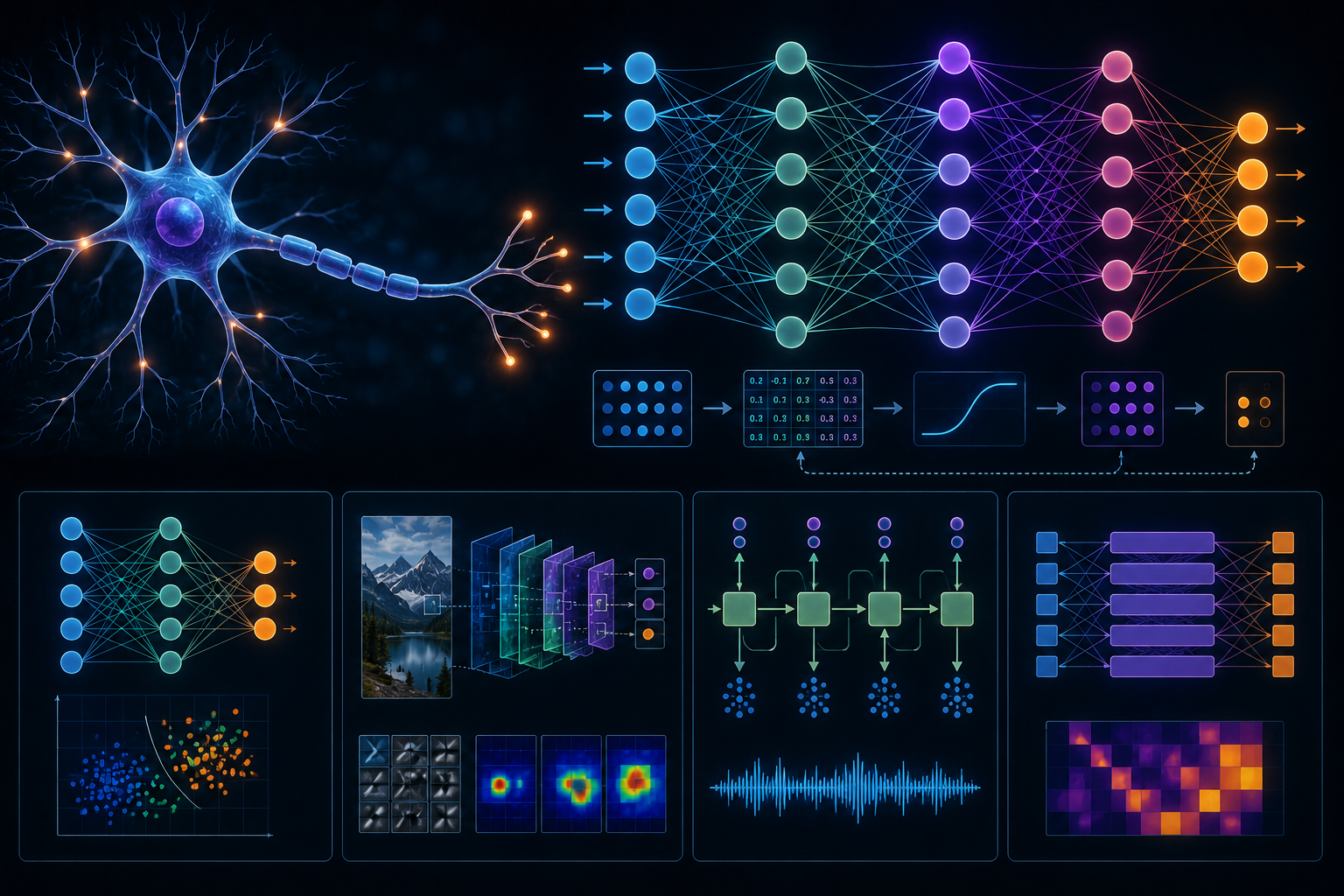
Artificial neural networks are computational models inspired, in a simplified manner, by the structure of biological nervous systems.
Although they do not replicate the complexity of the human brain, they employ interconnected processing units known as artificial neurons, which exchange numerical signals through weighted connections.
Each neuron receives information, processes it mathematically, and passes the result to other neurons.
During training, the network adjusts millions or even billions of numerical parameters to minimise prediction errors.
This process allows the network to improve its performance through repeated exposure to data.
Modern neural networks exist in many specialised forms.
Feedforward Neural Networks
The simplest architecture, where information flows in one direction from input to output.
Convolutional Neural Networks (CNNs)
Designed primarily for analysing images and video.
CNNs became fundamental to facial recognition, medical imaging, autonomous vehicles, and satellite observation.
Recurrent Neural Networks (RNNs)
Developed to process sequential information such as speech, handwriting, and language.
Although highly influential, many RNN applications have since been replaced by transformer-based architectures.
Transformer Networks
Introduced in 2017, transformers fundamentally changed natural language processing by enabling models to analyse relationships between words simultaneously rather than sequentially.
Today, they form the foundation of the most advanced language models.
The Data Revolution
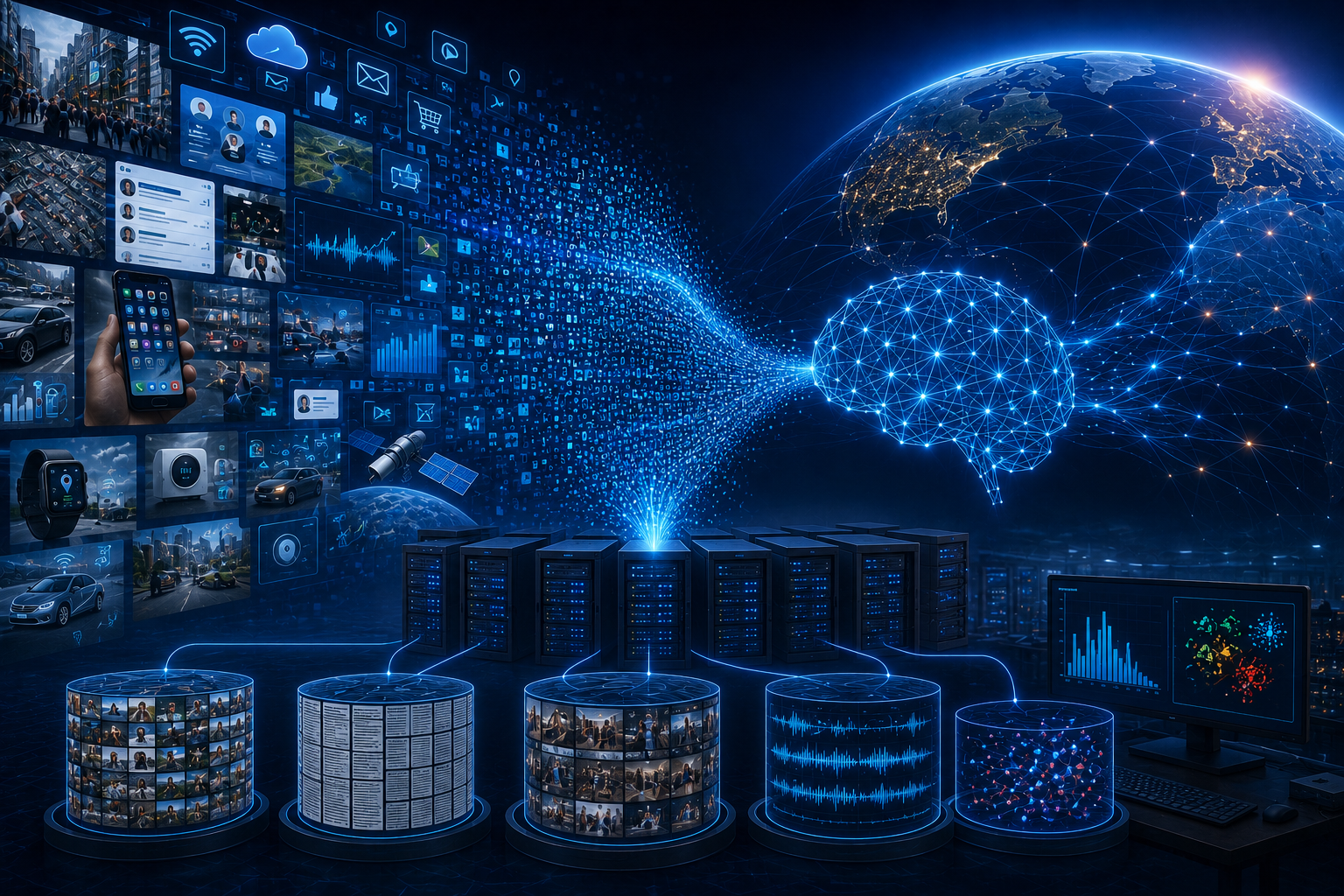
Deep learning could not have emerged without an equally important transformation: the explosion of digital data.
The widespread adoption of the internet, smartphones, social media, cloud services, digital sensors, and connected devices has produced vast quantities of information available for computational analysis.
Every online search, digital photograph, satellite image, scientific experiment, and financial transaction contributed to increasingly large datasets.
This abundance of information enabled AI systems to identify statistical relationships that would have remained invisible within smaller collections of data.
The availability of large datasets also encouraged the creation of shared research benchmarks such as:
- ImageNet
- Common Crawl
- COCO
- Wikipedia language corpora
- Open scientific datasets
These resources accelerated progress by allowing researchers worldwide to evaluate new algorithms using common standards.
Data became one of the most valuable resources in modern artificial intelligence.
Computer Vision
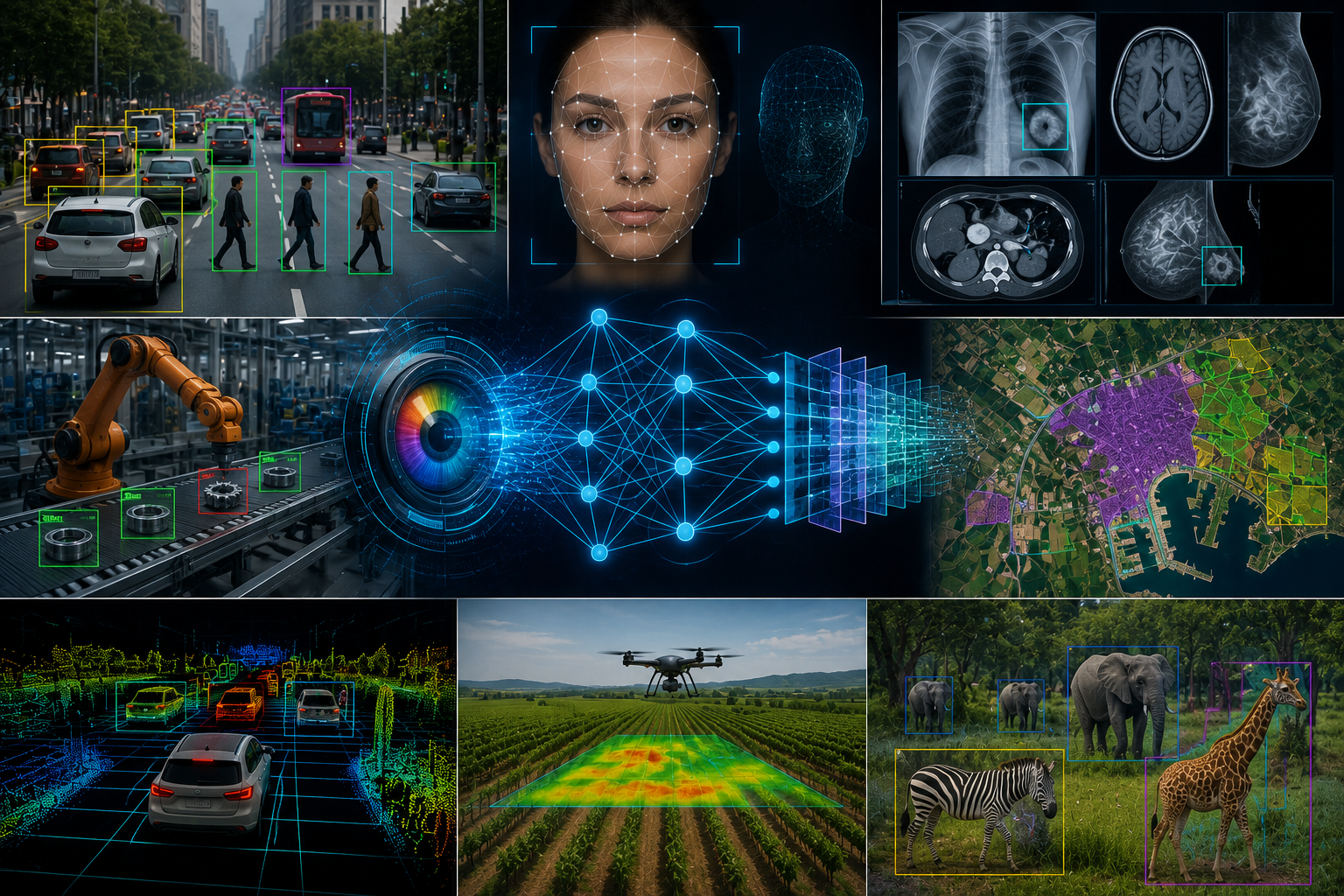
One of the fields transformed most dramatically by deep learning has been Computer Vision, the discipline that enables computers to interpret visual information.
Traditional computer vision relied heavily on manually designed rules for identifying shapes, textures, and colours.
Deep learning largely eliminated this requirement.
Modern computer vision systems learn directly from millions of annotated images.
Today, they can perform tasks such as:
- Object recognition
- Facial recognition
- Medical image analysis
- Industrial quality inspection
- Satellite imagery interpretation
- Autonomous vehicle perception
- Agricultural monitoring
- Wildlife conservation
Medical imaging has particularly benefited from these advances.
AI systems now assist physicians in detecting cancers, cardiovascular diseases, and neurological disorders by analysing radiological scans with remarkable accuracy.
Although these systems complement rather than replace medical professionals, they increasingly serve as valuable diagnostic tools.
Natural Language Processing

Language represents one of humanity’s most sophisticated cognitive abilities.
Enabling computers to understand and generate human language has therefore been one of artificial intelligence’s longest-standing objectives.
Natural Language Processing (NLP) combines computer science, linguistics, and machine learning to analyse spoken and written communication.
Early NLP systems relied on manually constructed grammatical rules and dictionaries.
These approaches performed reasonably well for restricted tasks but struggled with ambiguity, idioms, and contextual meaning.
Deep learning fundamentally changed this situation.
Instead of programming linguistic rules explicitly, neural networks learned statistical relationships directly from enormous collections of text.
Modern NLP systems now perform tasks including:
- Language translation
- Speech recognition
- Text summarisation
- Sentiment analysis
- Information retrieval
- Question answering
- Document classification
- Conversational dialogue
These capabilities have become integral to search engines, virtual assistants, customer support systems and scientific research.
Transformer Models
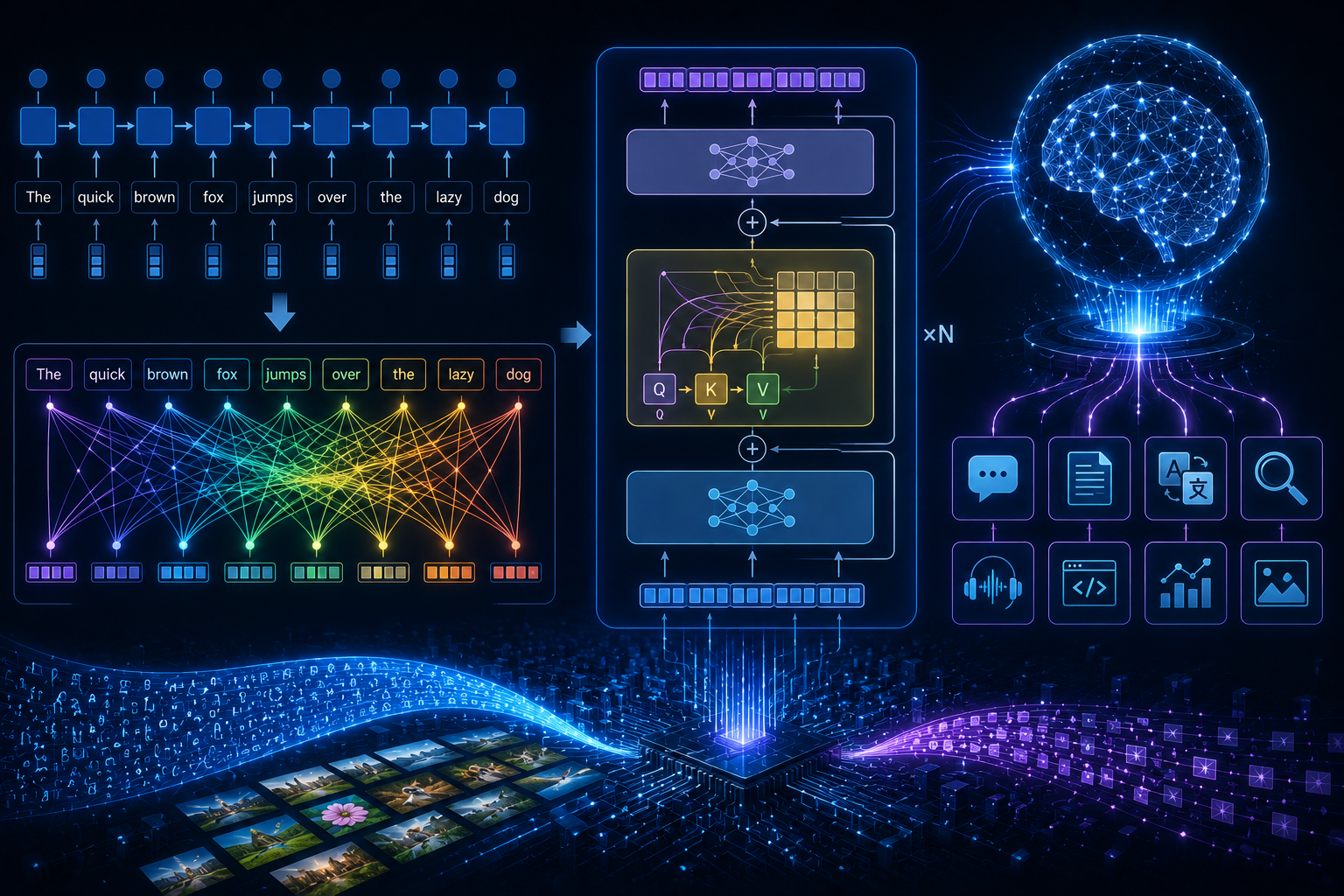
A major milestone in artificial intelligence occurred in 2017 with the publication of the research paper Attention Is All You Need by researchers at Google.
The paper introduced the Transformer architecture.
Unlike previous neural networks that processed language sequentially, transformers employ a mechanism known as attention, allowing models to evaluate relationships between words regardless of their position within a sentence.
This innovation dramatically improved both efficiency and performance.
Transformer models proved capable of processing vastly larger datasets while capturing long-range contextual relationships that earlier architectures often missed.
The introduction of transformers marked one of the most significant technological breakthroughs in modern artificial intelligence.
Nearly every major language model developed since then has been based on this architecture.
Large Language Models
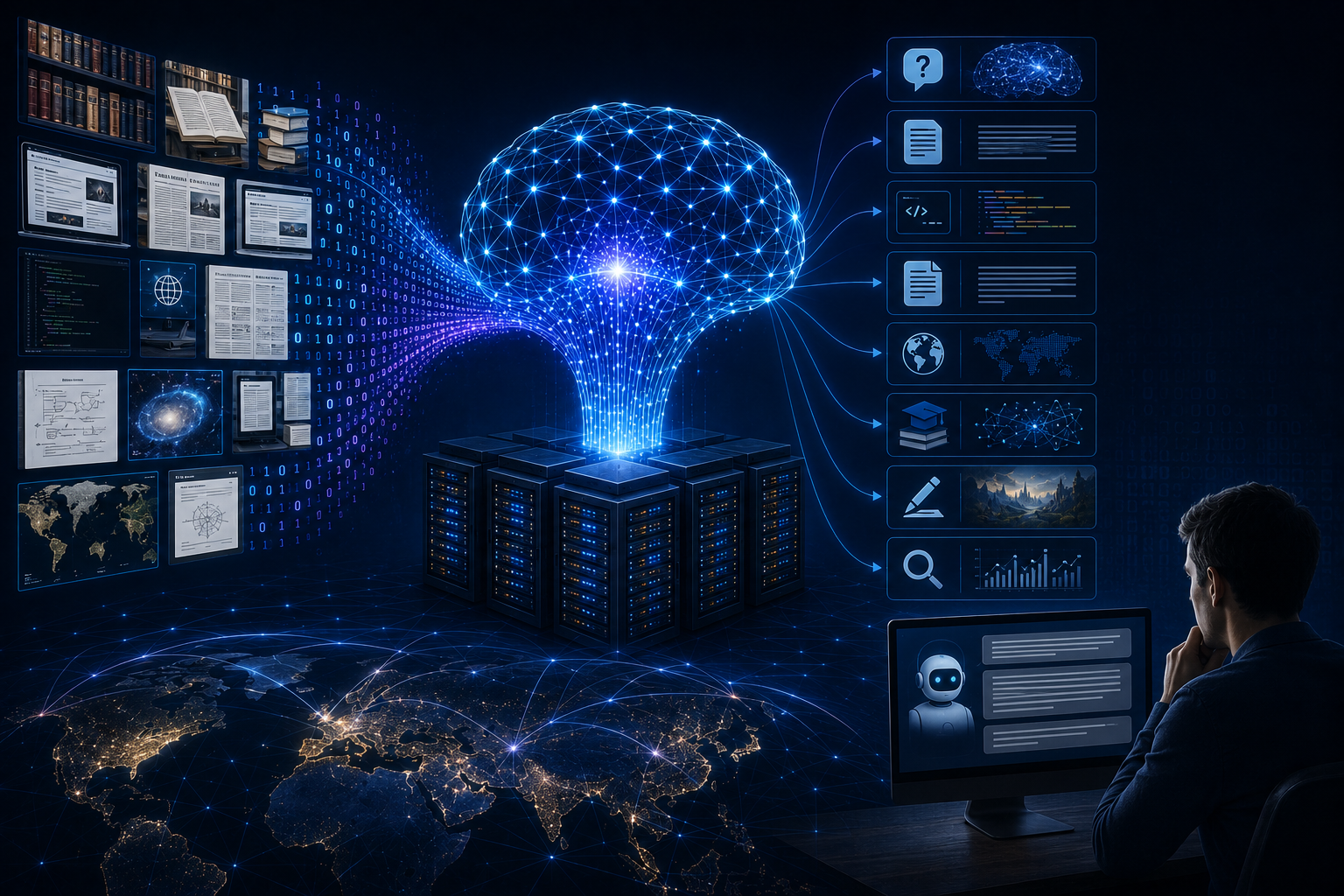
Large Language Models (LLMs) are among the most visible outcomes of the transformer revolution.
These models are trained using enormous collections of books, articles, websites, scientific publications, and other textual resources.
During training, they learn statistical relationships between words, phrases, and concepts rather than memorising fixed responses.
As model sizes increased from millions to billions, and eventually to trillions, of parameters, their capabilities expanded dramatically.
Modern LLMs can:
- Answer complex questions
- Generate coherent essays
- Write computer programs
- Summarise lengthy documents
- Translate languages
- Explain scientific concepts
- Assist with creative writing
- Support education and research
Although often capable of producing highly convincing responses, LLMs remain probabilistic systems.
They generate text based on learned statistical patterns rather than genuine understanding or conscious reasoning.
Consequently, they may occasionally produce inaccurate or fabricated information, making human oversight essential in professional and academic contexts.
Generative Artificial Intelligence
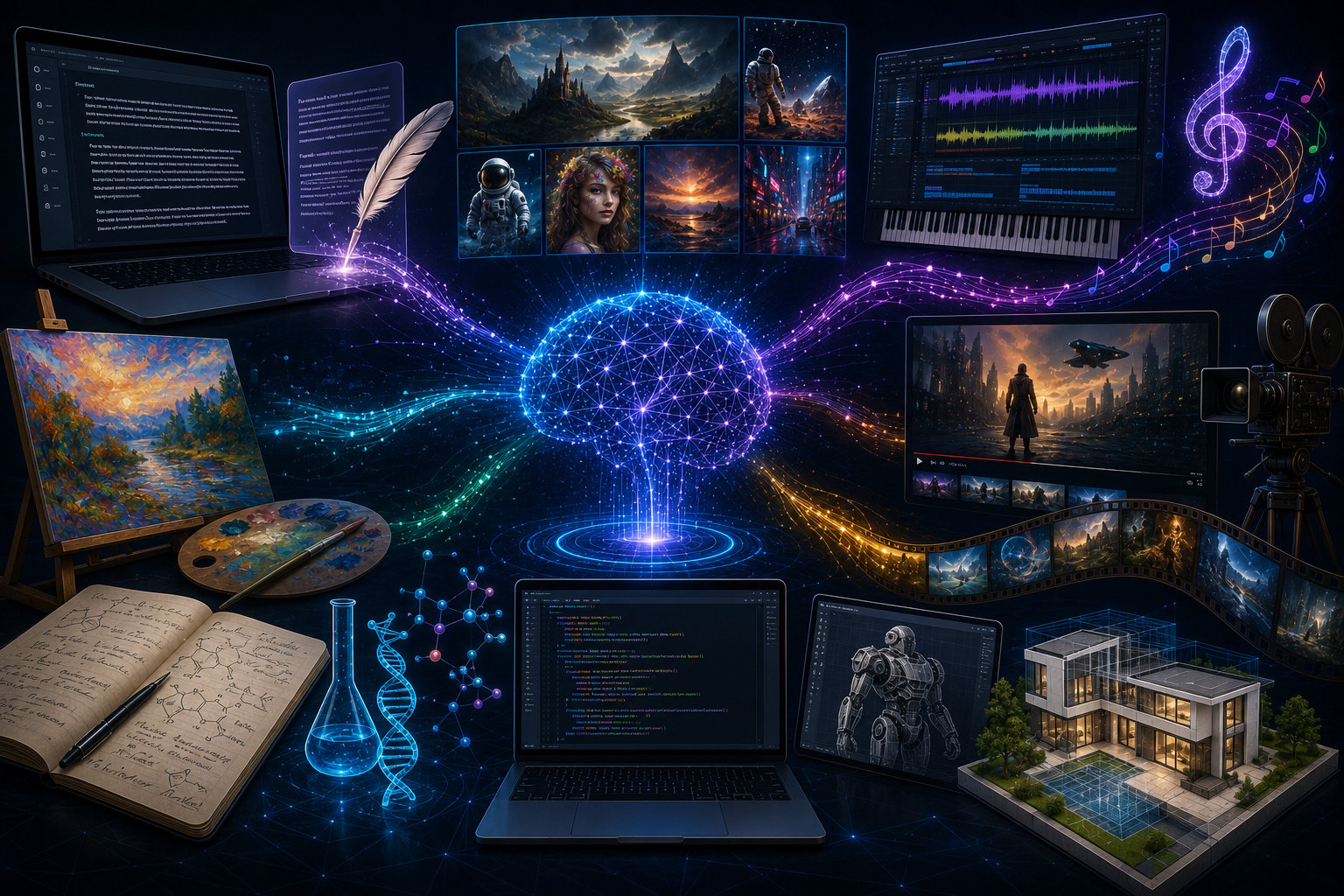
Generative Artificial Intelligence refers to systems capable of producing entirely new content rather than merely analysing existing information.
Unlike traditional AI applications focused on classification or prediction, generative models create original outputs based on patterns learned during training.
These outputs include:
- Written text
- Digital artwork
- Photography
- Music
- Video
- Three-dimensional models
- Computer code
- Scientific hypotheses
The rapid development of generative AI during the early 2020s fundamentally altered public perceptions of artificial intelligence.
For the first time, millions of people interacted directly with advanced AI systems capable of engaging in natural conversation, producing realistic images and assisting with complex intellectual tasks.
Generative AI has already transformed numerous industries, including publishing, education, software engineering, architecture, marketing, filmmaking, healthcare, and scientific research.
Its applications continue to expand as models become increasingly capable.
At the same time, generative AI has introduced significant societal challenges.
Questions surrounding misinformation, copyright, intellectual property, authenticity, privacy, employment, and ethical governance have become central issues for policymakers and researchers.
Balancing innovation with responsible deployment remains one of the defining technological challenges of the twenty-first century.
The New Era of Artificial Intelligence
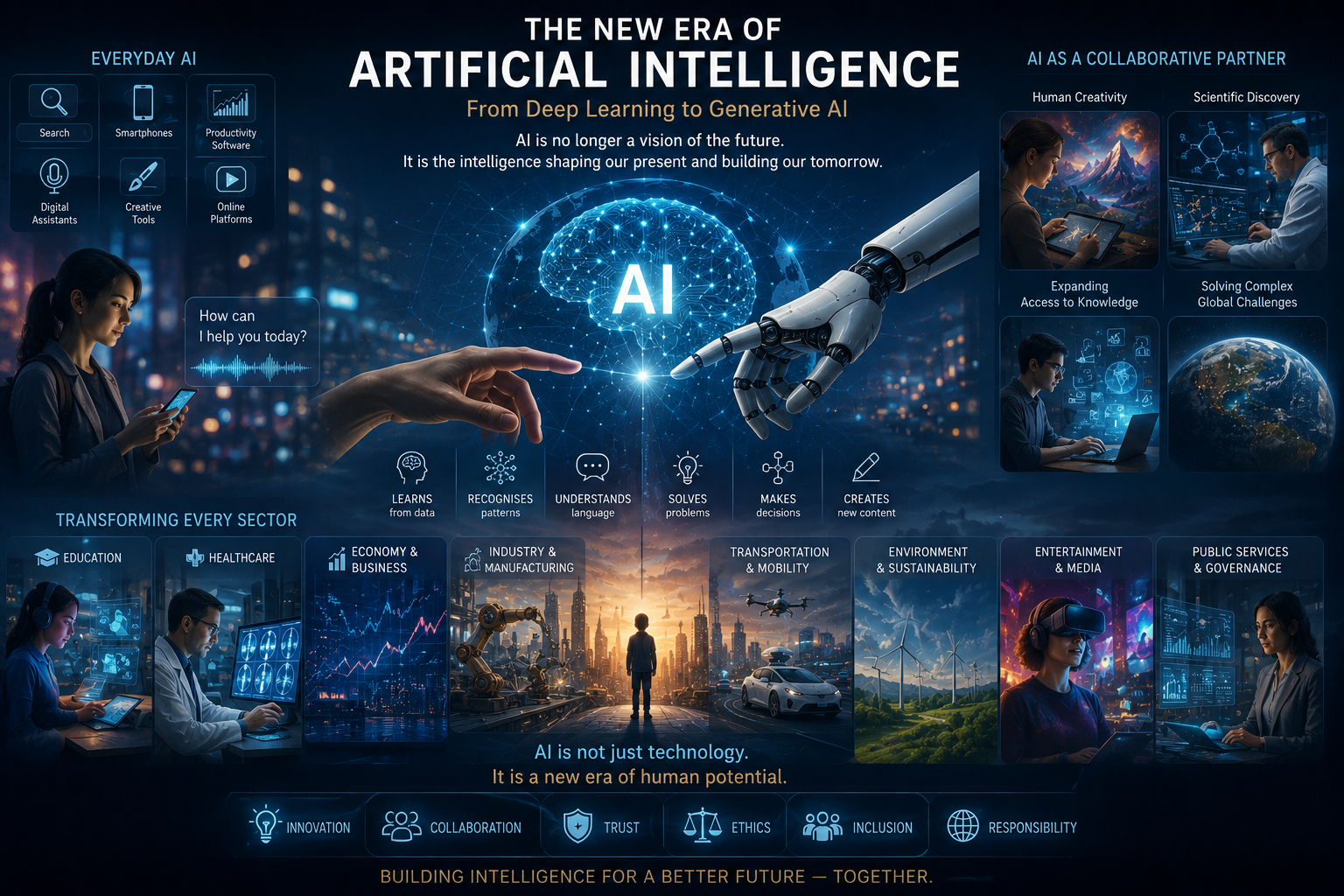
The emergence of deep learning, transformer architectures, large language models, and generative artificial intelligence marks a fundamental shift in the history of computing.
Artificial intelligence is no longer confined to specialised laboratories or industrial research centres.
It has become a technology used daily by hundreds of millions of people through search engines, smartphones, productivity software, creative tools, scientific platforms, and digital assistants.
This new generation of AI systems increasingly functions not merely as automated software but as collaborative tools capable of assisting human creativity, accelerating scientific discovery and expanding access to knowledge.
Their continued development will shape the future of technology, economics, education, healthcare, international security, and society as profoundly as the invention of the computer itself.
Applications Across Society
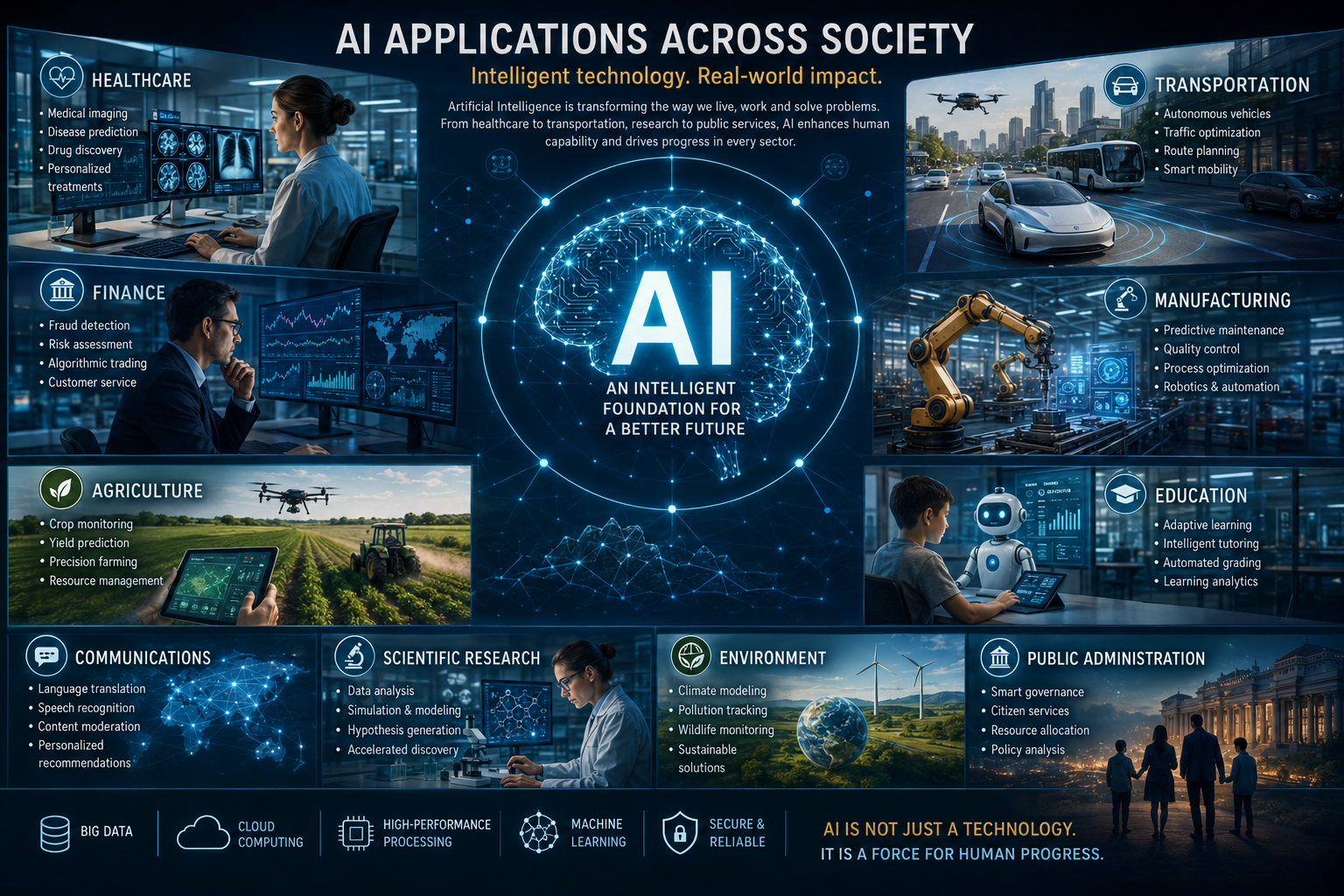
Artificial intelligence has evolved from an experimental research field into a foundational technology that influences nearly every sector of modern society. While early AI systems were confined to universities and specialised laboratories, contemporary applications have become deeply integrated into everyday life, often operating invisibly behind digital services used by billions of people.
Rather than replacing conventional software, AI increasingly complements human expertise by analysing vast quantities of information, recognising complex patterns and supporting decision-making in situations where speed and precision are essential.
The widespread availability of cloud computing, high-performance processors and massive datasets has accelerated the adoption of AI across governments, businesses, scientific institutions and public services.
Today, artificial intelligence contributes to advances in transportation, finance, manufacturing, agriculture, education, communications, environmental protection, scientific research and public administration.
As computational capabilities continue to expand, AI is becoming a general-purpose technology comparable in significance to electricity, the internet and the personal computer.
Artificial Intelligence in Industry
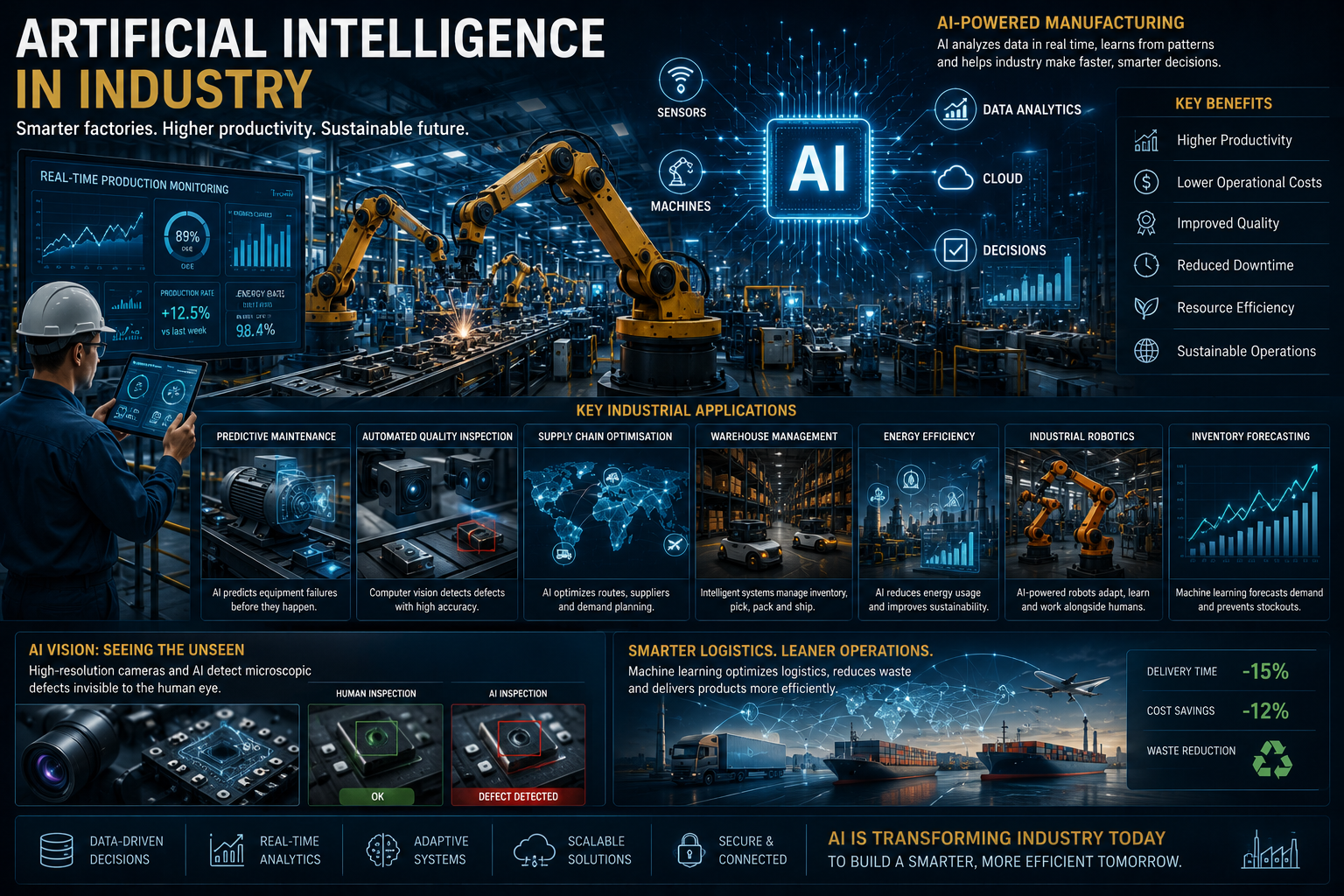
Industrial automation has long relied on programmable machines, but artificial intelligence has introduced a new level of flexibility and adaptability.
Modern manufacturing systems use AI to optimise production schedules, predict equipment failures and improve quality control through continuous monitoring.
Rather than simply following predefined instructions, intelligent manufacturing systems analyse operational data in real time, allowing factories to respond dynamically to changing conditions.
Common industrial applications include:
- Predictive maintenance
- Automated quality inspection
- Supply chain optimisation
- Warehouse management
- Energy efficiency
- Industrial robotics
- Inventory forecasting
Computer vision systems can detect microscopic manufacturing defects that would be difficult for human inspectors to identify consistently.
Meanwhile, machine learning algorithms optimise logistics by forecasting demand and reducing waste throughout global supply networks.
These technologies contribute to higher productivity while reducing operational costs and resource consumption.
Artificial Intelligence in Finance
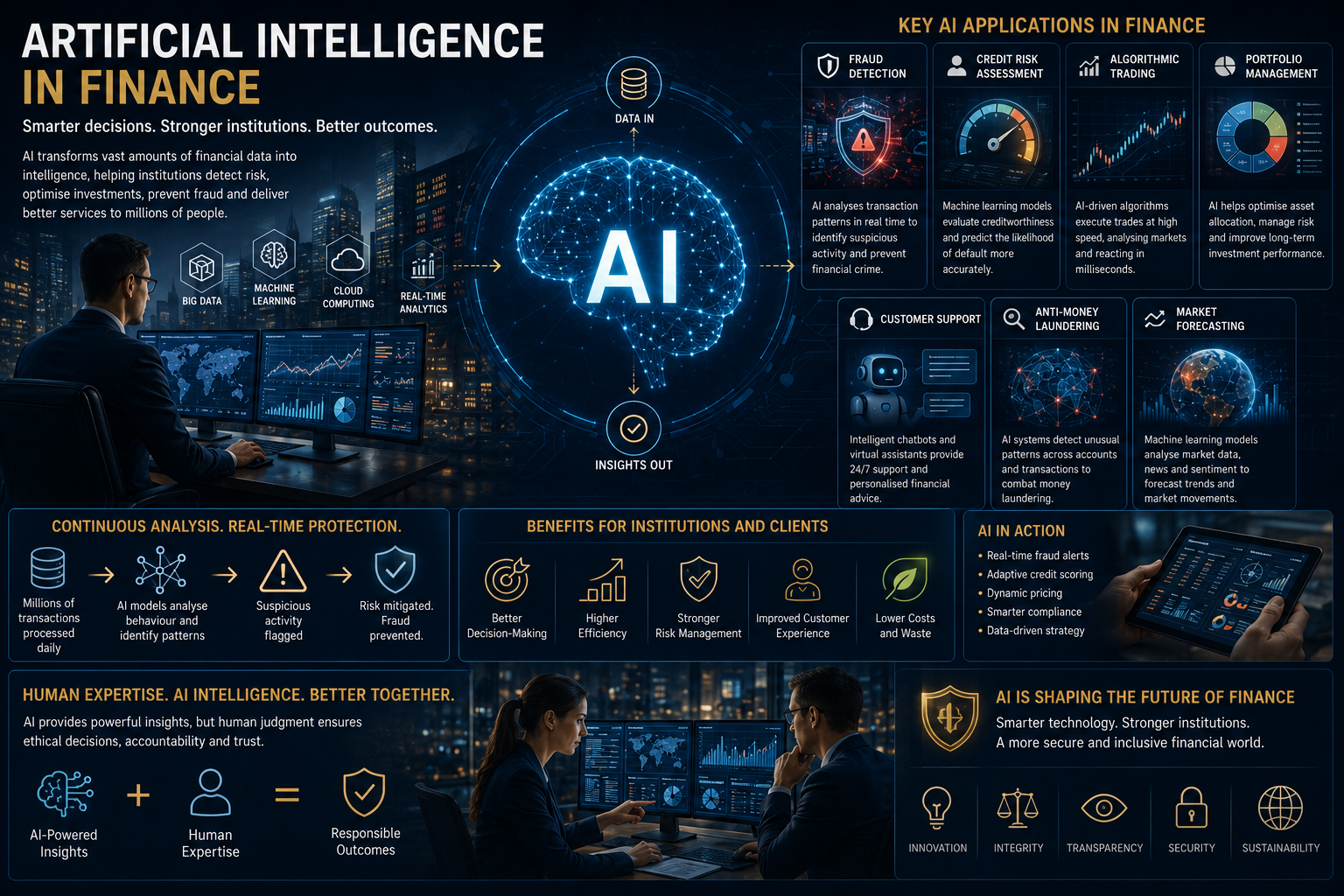
The financial sector was among the earliest adopters of artificial intelligence.
Banks, investment firms, and insurance companies process enormous volumes of information each day, making financial services particularly well suited to data-driven decision systems.
AI applications include:
- Fraud detection
- Credit risk assessment
- Algorithmic trading
- Portfolio management
- Customer support
- Anti-money laundering systems
- Market forecasting
Machine learning models continuously analyse transaction patterns to identify suspicious behaviour that may indicate fraud or financial crime.
Investment firms increasingly employ AI to evaluate market conditions, identify emerging trends, and assist portfolio managers in assessing financial risks.
Although AI contributes significantly to financial decision-making, human oversight remains essential due to the complexity and unpredictability of global markets.
Artificial Intelligence in Education
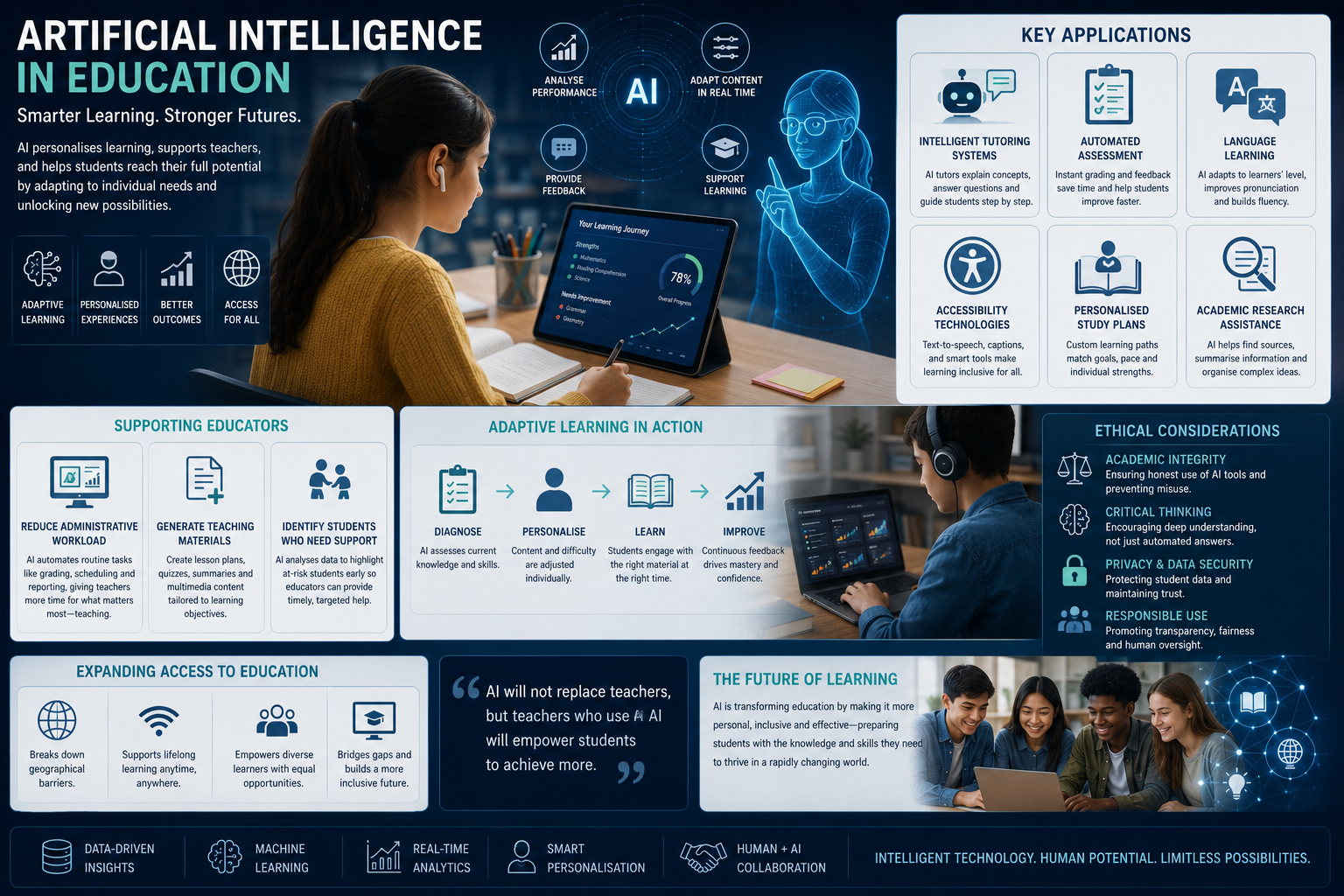
Education has experienced significant transformation through intelligent learning technologies.
Adaptive learning platforms analyse student performance and automatically adjust lesson difficulty according to individual progress.
Rather than presenting identical material to every learner, AI can personalise educational experiences based on strengths, weaknesses and learning pace.
Applications include:
- Intelligent tutoring systems
- Automated assessment
- Language learning
- Accessibility technologies
- Personalised study plans
- Academic research assistance
Artificial intelligence also assists educators by reducing administrative workloads, generating teaching materials and identifying students who may require additional academic support.
While AI expands access to educational resources, it also raises important questions regarding academic integrity, critical thinking and responsible classroom use.
Artificial Intelligence in Transportation
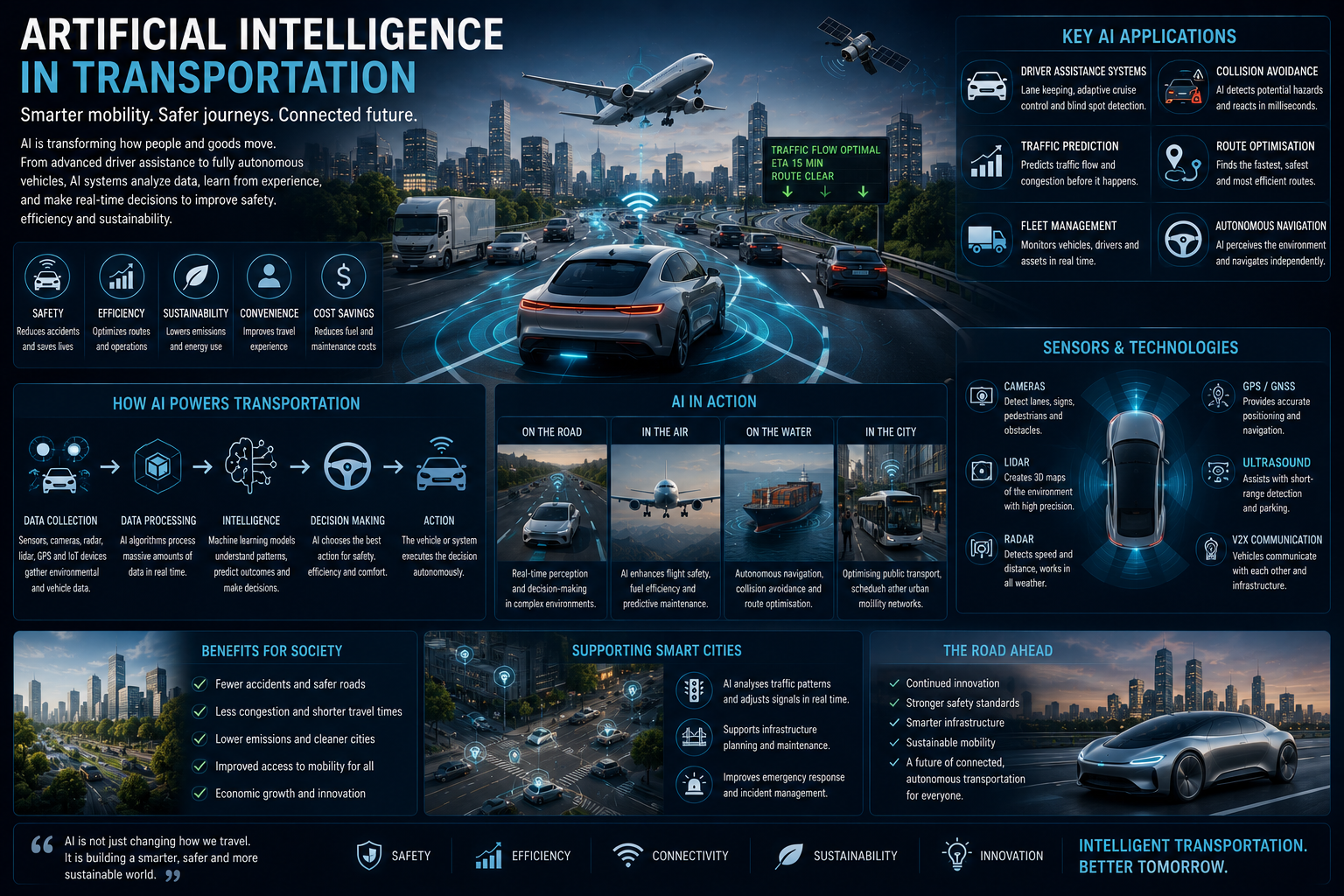
Transportation represents one of the most visible applications of artificial intelligence.
Modern vehicles incorporate numerous AI-driven systems that enhance safety, navigation, and operational efficiency.
These technologies include:
- Driver assistance systems
- Collision avoidance
- Traffic prediction
- Route optimisation
- Fleet management
- Autonomous navigation
Self-driving vehicles combine computer vision, radar, lidar, satellite navigation, and machine learning to interpret complex road environments.
Although fully autonomous transportation remains under development in many regions, partial automation has already become common in passenger vehicles, aviation and maritime operations.
Artificial intelligence also supports urban planning by analysing traffic patterns and improving public transportation networks.
Artificial Intelligence in Scientific Research
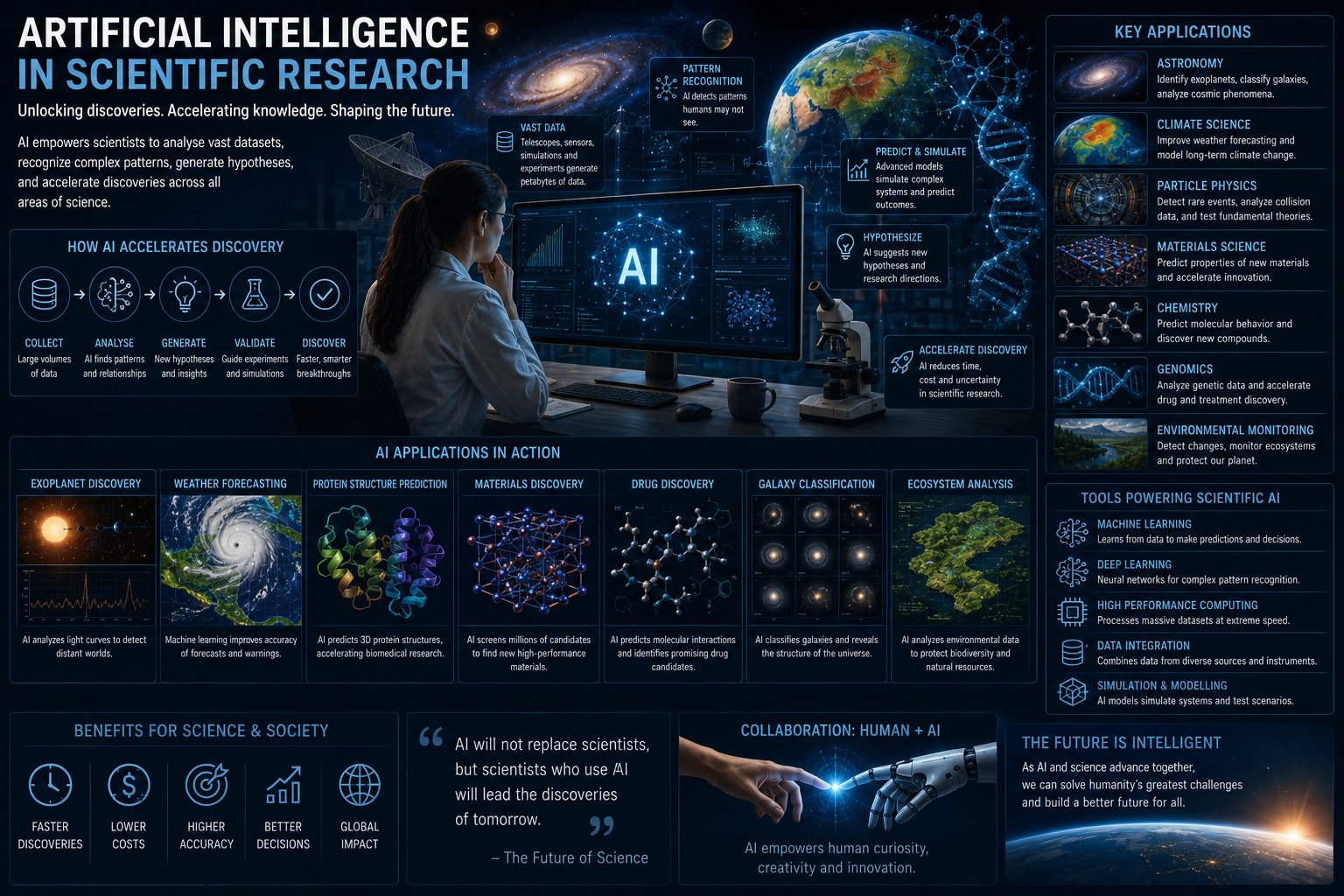
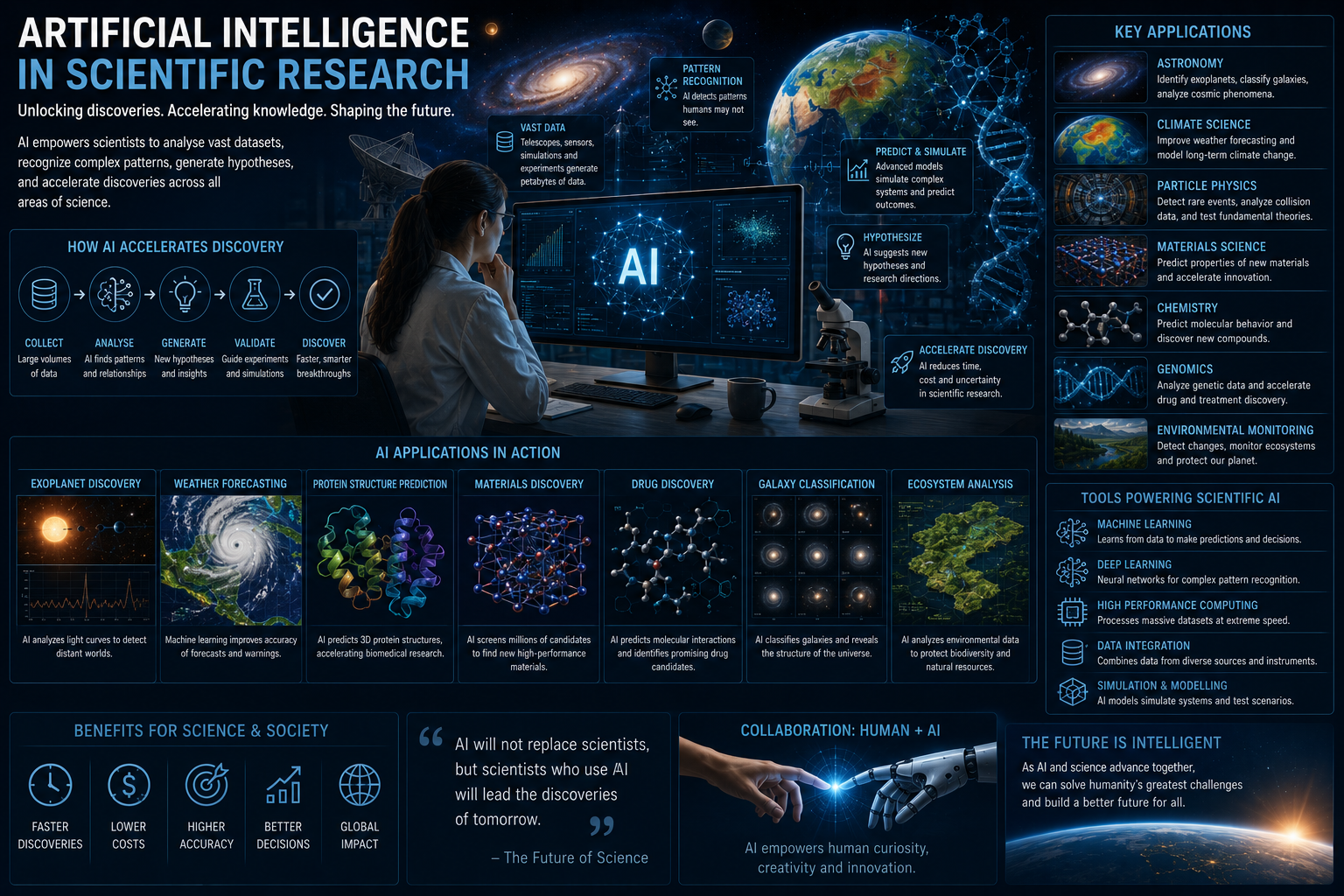
Scientific discovery increasingly depends upon analysing datasets too large for traditional research methods.
Artificial intelligence enables scientists to identify patterns, generate hypotheses, and accelerate discoveries across multiple disciplines.
Applications include:
- Astronomy
- Climate science
- Particle physics
- Materials science
- Chemistry
- Genomics
- Environmental monitoring
In astronomy, AI assists researchers in identifying exoplanets, classifying galaxies, and analysing data collected by space telescopes.
Climate scientists employ machine learning to improve weather forecasting and model long-term environmental change.
In chemistry and materials science, AI accelerates the search for new compounds by predicting molecular behaviour before laboratory testing begins.
Rather than replacing scientific experimentation, artificial intelligence functions as an increasingly powerful research partner capable of processing information at extraordinary speed.
Artificial Intelligence in Medicine
Healthcare has become one of the most transformative areas of artificial intelligence.
Medical professionals generate enormous quantities of clinical data through imaging systems, laboratory testing, electronic health records, and genomic sequencing.
Artificial intelligence assists healthcare providers by identifying patterns that may not be immediately apparent to human observers.
Current applications include:
- Medical imaging analysis
- Disease prediction
- Drug discovery
- Personalised medicine
- Clinical decision support
- Hospital resource management
- Remote patient monitoring
Computer vision algorithms can detect early signs of diseases such as cancer, diabetic retinopathy, and cardiovascular disorders from medical images.
Machine learning also contributes to personalised treatment by analysing genetic information alongside clinical records.
During pharmaceutical research, AI significantly reduces the time required to identify promising drug candidates, allowing researchers to evaluate millions of molecular combinations computationally before laboratory testing begins.
Despite these advances, medical professionals remain responsible for diagnosis, treatment decisions, and patient care.
Artificial intelligence serves primarily as a decision-support technology rather than a replacement for physicians.
Artificial Intelligence in Robotics
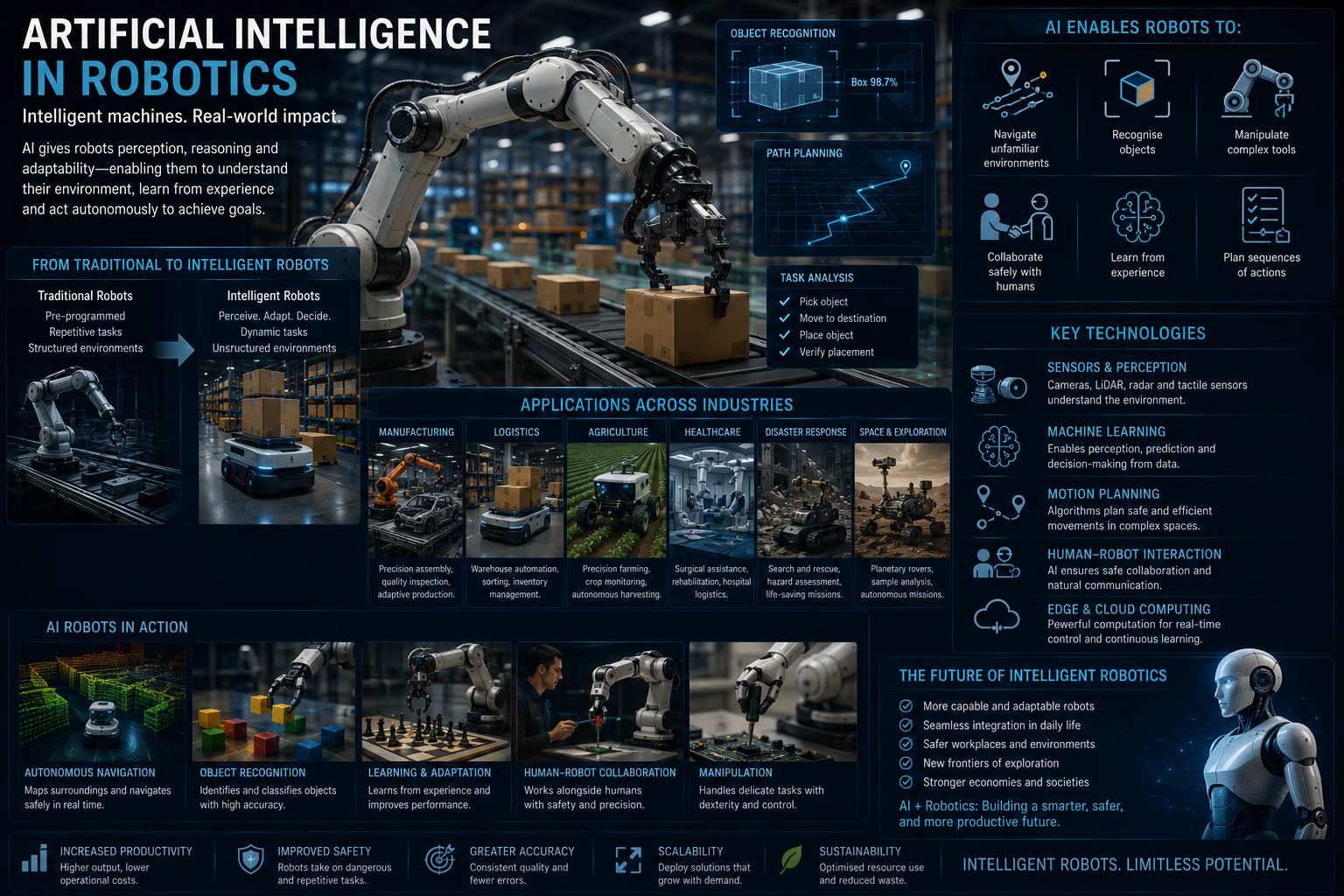
Robotics combines mechanical engineering, electronics, and artificial intelligence to create machines capable of interacting with the physical world.
Traditional industrial robots perform repetitive tasks within highly controlled environments.
Modern intelligent robots, however, increasingly perceive their surroundings, adapt to changing conditions, and make autonomous decisions.
Artificial intelligence enables robots to:
- Navigate unfamiliar environments
- Recognise objects
- Manipulate complex tools
- Collaborate safely with humans
- Learn from experience
- Plan sequences of actions
Applications extend across manufacturing, logistics, agriculture, healthcare, disaster response, and scientific exploration.
Autonomous robots assist in warehouse operations, precision farming, underwater inspection, and hazardous industrial environments where human safety would otherwise be at risk.
Humanoid robots remain an active area of research, although most practical robotic systems are designed for specialised tasks rather than human appearance.
As sensing technologies and machine learning continue to improve, intelligent robotics is expected to play an increasingly important role in future economies.
Artificial Intelligence in Space Exploration
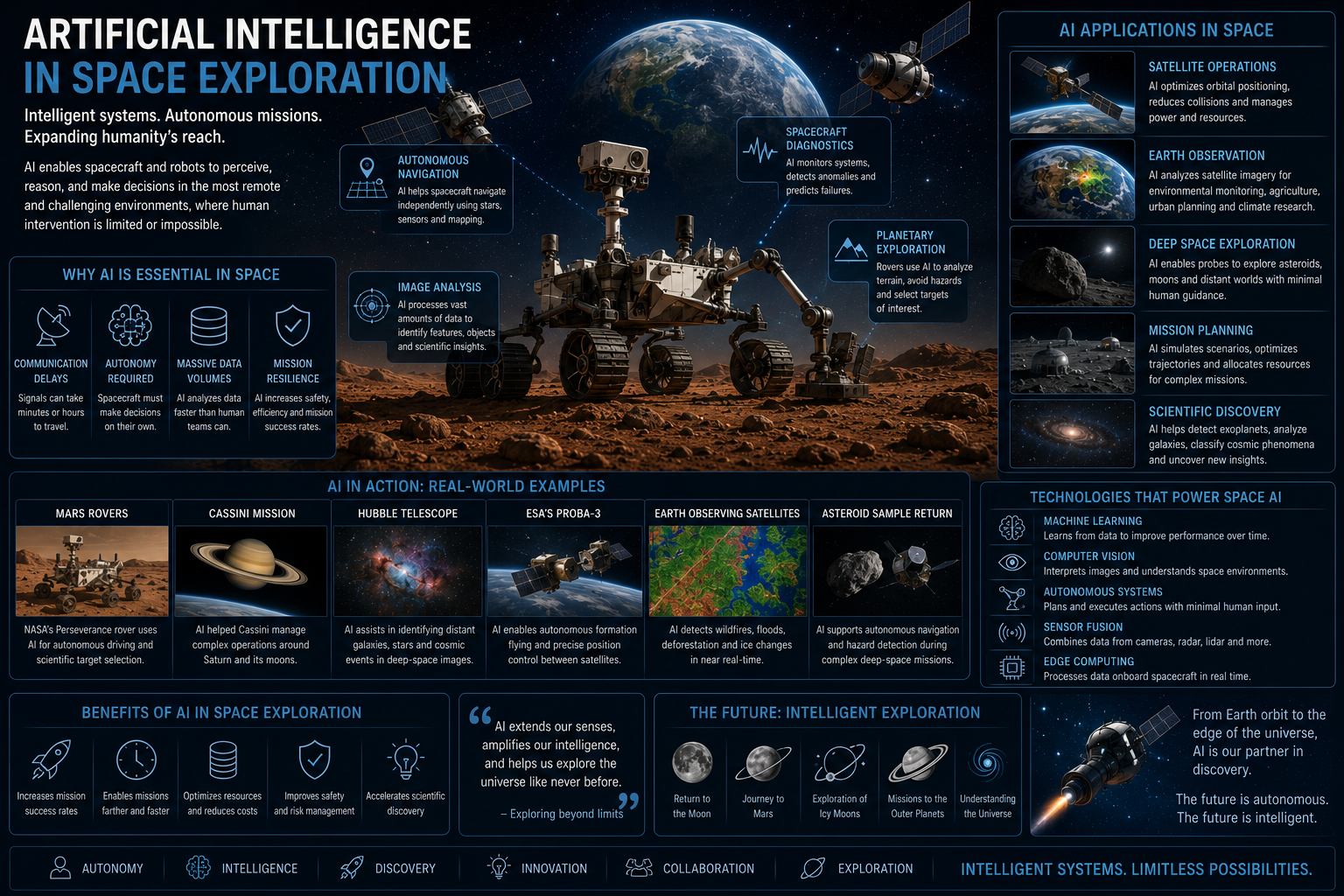
Space agencies have adopted artificial intelligence to support missions operating far beyond Earth.
Because communication delays make real-time human control impossible during deep-space exploration, spacecraft increasingly require autonomous decision-making capabilities.
AI supports:
- Autonomous navigation
- Planetary exploration
- Satellite operations
- Image analysis
- Mission planning
- Spacecraft diagnostics
Planetary rovers employ computer vision to identify obstacles and select safe routes across unfamiliar terrain.
Satellite systems use AI to analyse Earth observation imagery for environmental monitoring, disaster response and climate research.
Future missions to the Moon, Mars, and beyond are expected to rely even more heavily on autonomous intelligent systems capable of operating independently for extended periods.
Artificial Intelligence in Defence and Security
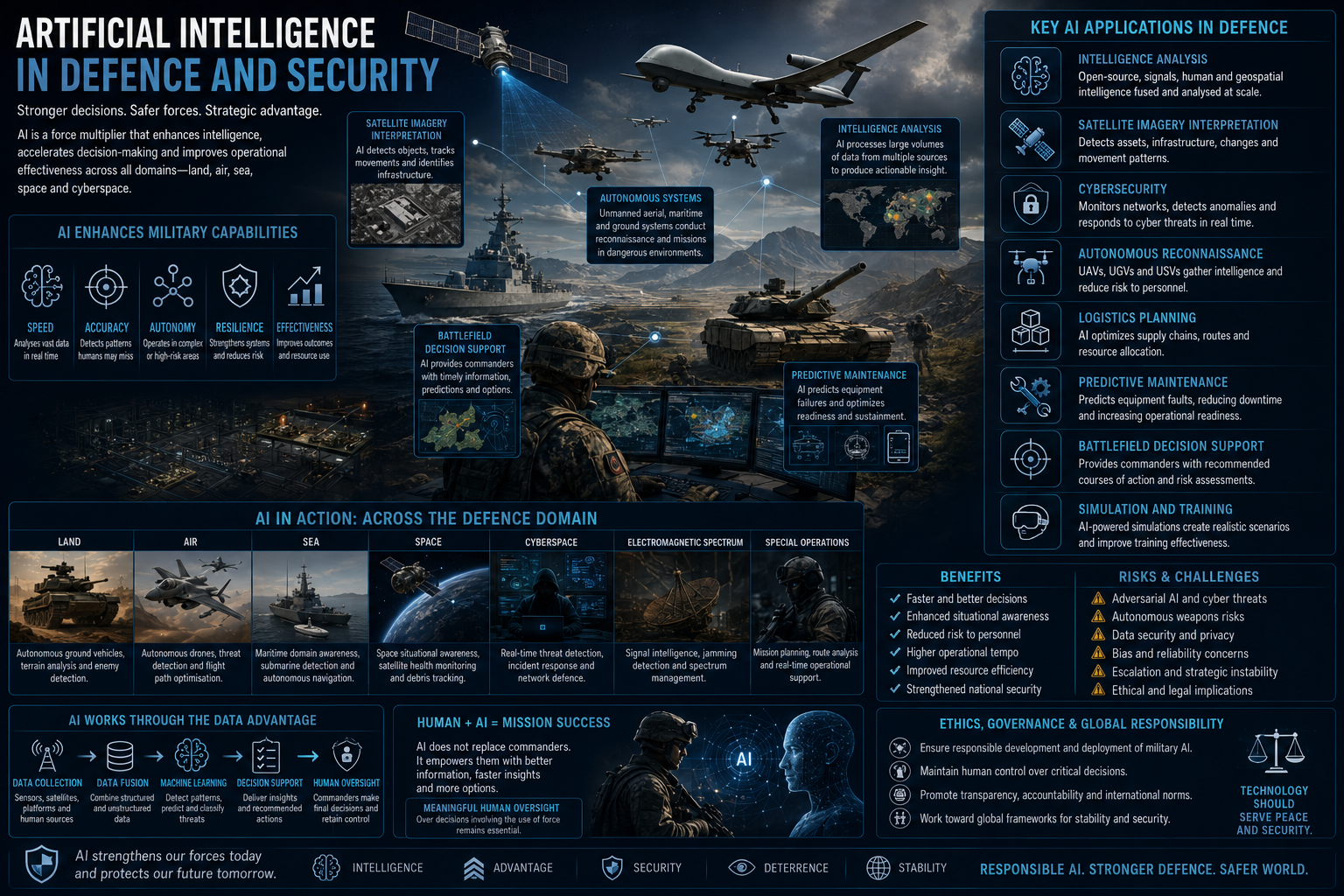
Artificial intelligence has become a strategic priority for defence organisations around the world.
Military planners increasingly view AI as a force multiplier capable of enhancing decision-making, intelligence gathering, and operational effectiveness.
Current defence applications include:
- Intelligence analysis
- Satellite imagery interpretation
- Cybersecurity
- Autonomous reconnaissance
- Logistics planning
- Predictive maintenance
- Battlefield decision support
- Simulation and training
Machine learning systems analyse enormous volumes of intelligence data far more rapidly than traditional analytical methods.
Computer vision assists in identifying military equipment, infrastructure, and movement patterns from satellite imagery.
Autonomous aerial, maritime, and ground systems increasingly support reconnaissance missions in environments considered dangerous for human personnel.
Cybersecurity has become another major area of AI deployment.
Machine learning algorithms continuously monitor digital networks, detecting anomalies that may indicate cyberattacks, espionage, or malicious software.
At the same time, artificial intelligence presents new security challenges.
Advanced AI technologies may be exploited for sophisticated cyber operations, automated disinformation campaigns, or increasingly autonomous weapon systems.
These developments have intensified international discussions regarding military ethics, strategic stability, and the need for global governance frameworks.
Although AI offers significant operational advantages, most military organisations continue to emphasise the importance of maintaining meaningful human oversight over decisions involving the use of force.
Artificial Intelligence and Everyday Life
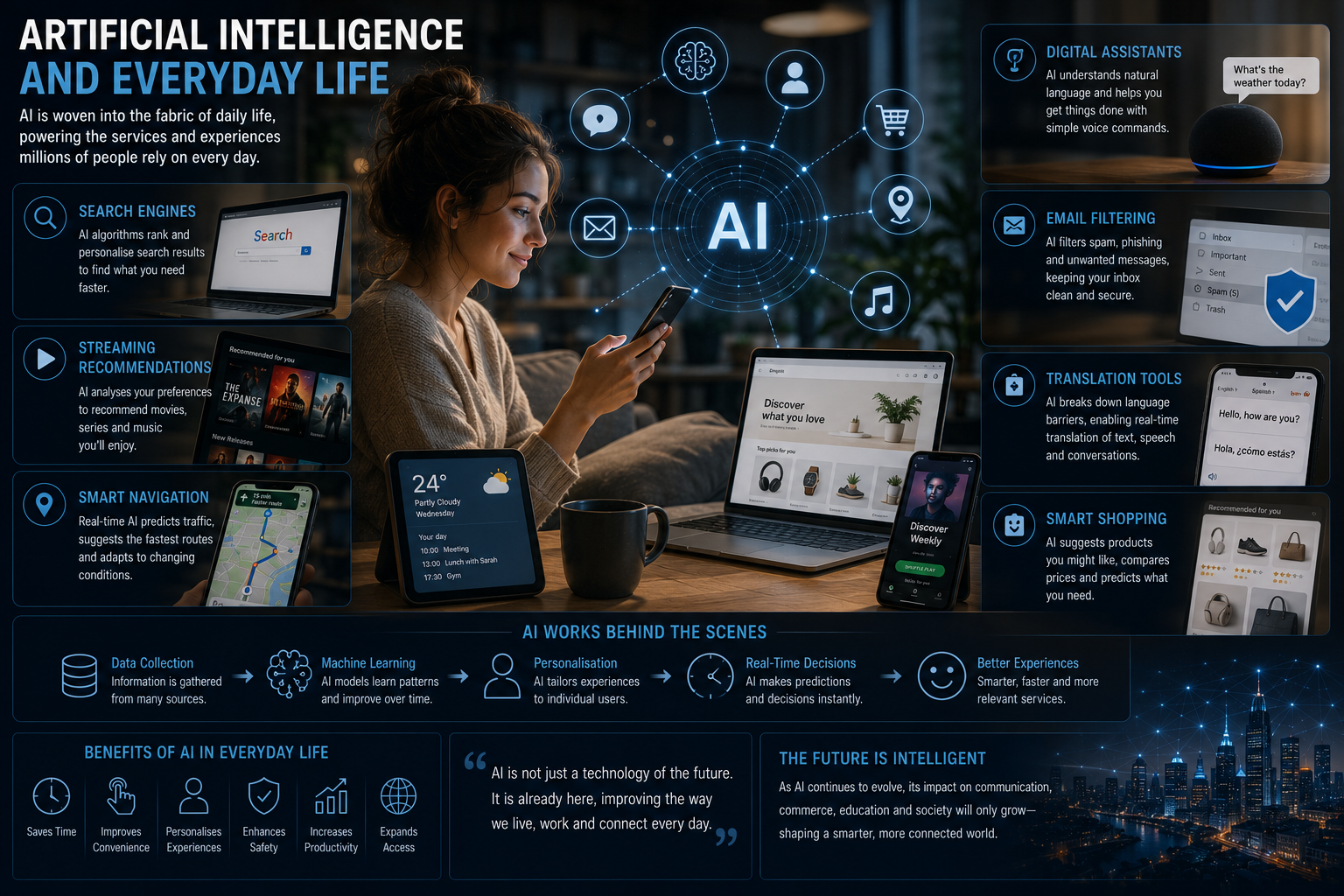
For many people, artificial intelligence is no longer an abstract scientific concept but an invisible component of daily life.
Search engines rank information using AI algorithms.
Streaming platforms recommend films and music based on previous preferences.
Navigation applications optimise travel routes in real time.
Digital assistants interpret spoken commands.
Email services filter unwanted messages.
Translation systems enable communication across languages.
These technologies often operate without users recognising the complex artificial intelligence systems working behind the scenes.
As AI becomes increasingly embedded within digital infrastructure, its influence on communication, commerce, education and personal productivity is expected to continue expanding throughout the coming decades.
Artificial intelligence has therefore evolved beyond a specialised research discipline into one of the fundamental technologies shaping contemporary civilisation.
Ethics, Governance and Responsible Artificial Intelligence
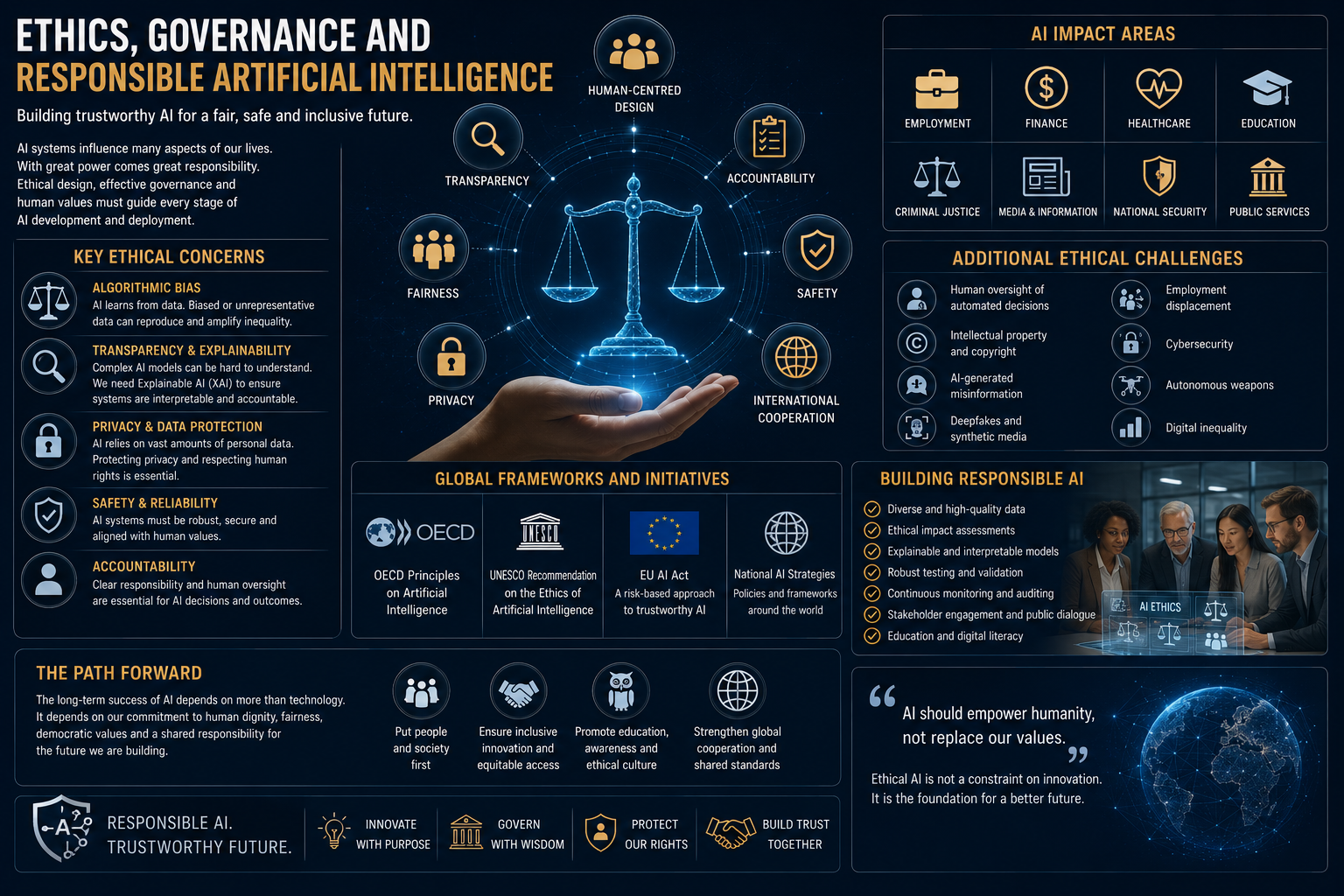
As artificial intelligence has become increasingly integrated into everyday life, ethical considerations have moved from academic debate to global public policy.
Modern AI systems influence decisions involving employment, finance, healthcare, education, criminal justice, media, and national security. As their capabilities expand, ensuring that these systems operate responsibly has become one of the defining technological challenges of the twenty-first century.
One of the principal ethical concerns is algorithmic bias.
Artificial intelligence learns from data, and if that data reflects historical inequalities or societal prejudices, AI systems may reproduce or even amplify those biases. Researchers therefore place considerable emphasis on developing fair, transparent, and representative training datasets.
Another major issue concerns transparency.
Many advanced AI models, particularly deep neural networks, function as highly complex mathematical systems whose internal decision-making processes can be difficult even for their developers to interpret. This challenge, often referred to as the “black box problem,” has encouraged growing research into Explainable Artificial Intelligence (XAI), which seeks to make AI systems more understandable and accountable.
Privacy has also become a central concern.
Modern AI systems frequently rely on enormous quantities of personal information, including medical records, financial transactions, online behaviour and biometric data. Governments and regulatory bodies increasingly require organisations to ensure that AI systems comply with privacy legislation and respect fundamental human rights.
Other ethical considerations include:
- Human oversight of automated decisions
- Intellectual property and copyright
- AI-generated misinformation
- Deepfakes and synthetic media
- Employment displacement
- Cybersecurity
- Autonomous weapons
- Digital inequality
Recognising these challenges, governments, universities and international organisations have begun developing ethical frameworks intended to guide the responsible development and deployment of artificial intelligence.
Among the most influential initiatives are the OECD Principles on Artificial Intelligence, the UNESCO Recommendation on the Ethics of Artificial Intelligence, the European Union AI Act, and numerous national AI strategies adopted across the world.
These frameworks generally promote principles including:
- Human-centred design
- Transparency
- Accountability
- Safety
- Privacy protection
- Fairness
- International cooperation
The long-term success of artificial intelligence will depend not only upon technological progress but also upon society’s ability to establish effective governance that encourages innovation while protecting individual rights and democratic institutions.
Artificial General Intelligence (AGI)
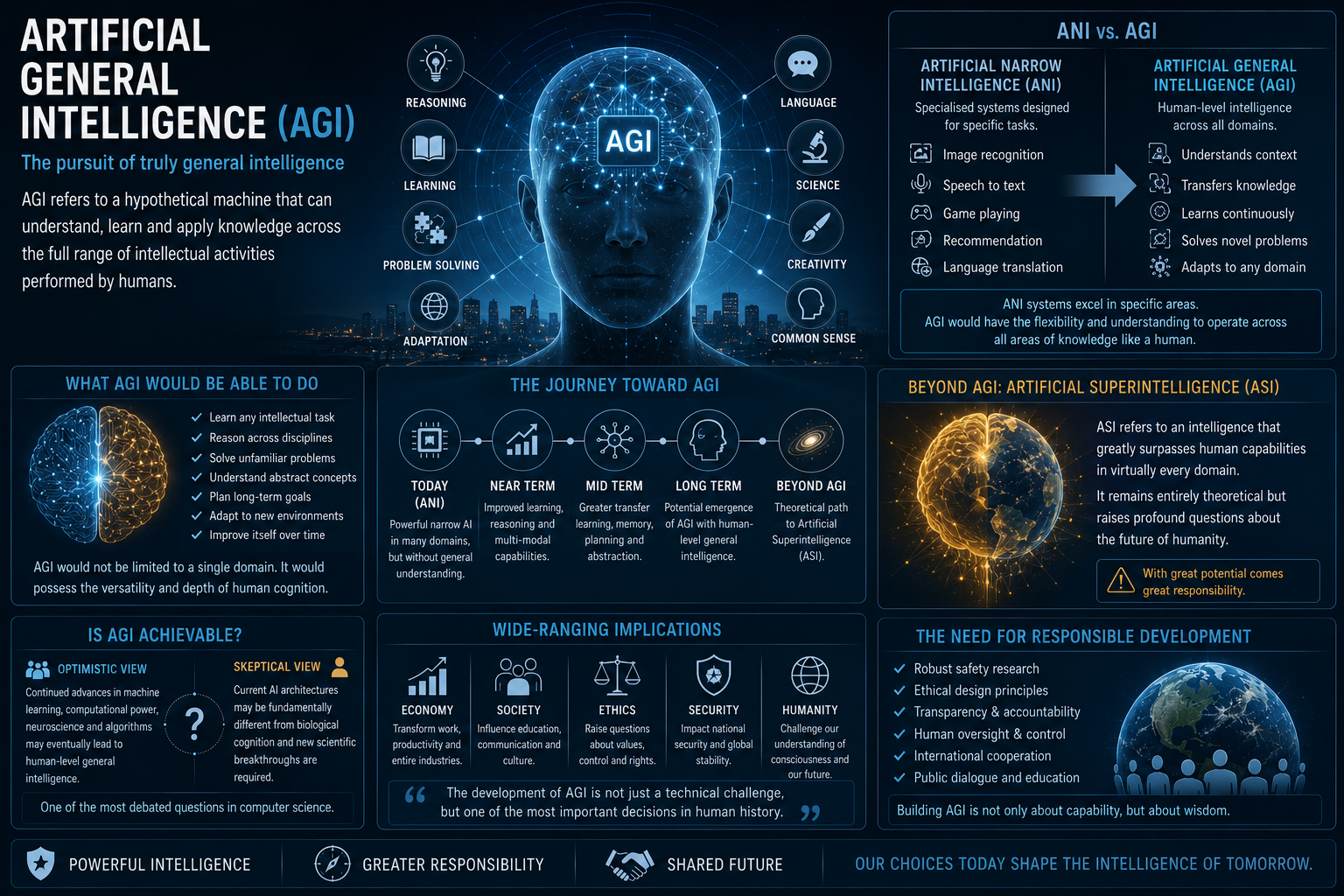
Virtually all artificial intelligence systems currently deployed belong to the category known as Artificial Narrow Intelligence (ANI).
These systems excel within specialised domains but cannot transfer knowledge broadly across unrelated tasks.
Artificial General Intelligence (AGI), sometimes referred to as Strong AI, describes a hypothetical machine capable of understanding, learning, and applying knowledge across the full range of intellectual activities performed by humans.
An AGI system would not simply recognise images or generate text.
It would possess the flexibility to reason across disciplines, solve unfamiliar problems, learn continuously with minimal supervision, and adapt to entirely new environments.
Whether AGI is achievable remains one of the most debated questions in computer science.
Some researchers believe that continued advances in machine learning, computational power, and neuroscience may eventually lead to general intelligence.
Others argue that current AI architectures remain fundamentally different from biological cognition and that entirely new scientific breakthroughs will be required.
Closely related is the concept of Artificial Superintelligence (ASI).
Popularised by philosopher Nick Bostrom, ASI describes an intelligence that significantly surpasses human capabilities across virtually every intellectual domain.
Although entirely theoretical, discussions surrounding AGI and ASI have become increasingly prominent as modern AI systems demonstrate rapid improvements in reasoning, language and scientific problem-solving.
These debates extend beyond technology into philosophy, economics, ethics, and international security.
The Future of Artificial Intelligence
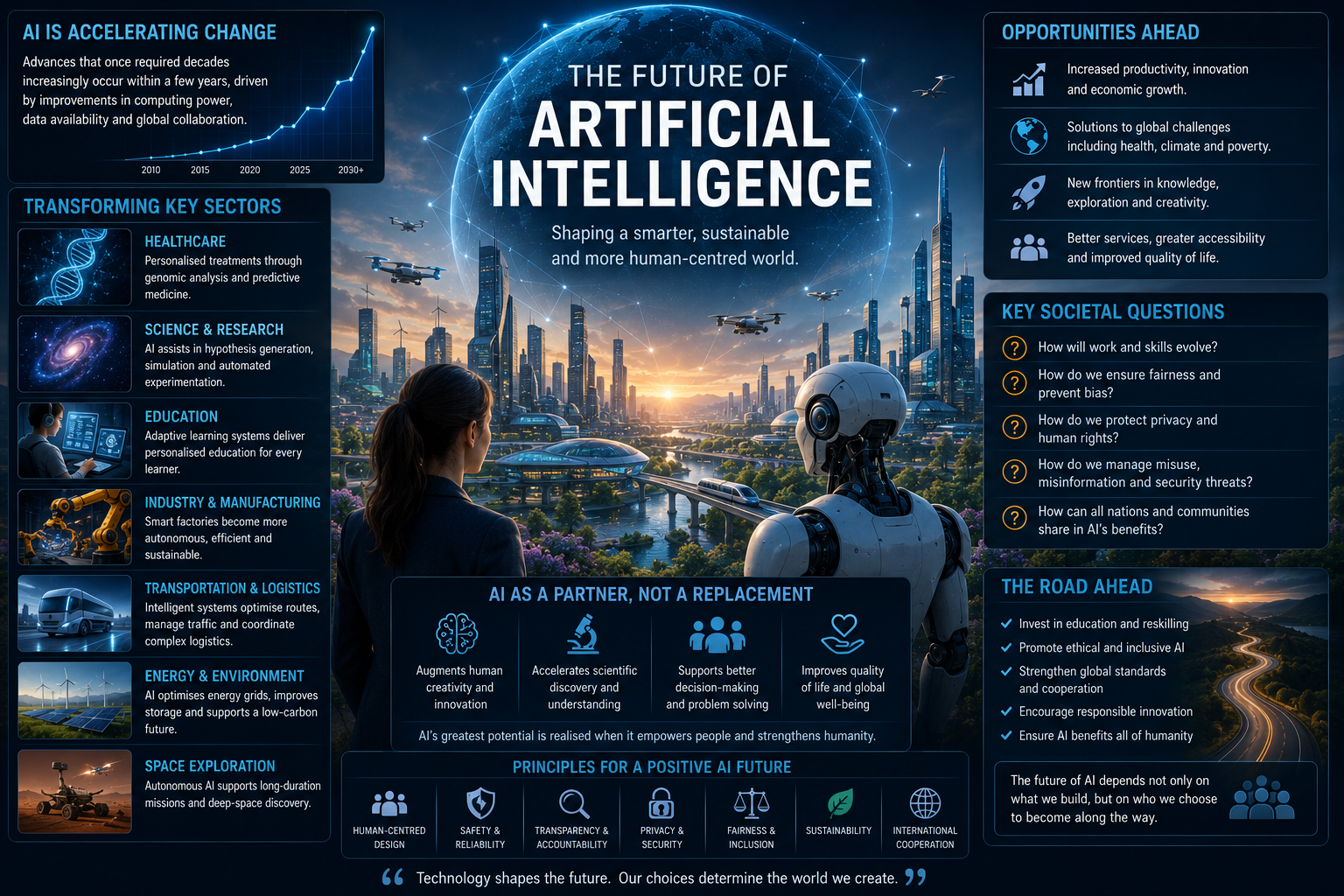
Artificial intelligence continues to evolve at an extraordinary pace.
Advances that once required decades increasingly occur within a few years, driven by improvements in computing power, data availability and scientific collaboration.
Future developments are expected to transform numerous sectors.
Healthcare may benefit from highly personalised treatments generated through genomic analysis and predictive medicine.
Scientific research could accelerate through AI-assisted hypothesis generation and automated experimentation.
Education may become increasingly personalised through adaptive learning systems.
Industrial production is expected to become more autonomous, efficient, and sustainable.
Transportation, logistics, and energy management will likely depend upon increasingly intelligent decision systems capable of coordinating complex infrastructure in real time.
Space exploration may rely heavily upon autonomous AI capable of supporting long-duration missions far beyond Earth.
At the same time, artificial intelligence presents important societal questions.
Labour markets will continue to evolve as routine cognitive tasks become increasingly automated.
Governments must address issues relating to education, workforce transition, and digital inclusion.
International cooperation will become essential in establishing shared standards for AI safety, cybersecurity and responsible innovation.
Rather than replacing human intelligence, many researchers anticipate that AI will increasingly function as an intellectual partner, augmenting human creativity, scientific discovery and decision-making.
The future of artificial intelligence will therefore depend not only upon technological capability but also upon humanity’s collective choices regarding its responsible development.
Timeline
1943 – Warren McCulloch and Walter Pitts publish the first mathematical model of an artificial neuron.
1950 – Alan Turing publishes Computing Machinery and Intelligence and introduces the Turing Test.
1956 – The Dartmouth Conference formally establishes Artificial Intelligence as an academic discipline.
1958 – Frank Rosenblatt develops the Perceptron.
1960s – Early symbolic AI systems demonstrate theorem proving, planning, and reasoning.
1970s – First AI Winter follows reduced expectations and declining research funding.
1980s – Expert systems achieve widespread commercial adoption.
Late 1980s–1990s – Second AI Winter slows investment and commercial deployment.
1997 – IBM’s Deep Blue defeats World Chess Champion Garry Kasparov.
2006 – Geoffrey Hinton helps revive deep learning research.
2012 – AlexNet demonstrates the power of deep neural networks in computer vision.
2016 – AlphaGo defeats Lee Sedol, marking a major milestone in machine learning.
2017 – Google researchers publish Attention Is All You Need, introducing the Transformer architecture.
2020s – Large Language Models and Generative AI become widely accessible to governments, businesses and the general public.
Open Chronicle Perspective
Artificial intelligence represents more than another technological innovation. It marks a profound shift in humanity’s relationship with knowledge, decision-making, and creativity.
Throughout history, transformative technologies have extended human physical capabilities. The steam engine multiplied industrial power, electricity transformed civilisation, and the internet connected billions of people across the globe.
Artificial intelligence differs because it extends aspects of human cognition itself.
Rather than merely automating physical labour, AI increasingly assists reasoning, communication, scientific discovery and creative expression.
Its long-term significance will therefore be measured not only by technological achievements but by the manner in which societies integrate intelligent systems into education, healthcare, scientific research, public administration, and democratic institutions.
Artificial intelligence should not be viewed solely as a replacement for human capability, but as a tool that has the potential to amplify human knowledge, accelerate innovation, and address global challenges that exceed the capacity of individuals working alone.
The future of AI will ultimately depend on maintaining an appropriate balance between scientific progress, ethical responsibility, and international cooperation.
Why Artificial Intelligence Matters
Artificial intelligence has become one of the defining technologies of the modern era.
Its influence extends across nearly every scientific discipline and economic sector, shaping how information is produced, analysed and applied.
From assisting physicians in diagnosing disease to accelerating scientific research, improving industrial efficiency and enabling new forms of communication, AI increasingly serves as an essential component of contemporary civilisation.
As intelligent systems continue to evolve, understanding their capabilities, limitations, and societal implications will become increasingly important for governments, businesses, researchers, and citizens alike.
Artificial intelligence is therefore not simply a technological field but a transformative force that will help shape the political, economic, scientific, and cultural landscape of the twenty-first century.
See Also
- Alan Turing
- Machine Learning
- Deep Learning
- Artificial Neural Networks
- Computer Science
- Robotics
- Natural Language Processing
- Computer Vision
- Generative Artificial Intelligence
- Large Language Models
- Cybernetics
- Algorithm
- Data Science
- Automation
- Quantum Computing
References
- Russell, Stuart J.; Norvig, Peter. Artificial Intelligence: A Modern Approach. 4th Edition. Pearson, 2021.
- McCarthy, John et al. A Proposal for the Dartmouth Summer Research Project on Artificial Intelligence. Dartmouth College, 1955.
- Turing, Alan M. Computing Machinery and Intelligence. Mind, Vol. 59, No. 236, 1950.
- Goodfellow, Ian; Bengio, Yoshua; Courville, Aaron. Deep Learning. MIT Press, 2016.
- Russell, Stuart. Human Compatible: Artificial Intelligence and the Problem of Control. Viking, 2019.
- Mitchell, Melanie. Artificial Intelligence: A Guide for Thinking Humans. Farrar, Straus and Giroux, 2019.
- OECD. OECD Principles on Artificial Intelligence. 2019.
- UNESCO. Recommendation on the Ethics of Artificial Intelligence. 2021.
- European Union. Artificial Intelligence Act. Official Journal of the European Union.
- Vaswani, Ashish et al. Attention Is All You Need. Advances in Neural Information Processing Systems, 2017.
Further Reading
- Nick Bostrom, Superintelligence: Paths, Dangers, Strategies.
- Max Tegmark, Life 3.0: Being Human in the Age of Artificial Intelligence.
- Pedro Domingos, The Master Algorithm.
- Kai-Fu Lee, AI Superpowers.
- Geoffrey Hinton, selected publications on Deep Learning.
- Andrew Ng, Machine Learning lectures and publications.
- MIT Computer Science and Artificial Intelligence Laboratory (CSAIL).
- Stanford Institute for Human-Centered Artificial Intelligence (HAI).
Image Information
Title: Artificial Intelligence
Creator: Open Chronicle
Creation Date: June 2026
Image Type: AI-generated editorial illustrations.
Description: Original illustrations created exclusively for the Open Chronicle Encyclopedia to accompany the article Artificial Intelligence. The images are artistic visual interpretations intended to illustrate key concepts in the historical development, scientific foundations, and modern applications of artificial intelligence. They are not documentary photographs.
Explore this subject
Continue exploring related Open Chronicle Encyclopedia entries through the categories associated with this article.

Staff Writers at Open Chronicle produce trusted journalism, strategic analysis and authoritative reference content across global affairs, geopolitics, defense, science, history, technology, business, culture and sport. Their work combines accurate reporting with historical perspective and analytical depth, helping readers understand not only what is happening, but why it matters. Beyond daily news coverage, Staff Writers contribute to the Open Chronicle Encyclopedia, investigative features, original research projects and long-form reports, building a comprehensive knowledge platform designed to inform, educate and preserve reliable information for a global audience.